Winter used to announce itself in Nepal by the sound of rivers thinning and the familiar arithmetic of the Nepal Electricity Authority: generation falling as snow-fed streams recede, demand rising as the evenings lengthen. This year the season has arrived early, and not only on the calendar. The flash flood that tore down the Lhende Khola, the Bhotekoshi and the Trishuli on 26 August did in a few hours what the dry months usually do over weeks. Plants that should still have been sending surplus power south were silent. Transmission corridors along the riverbank were gone. The country that had only recently learned to sell electricity in the monsoon found itself asking, weeks ahead of schedule, to buy it back.
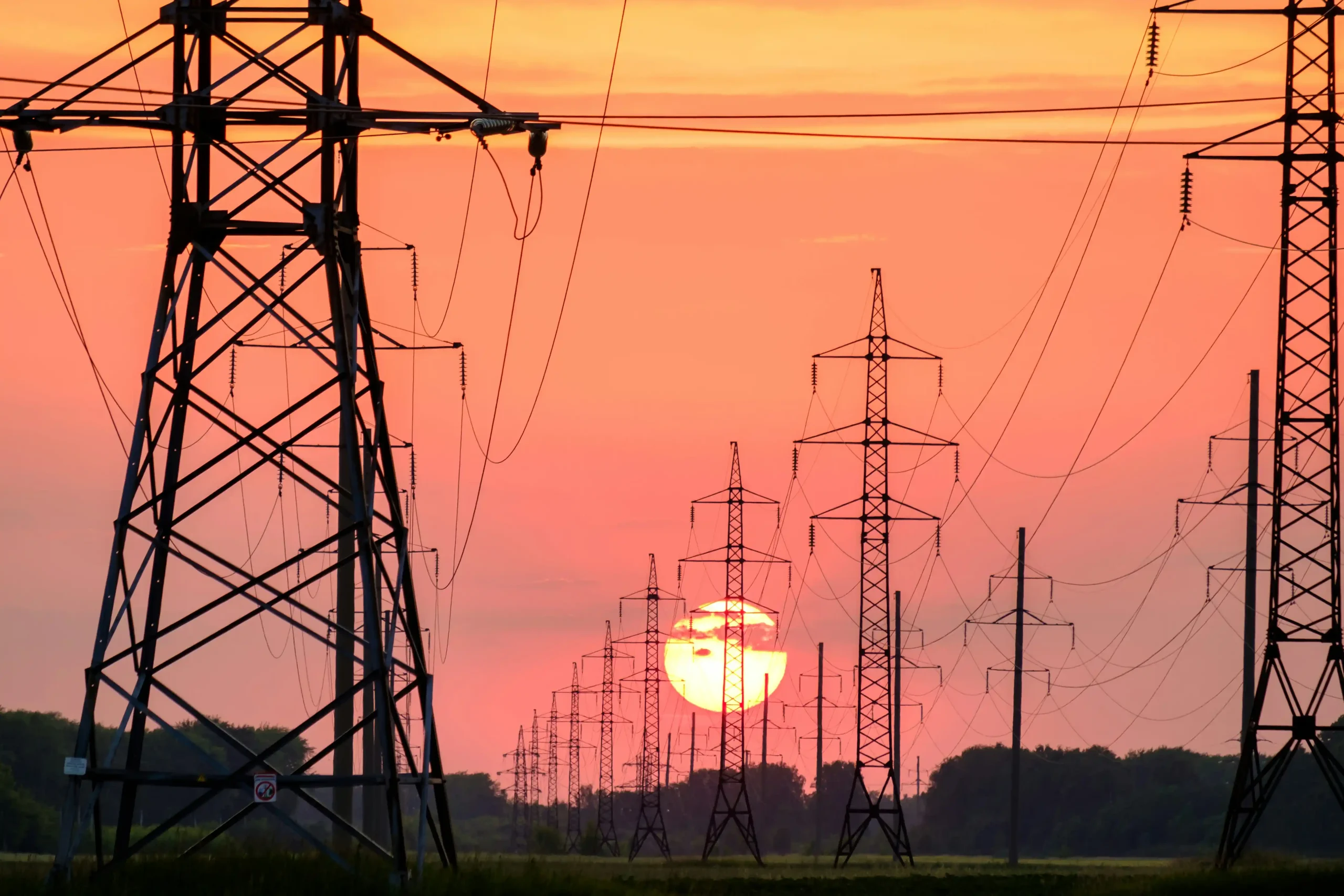
India’s Ministry of Power has now approved the export of up to 654 megawatts to the Nepal Electricity Authority from 13 September through 31 December, for eighteen hours a day, from midnight to six in the evening. Up to 600 MW will move on the Muzaffarpur–Dhalkebar 400 kV double-circuit line; another 54 MW on the older Tanakpur–Mahendranagar 132 kV link. The quantum for January will be reviewed in December. These are not grand figures by the standards of a 260-gigawatt Indian system. They are large enough, on our side of the border, to keep hospitals, cold stores, water pumps and the evening peak from becoming a second disaster.
Dirghayu Kumar Shrestha, acting managing director of the NEA, has said plainly what every winter planner already knew: the dry season would have been tight even without the flood. With several plants damaged or isolated, it would have been worse. The request to India was therefore not a diplomatic flourish. It was an operational one, and it was granted earlier than the usual October window for winter imports. That timing matters. So does the fact that India approved the flow while its own September demand was unusually high — peak load near 269 GW, non-solar hours still short — and while El Niño and a patchy monsoon were squeezing its own hydro and wind. A neighbour that can spare power when it is also short is not performing a ceremony. It is making a choice.
The choice sits on a scar. The Independent Power Producers’ Association and the NEA have listed the wreckage in the language of capacity: Trishuli 3A, Devighat, Middle Trishuli Ganga, the Nuwakot solar farm among those badly hit; Upper Trishuli-1, Rasuwagadhi, Rasuwa–Bhotekoshi, Chilime and Mailung Khola among those damaged. Operational capacity of the order of 430 MW left the grid; projects under construction of several hundred megawatts more were set back. The government’s rapid assessment put energy-sector physical damage at Rs 134.69 billion and the bill for restoring generation and the grid far higher. Hundreds of hydropower workers remain among the missing. The rivers that were supposed to underwrite our export earnings became, for a morning, a wall of ice, rock and water.
There is a bitter geography in that list. Devighat and the original Trishuli station are not just any plants. They were built with Indian grant assistance — Trishuli under the 1958 agreement, commissioned in the late 1960s; Devighat as its cascade in the mid-1980s, along with smaller gifts such as Phewa and the Kataiya house on the Koshi canal. When Nepal first stepped onto the Indian Energy Exchange as a seller in November 2021, the first blocks approved for export were 39 MW from those same two stations. The current that once arrived as aid left, decades later, as a traded commodity. This month the current is coming the other way again, over the same family of lines, because the river that fed those machines has been brutal to them. History does not often arrange its ironies so neatly. We would have preferred it did not.
The days after 26 August were not only about megawatts. The first Indian Air Force flight left Hindon the same evening the flood struck, after a call between the two prime ministers, with about ten tonnes of shelters, blankets, hygiene kits, lamps and medicines. Further sorties and consignments followed — tens of tonnes in all — along with tunnel-rescue specialists to work with the Nepali Army at blocked hydropower adits, forensic teams for identification, and equipment for modular and Bailey bridges where the road had simply ceased to exist. Other countries sent help too; gratitude is not a scarce resource and should not be monopolised. But first response is a habit, and habits show. In April 2015, after the Gorkha earthquake, that habit had a name — Operation Maitri — and it arrived within hours: NDRF teams, aircraft, field hospitals, and later a reconstruction pledge that included houses in Gorkha and Nuwakot, schools and heritage sites. After Jajarkot in 2023 and the September 2024 rains, the pattern was smaller but the same: material on the ground before the condolence statements had cooled. None of this erases the harder chapters of the relationship. It does describe what happens when the ground moves.
Energy cooperation between the two countries is older than the present crisis and more mundane than the speeches that accompany it. Power has been exchanged at border points since 1971. The Dhalkebar–Muzaffarpur 400 kV line turned that local swap into a market. Nepal entered the Indian Energy Exchange as a buyer in April 2021 and as a seller that November. In the wet months we have sold surplus energy into Indian day-ahead and real-time markets; in the dry months we have bought it back. Last July the joint steering committee raised Nepal’s approved export ceiling toward 1,650 MW. In January 2024 the two governments signed a long-term understanding aimed at 10,000 MW of Nepali power flowing south over a decade, with more cross-border lines to carry it. That is not charity. It is a bet that our monsoon surplus and India’s evening peak can fit together, and that our winter deficit and India’s thermal and solar fleet can do the same. The 654 MW approval is that bet under strain, not a departure from it.
We should be honest about what the bet conceals. Almost all of our electricity still comes from run-of-river hydro clustered in a handful of valleys. When a glacier fails on the Nepal–Tibet frontier, the same corridor that generates our export revenue also concentrates our risk. Transmission built along the river is cheap until the river takes it. Winter imports from India have always been the silent subsidy of that model; this year they are simply more visible. Diversifying the mix — solar on the Tarai and mid-hills, storage where geology and politics allow, stronger east–west and cross-border lines that do not all hug the same bank — is our work, not India’s. So is climate-proofing design standards that treated yesterday’s flood as the design flood. Partners can keep the lights on while we rebuild. They cannot redesign the basin for us.
That is not a conclusion about the next decade of treaties, tariffs or transmission. It is a description of the next four months. Households in the valley will not ask which market cleared the block that keeps the refrigerator running. Patients will not. Factory shifts will not. The work after December — repairing intakes, finding the missing, rewriting how we site plants in a warming Himalaya — will still be ours. Until then, the current crossing at Dhalkebar and Tanakpur is what a partnership looks like when the rivers are not in a mood to cooperate: unspectacular, time-bound, and, if we are lucky, enough.