The growing strategic and economic significance of the Indo-Pacific region has led India to strengthen its engagement with Southeast Asia through a combination of regional partnerships, economic integration and transcontinental connectivity initiatives. In this context, the Association of Southeast Asian Nations (ASEAN) occupies a vital position in Indian foreign policy, especially related to New Delhi’s Act East Policy. However, as global trade networks undergo considerable transformation and connectivity becomes an important instrument of geopolitical influence and India’s engagement with ASEAN could be connected with broader connectivity frameworks, particularly the India-Middle East-Europe Economic Corridor (IMEC). This would result in potentially transforming India’s Act East Policy from a predominantly regional engagement strategy into a wider framework connecting South Asia, Southeast Asia, West Asia and Europe.
India’s relationship with Southeast Asia has evolved considerably since the introduction of the Look East Policy in 1991, which was subsequently upgraded to the Act East Policy in 2014. The Act East Policy implemented a broader strategic plan including connectivity, defence cooperation, maritime security, infrastructure development and regional institution building. This further indicated India’s recognition that Southeast Asia is essential to its economic integration within the wider Indo-Pacific region. So, India’s engagement with ASEAN has acquired greater institutional depth through the ASEAN-India Comprehensive Strategic Partnership which was established in 2022. The relationship includes cooperation in trade, investment, digital transformation, maritime security, renewable energy, defence and people-to-people exchanges. Still there are considerable opportunities that remain for strengthening trade integration, improving connectivity and diversifying supply chains. The geographical significance of the Southeast Asian region makes it particularly significant for India’s maritime and economic aspirations through ASEAN as a regional organisation. The Malacca Strait, through which a sizable portion of global maritime trade and energy shipments pass, connects the Indian Ocean with the South China Sea and the wider Pacific. As a result, India’s engagement with ASEAN is not merely an extension of its eastern neighbourhood policy but is also crucial to its maritime security calculations and its ambition to emerge as a significant Indo-Pacific power. The February 2026 ASEAN-India Joint Cooperation Committee meeting further reaffirmed ASEAN’s position as the cornerstone of India’s Act East Policy. Also, the year 2026 has also been designated as the ASEAN-India Year of Maritime Cooperation, making it possible to expand collaboration in maritime domain awareness, blue economy development, disaster management and maritime connectivity.
Moving Beyond Regional Connectivity: The IMEC Opportunity
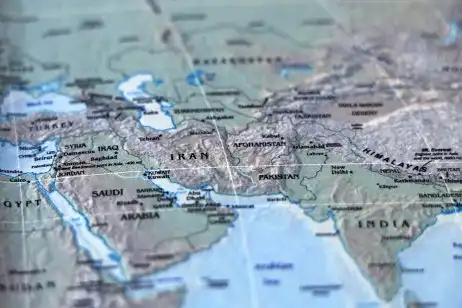
An interesting dimension of India’s connectivity strategy is the potential convergence between the its Act East Policy and IMEC announced during India’s G20 Presidency in September 2023. IMEC envisages connecting India with the Arabian Gulf and subsequently with Europe through an integrated network of maritime, railway, road, energy and digital infrastructure. The IMEC framework identifies two principal corridors—the Eastern Corridor, connecting India with the Arabian Gulf, and the Northern Corridor, connecting the Arabian Gulf with Europe. The proposed connectivity network involves India, the UAE, Saudi Arabia, Jordan, Israel and European destinations. It also envisions electricity interconnections, digital connectivity cables and clean hydrogen infrastructure. Although IMEC and the Act East Policy operate across different geographical spaces, they share an underlying strategic objective which is to strengthen India’s connectivity with important economic centres through diversified trade routes and integrated infrastructure networks. The possibility of linking ASEAN with IMEC should therefore be explored through a broader understanding of economic corridors rather than viewing IMEC as an isolated India-West Asia-Europe initiative. In fact, this could become part of a wider transcontinental connectivity architecture connecting Southeast Asia, the Indian subcontinent, the Arabian Peninsula and Europe making India to act as a bridge between these regions. ASEAN economies possess established manufacturing networks, major maritime ports and extensive connections with global value chains. Integrating these production networks with India’s logistics infrastructure and IMEC’s proposed western connectivity could create additional opportunities for trade diversification, investment and supply chain cooperation.
Connecting the Eastern and Western Corridors
One interesting possibility could be the development of an interconnected east-west connectivity framework. India’s eastern maritime infrastructure, including ports along the eastern coastline, could facilitate greater commercial integration with Southeast Asian economies. Simultaneously, India’s western coastline could provide access to the proposed IMEC network. This would create a conceptual framework in which India’s eastern connectivity initiatives under the Act East Policy complement its western connectivity ambitions under IMEC. These initiatives could be complemented by improved port infrastructure, coastal shipping, multimodal logistics and digital trade facilitation. On the western side, IMEC could provide opportunities for connecting Indian manufacturing and logistics centres with the UAE, Saudi Arabia and European markets. The integration of these two geographical orientations could allow India to function as a major logistics and commercial intermediary between Southeast Asia and West Asia. However, it is important to recognise that ASEAN is not currently a formal participant in the original IMEC framework. Therefore, its association with IMEC should be understood as a potential extension or complementary connectivity arrangement rather than an existing institutional linkage.
The possibilities of cooperation extend beyond conventional transportation infrastructure. Digital connectivity can become one of the most important areas of convergence between ASEAN, India’s Act East Policy and IMEC. ASEAN is advancing its regional digital integration agenda, while India has developed considerable capabilities in digital public infrastructure, financial technology, digital payments and information technology services. Connecting all these capabilities with IMEC’s proposed digital infrastructure can help in creating the opportunities for cross border digital trade, financial connectivity, secure data exchange and technological cooperation. IMEC’s proposed network shows the potential of submarine cables to connect India with Europe, West Asia and African economies. Similar principles could inform future digital connectivity arrangements extending towards Southeast Asia.
Further, India could explore cooperation in renewable energy, green hydrogen, energy storage and electricity grid technologies. Such initiatives could complement IMEC’s proposed clean energy infrastructure as well as contribute to a broader framework of energy security connecting the Indo-Pacific with West Asia and Europe. Furthermore, the diversification of supply chains has become increasingly important amid geopolitical competition, trade disruptions and strategic dependencies. Cooperation between ASEAN and India in semiconductors, electronics, pharmaceuticals, critical minerals and advanced manufacturing could strengthen regional production networks. Connecting these networks with Gulf logistics hubs and European markets could create a more diversified economic geography.
Geopolitical Significance and Strategic Challenges
The convergence of ASEAN, Act East and IMEC also carries considerable geopolitical significance. It could strengthen Indian position as a connecting power between the Indo-Pacific and West Asia while providing regional economies with additional options for trade and infrastructure partnerships. More importantly, this approach would promote inclusive economic cooperation based on ASEAN centrality and strategic autonomy. Nevertheless, several challenges require consideration. Infrastructure interoperability, financing requirements, regulatory differences, customs procedures and the absence of seamless cross-border transportation networks could constrain the development of an integrated corridor. Additionally, geopolitical instability in West Asia, maritime security vulnerabilities and competing regional infrastructure initiatives could affect the implementation of IMEC. However, there are certain limitations, and IMEC’s success will depend on institutional cooperation rather than infrastructure investment alone.
Towards an Integrated Indo-Pacific–West Asia Connectivity Framework
The convergence of ASEAN, India’s Act East Policy and IMEC offers an opportunity to rethink new Delhi’s approach towards international connectivity. Rather than treating its eastern and western engagements as separate foreign policy priorities, India could develop a more integrated framework connecting Southeast Asia with the Arabian Gulf and Europe. The major idea should be to establish complementary eastern and western connectivity networks, with India functioning as their central geographical and economic link. Such an approach would strengthen ASEAN-India economic integration, diversify international supply chains, enhance maritime connectivity and expand opportunities for cooperation in digital infrastructure, renewable energy and advanced manufacturing. The strategic significance of this convergence lies in its potential to transform India from a participant in multiple regional connectivity initiatives into a central node within an interconnected Indo-Pacific–West Asia–Europe economic architecture. The future of India’s Act East Policy may therefore depend not only on how effectively it engages with Southeast Asia, but also on how successfully it connects its eastern neighbourhood with the emerging economic and strategic opportunities of West Asia and Europe.
The views expressed are those of the author and do not represent the institution.