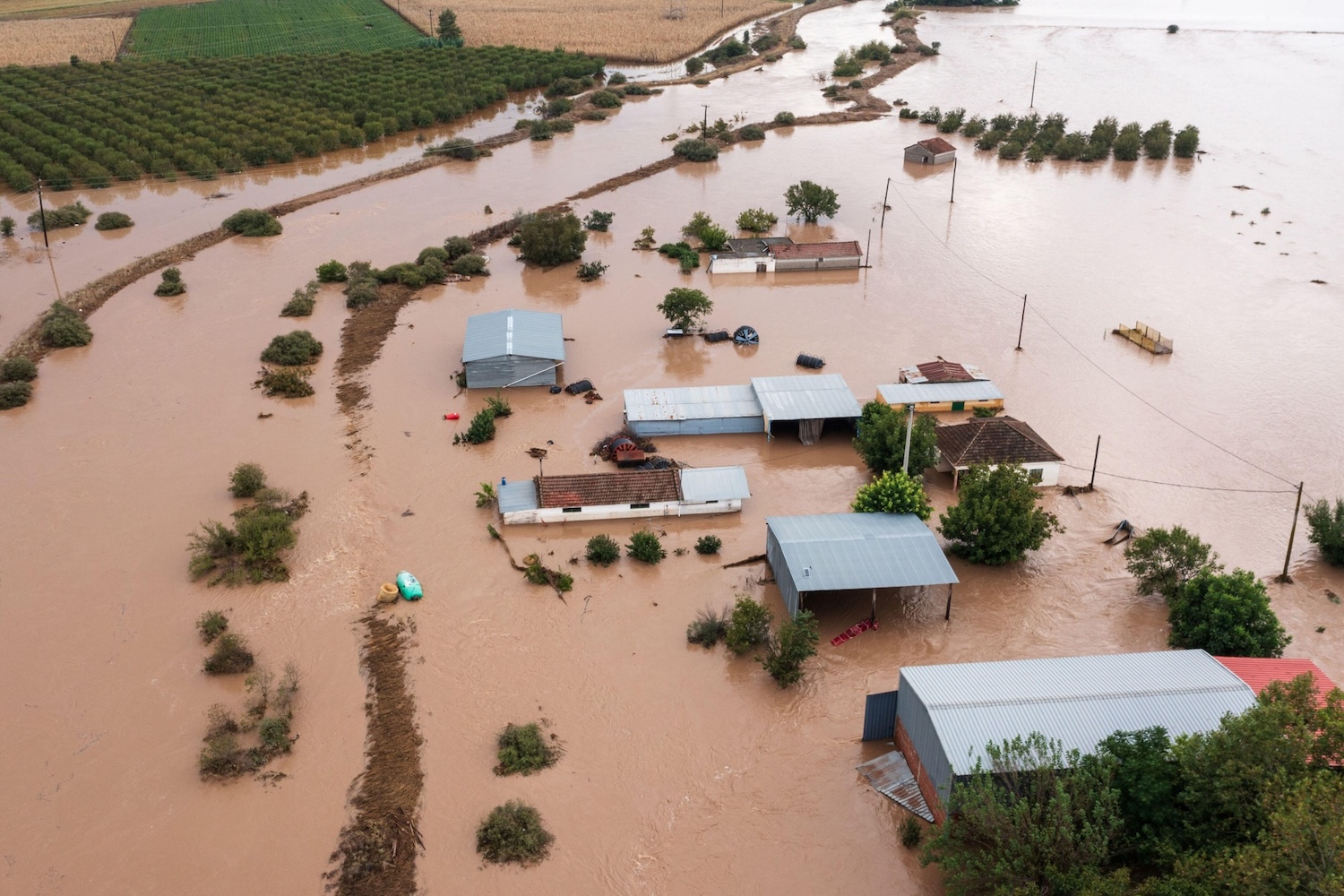
India’s battle with climate change is no longer a distant crisis; it’s an everyday reality. The country swings between two extremes: scorching heatwaves and devastating downpours. In this unpredictable climate landscape, the nation’s approach to disaster management has evolved from reactive relief to proactive risk reduction. But as floods swallow towns and heatwaves scorch fields, the question remains: can India’s new model of disaster preparedness match the growing ferocity of nature?
A New Philosophy of Preparedness
Over the past decade, India has made a quiet but revolutionary shift in how it manages disasters. No longer confined to post-calamity relief and compensation, disaster management now encompasses prevention, mitigation, and preparedness. This transformation owes much to the 15th Finance Commission’s forward-looking framework for Disaster Risk Reduction (DRR).
By allocating ₹2.28 lakh crore over five years, the Commission redefined the disaster response chain. A full 30% of the funds were set aside for pre-disaster measures—10% for preparedness and capacity building, and 20% for mitigation. This is a notable departure from the traditional approach, where most funds were reserved for post-disaster response and reconstruction. The signal is clear: India is learning to act before calamity strikes.
At the heart of this new strategy lies an understanding that knowledge saves lives. The establishment of geo-spatial training labs, the expansion of the National Institute of Disaster Management (NIDM), and the creation of community-based volunteer networks such as Apda Mitra and Yuva Apda Mitra all mark a people-first approach. By training over 2.5 lakh volunteers, India is placing disaster management in the hands of its citizens, not just its bureaucracies.
This is crucial. Disaster resilience cannot be built solely through steel and concrete—it depends on awareness, preparedness, and local participation. The effort to mainstream disaster education into every panchayat through 36 streams of disaster management studies is a welcome step. The goal is not merely to respond to disasters, but to create a culture of prevention and adaptation at the grassroots level.
Nature-Based Solutions: A Return to Ecological Wisdom
While high-tech systems and early warnings play a vital role, India’s new focus on nature-based solutions may prove to be its most transformative idea. Projects worth ₹10,000 crore are now underway to restore water bodies, green spaces, and natural buffers that mitigate the impact of floods and droughts. This approach recognizes that the environment, when preserved, is humanity’s first line of defense.
Reviving wetlands along the Brahmaputra, reinforcing slopes in landslide-prone zones through bio-engineering, and rejuvenating urban lakes are not just environmental projects—they are acts of resilience. These interventions mirror a global shift from infrastructure-heavy solutions toward sustainable, ecological resilience. After all, embankments may crack, but restored wetlands endure.
The success of the National Cyclone Mitigation Programme (2011–22), which built shelters, embankments, and early warning systems across eight coastal states, shows that when science and governance work hand in hand, lives can be saved. That same energy must now extend to all forms of climate stress, from glacial lake outbursts in the Himalayas to forest fires in the Western Ghats.
From Reactive Relief to Anticipatory Action
India’s early warning systems—once patchy and delayed—are now world-class. Through the Common Alerting Protocol, alerts are issued swiftly and in regional languages, ensuring that information reaches the most vulnerable. These systems, along with nationwide mock drills and school safety programs, are slowly transforming India’s response culture from panic to preparedness.
Yet, the task ahead remains daunting. Climate change is accelerating faster than administrative reforms. Urban floods continue to expose the weaknesses of unplanned cities, while rural communities face rising temperatures that threaten livelihoods. The government’s success will depend on whether it can translate plans into local action—where a flood is not a press release but a lived emergency.
India’s Global Role and the Road Ahead
India’s leadership in international forums like the G20 and the Coalition for Disaster Resilient Infrastructure signals a recognition that disaster resilience is not a domestic issue—it’s a global one. The lessons India learns from managing its vast, diverse hazard landscape will shape global climate adaptation strategies. In an interconnected world, resilience anywhere strengthens resilience everywhere.
India’s shift toward pre-disaster investment, local empowerment, and nature-based solutions offers hope in an era of climate anxiety. But policies and projects will only go so far without political will, transparent implementation, and sustained community engagement.
As climate extremes become the new normal, India’s challenge is to make resilience not an aspiration, but a daily practice—from government offices to village panchayats, from schoolrooms to city streets. The path to a safer, more sustainable future lies not just in surviving disasters, but in learning to live wisely with the planet that sustains us.