Marco Rubio’s strategic push aligns Venezuela’s viscous crude with India’s refining prowess, but significant hurdles in output, cost, and geopolitics remain.
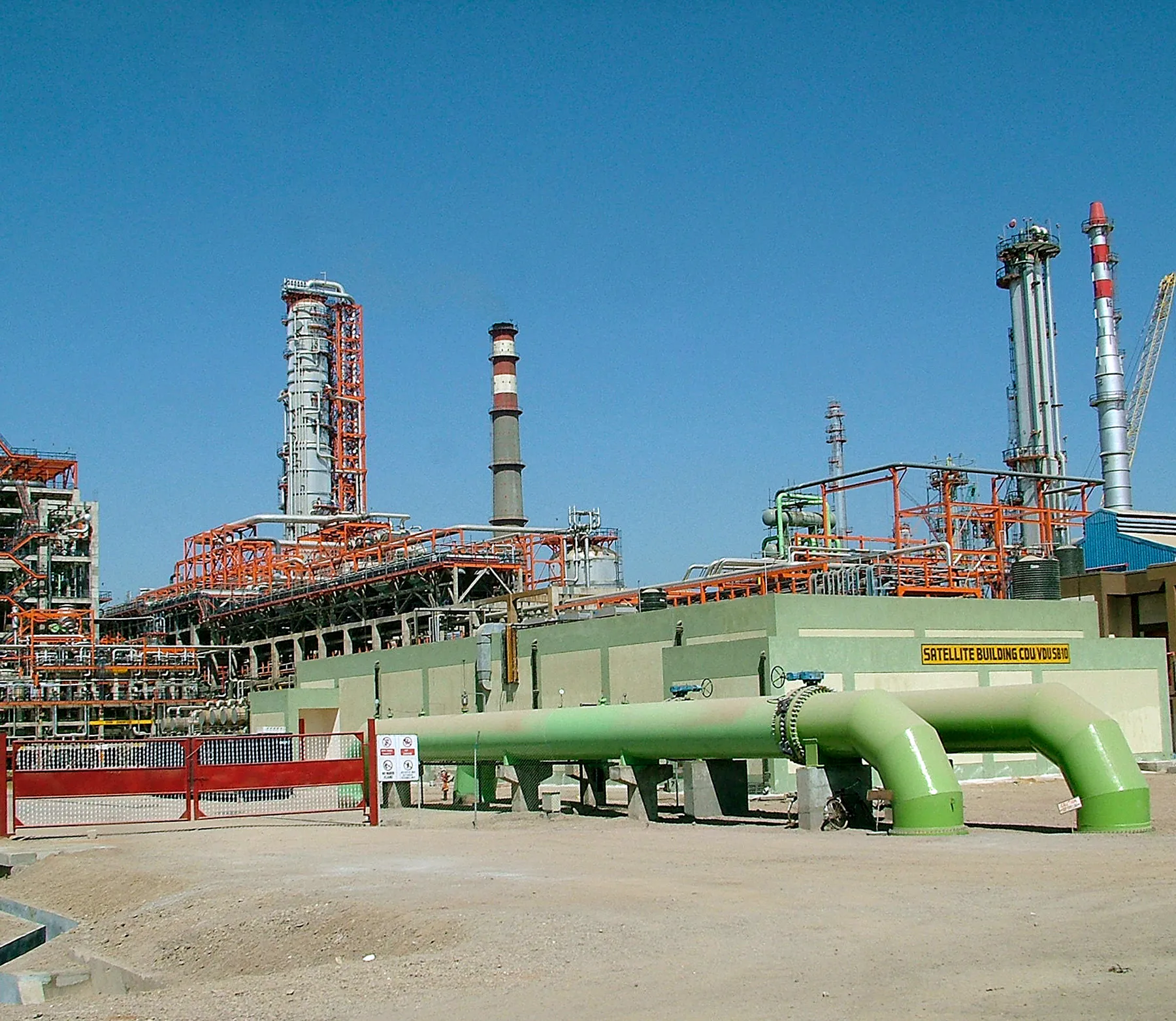
During his October 2026 visit to India, US Secretary of State Marco Rubio made a concerted pitch to reshape global energy flows. Standing at the intersection of trade diplomacy and national security, Rubio explicitly labeled India a “refining superpower”. His visit, which included talks with External Affairs Minister S. Jaishankar and a pivotal trip to Reliance Industries’ colossal Jamnagar refinery, underscored a specific US strategic objective: leveraging India’s unique industrial capabilities to process Venezuelan heavy crude as a viable alternative to Russian oil.
The geopolitical logic is straightforward. India imports over 85% of its crude requirements, and since 2022, discounted Russian barrels have dominated its energy portfolio. Washington is eager to dilute this dependency. Yet, shifting global supply chains cannot be achieved overnight. As Rubio acknowledged, India has made “substantial progress” in diversifying its energy sources—a move he described as a “smart thing to do”.
Global Crude Oil Blends Comparison
Comparing API Gravity (viscosity/weight) vs. Sulfur Content. Heavier, sour crudes (like Venezuelan) require more complex refining.
However, the matchmaking of Venezuelan crude to Indian refineries is not merely a political maneuver; it is heavily dictated by chemistry, engineering, and the harsh realities of oil market logistics.
The Viscous Challenge of the Orinoco Belt
Venezuela sits on the largest proven oil reserves on the planet, largely concentrated in the Orinoco Belt. However, unlike the light, sweet crude pumped from the Permian Basin in Texas or the North Sea, Venezuelan crude is fundamentally different.
Blends like Merey and Boscan are ultra-heavy and highly viscous—sometimes possessing the consistency of molasses at room temperature. They are laden with high sulfur content, heavy metals, and massive carbon molecules. Pumping this crude out of the ground is only the first challenge; it often requires the injection of diluents (lighter hydrocarbons) simply to make it flow through pipelines to the export terminals.
Because of its physical properties, Venezuelan crude trades at a steep discount. Most of the world’s standard oil refineries are incapable of processing it efficiently. If a conventional refinery attempts to run ultra-heavy crude, it yields a high percentage of low-value residual products like petroleum coke (petcoke) and asphalt, rather than the high-margin transportation fuels the market demands. To unlock the value of Venezuelan oil, a refinery requires billions of dollars in specialized, high-pressure infrastructure.
India’s Refining Superpower: The Reliance Advantage
This is exactly where India, and specifically Reliance Industries, enters the equation.
“Petroleum is useless if you don’t refine it into a usable product,” Rubio noted while discussing his itinerary, which included the Jamnagar complex. Jamnagar is not just the largest oil refinery hub in the world; it is arguably the most complex.
Refinery complexity is measured by the Nelson Complexity Index (NCI). While the global average NCI hovers in the single digits, Jamnagar boasts a rating upwards of 21. This means it is equipped with massive coker units, fluid catalytic crackers, and deep desulfurization facilities capable of tearing apart the long, heavy hydrocarbon chains found in Venezuelan crude.
Jamnagar can ingest the cheapest, dirtiest, and heaviest crude on the market and upgrade it into high-value, ultra-low-sulfur diesel and aviation turbine fuel. Reliance has historically been one of the top buyers of Venezuelan oil and even operated upstream concessions within the South American nation before sanctions tightened. Rubio’s diplomatic push is designed to clear the geopolitical friction, encouraging Reliance to not only refine the crude but potentially return as a producer in Venezuela.
The Russian Pivot and the Geopolitics of Diversification
The US effort to redirect Indian energy procurement is a delicate balancing act. Over the past few years, Russian Urals crude became the bedrock of India’s energy security. By absorbing discounted Russian barrels, India managed domestic inflation and exported refined products back to Western markets, acting as a crucial shock absorber for the global economy.
Washington has largely tolerated this, but the long-term goal remains to degrade Russia’s energy revenues. The recent waiver by the Trump administration of a proposed 100% tariff on major Russian oil buyers (including India) reflects the nuanced reality of this relationship; Washington is trying to balance sanctions on Moscow with its broader, deepening strategic ties with New Delhi.
By spotlighting Venezuela, the US is offering a carrot. If Indian refiners can secure long-term, stable, and sanctioned-cleared supplies of Venezuelan heavy crude, the economic incentive to buy Russian Urals naturally diminishes. A diverse energy portfolio, as Rubio argued, is fundamentally in the national security interests of both India and the United States.
The Viability Test: Output, Costs, and Policy
Despite the perfect technical synergy between Venezuelan geology and Indian engineering, realizing this trade route at a scale large enough to offset Russian imports faces severe headwinds.
1. The Output Deficit Decades of mismanagement, chronic underinvestment, and crippling US sanctions have left Venezuela’s state-owned oil company, PDVSA, with a dilapidated infrastructure. Rubio himself cautioned that Venezuelan oil alone cannot make up for all the supply shortages facing the global market. Ramping up production requires massive capital expenditure, rig mobilization, and stable electrical grids—resources currently scarce in Caracas.
2. Freight and Logistics Geography dictates economics. The voyage from the Jose Terminal in Venezuela to India’s west coast takes roughly 40 to 45 days. In contrast, Russian crude from Novorossiysk or the Baltic ports can reach India much faster. For Venezuelan crude to be a viable alternative, the initial price of the oil must be discounted steeply enough to absorb the elevated maritime freight and insurance costs.
3. The Sanctions Gray Area The US policy environment remains the ultimate bottleneck. While Rubio is encouraging Reliance to re-engage, multinational corporations require regulatory certainty. Intermittent sanctions relief or temporary six-month licenses are insufficient for a company to commit the billions of dollars required to revive upstream Venezuelan assets. Unless the US provides ironclad, long-term waivers—and a clear framework for financial repatriation—Indian firms will remain hesitant to over-commit.
Conclusion
The pairing of Venezuela’s viscous crude and India’s complex refining capacity is an industrial match made in heaven. Marco Rubio’s 2026 diplomatic push smartly attempts to leverage this existing technical synergy to achieve the geopolitical goal of weaning India off Russian oil.
However, engineering capability cannot entirely override economic and political friction. Until Venezuela can consistently pump more oil, and until Washington can provide long-term regulatory stability regarding sanctions, the flow of heavy crude to Jamnagar will remain a supplementary stream rather than a total replacement for Russian barrels. India will undoubtedly continue its strategy of diversification, but it will do so strictly on its own commercial terms.