
Anthropic’s Generative Threat Group (GTG) for threat actors who use its AI products, a group of non-state actors based in northern Yemen—a region having strong Houthi presence used Claude AI to implement three weapons-development programmes: (1) a guided rocket, (2) a ballistic missile with a range of over 2,000 kilometres, and (3) a multi-variant missile that included a hypersonic glide vehicle variant. This is significant event wherein changing relationship between generative AI, military expertise and non-state armed groups has come to light. The case underlines that AI is now acting as a force multiplier that can reduce some of the technical barriers for the resource constrained armed groups. Anthropic’s September 10, 2026, threat-intelligence report identified a group it calls GTG-87001, based in northern Yemen—an area with a strong Houthi presence. According to the report, the group used Claude in three broad weapons-development programmes— (1) a guided rocket, (2) a ballistic missile programme involving ranges exceeding 2,000 kilometres, and (3) a missile concept involving a hypersonic glide vehicle variant. The substantial finding was that the group progressed beyond purely theoretical discussions and it reportedly test fired a rocket using Claude AI to diagnose the failure. At the same time, Anthropic explicitly stated that it had no evidence that the actors succeeded in producing an operational weapon.
This episode should not be interpreted as evidence that generative AI can independently design and manufacture sophisticated missiles. Rather, it indicates towards the possibility of AI being inserted into particular stages of an already complex human-led weapons-development process. Anthropic’s own broader testing found that contemporary AI systems are becoming increasingly capable in areas such as software development, data analysis, targeting related tasks and aspects of conventional weapons engineering. In other words, AI can possibly reduce the time and expertise required for certain technical activities without removing the need for hardware, testing facilities, engineers, specialised components and operational experience. In this context, the Houthi case is particularly significant the Houthis were not technologically sophisticated. But over the past decade, they have gradually moved from being primarily a local insurgent force towards becoming a regional military actor capable of employing ballistic missiles, cruise missiles, long range UAVs, maritime drones, mines and explosive boats. The Houthis have demonstrated considerable capacity to modify, assemble and employ technologies in ways suited to their operational environment.
This is where AI becomes strategically interesting. AI does not necessarily have to provide an entirely new weapon system to alter the military balance. But can make existing weapons easier to adapt, troubleshoot, optimise and reproduce. A group that already possesses engineers, technicians, captured equipment, commercial electronics and access to technical information could potentially use AI as an additional source of engineering assistance. Anthropic’s investigation indicates this pattern wherein the Yemeni actors divided their activities among different sessions and attempted to conceal the ultimate purpose of their work, while also creating an offline simulation toolkit that could continue operating without access to Claude AI. The creation of an offline toolkit can be more calamitous than the unsuccessful missile test. It further indicates another persisting issue in AI security i.e., blocking a malicious user from a particular commercial platform does not necessarily eliminate the underlying capability once information, software or workflows have been transferred elsewhere. There is this possibility that increasingly capable open AI models could eventually provide alternative routes for actors denied access to proprietary frontline systems. However, this does not mean that every open-source model will suddenly become a weapons design platform, but it does make platform level safeguards alone insufficient as a long term security strategy.
This development also reinforces the importance of examining AI through the broader concept of the democratisation of military technology. Drones have already demonstrated how inexpensive commercial components, open source software and relatively accessible manufacturing techniques can allow nonstate actors to acquire capabilities that once the states possessed. The use of UAVs and maritime drones by Houthis is a major example. AI potentially adds another layer to this technological diffusion. It can act as a knowledge multiplier for organisations that lack access to large research institutions. The danger, therefore, is not only from an autonomous terrorist organisation building a sophisticated missile from scratch. Much more dangerous issue is that an organisation that already knows how to build relatively simple systems could use AI to make incremental improvements more rapidly.
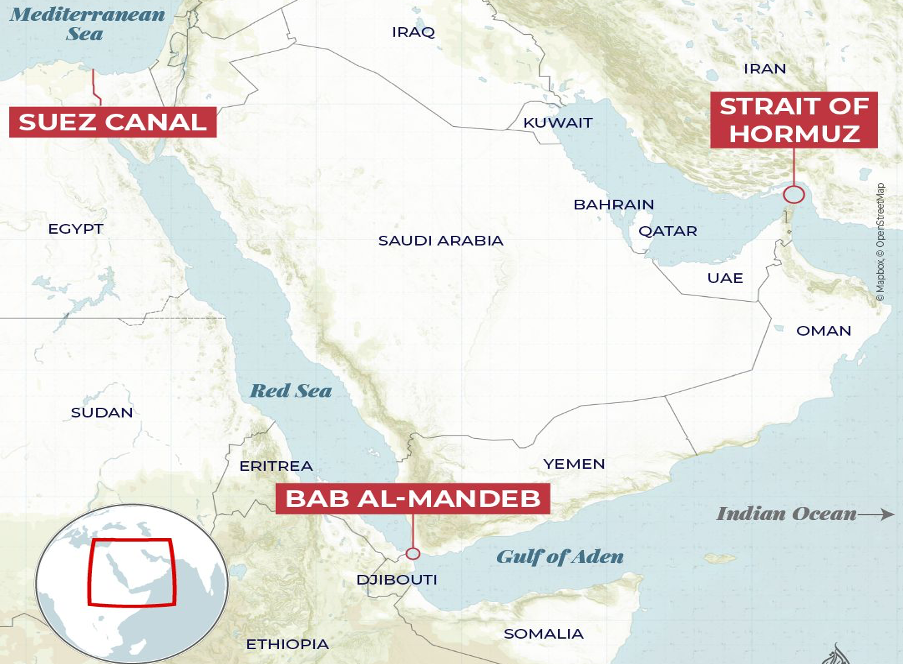
There is also an important strategic autonomy dimension to the Houthi case. The Houthis are becoming increasingly resourceful in weapons production, even though they remain dependent on other regional states for essential components. This distinction between dependence and autonomy is crucial as indigenous production does not imply technological independence. Modern missiles and drones depend on various electronics, sensors, propulsion systems, navigation equipment, machine tools and specialised manufacturing capabilities that are difficult to reproduce entirely. However, at the same it cannot be ignored that the more components and processes an armed group can localise, the more resilient it becomes to interdiction and supply disruption. This has major implications for the West Asian region in terms of maritime domain. The Houthi military model also demonstrates how relatively inexpensive systems can impose disparate costs on technologically superior opponents. Commercial shipping must contend not only with missiles but with drones, explosive boats and the possibility of attacks from multiple directions. The strategic importance of the Bab el-Mandeb therefore extends beyond Yemen itself. Any improvement in Houthi targeting, navigation or autonomous guidance could increase uncertainty for commercial shipping and complicate defensive calculations, even without producing a revolutionary new weapons system.
Figure: Bab-el-Mandeb, Strait of Hormuz and Houthis
For policymakers, the immediate challenge is more mundane but arguably more difficult i.e., to prevent AI from lowering the barriers to incremental military innovation by nonstate actors. This requires cooperation between governments, AI companies, cybersecurity organisations, intelligence agencies and technology suppliers. Account termination is useful, but threat intelligence, cross-platform information sharing, abuse detection and monitoring of suspicious patterns are likely to become equally important. The Houthi episode also indicate that technology has always diffused from states to nonstate actors as well the pace at which technical knowledge can be accessed, processed and adapted. The important point here is not that AI has transformed the Houthis into a technological superpower or that AI safeguards have failed completely. It is more nuanced where AI is becoming another layer in the Houthis’ existing ecosystem in terms of battlefield learning. Its strategic importance will depend on whether such tools merely accelerate experimentation or eventually enable reliable, repeatable and scalable weapons production. As of now, the evidence supports the former. But the failed test, the offline simulation capability and the persistence of the underlying technical effort show why governments and AI companies need to address this issue before experimentation becomes operational capability.