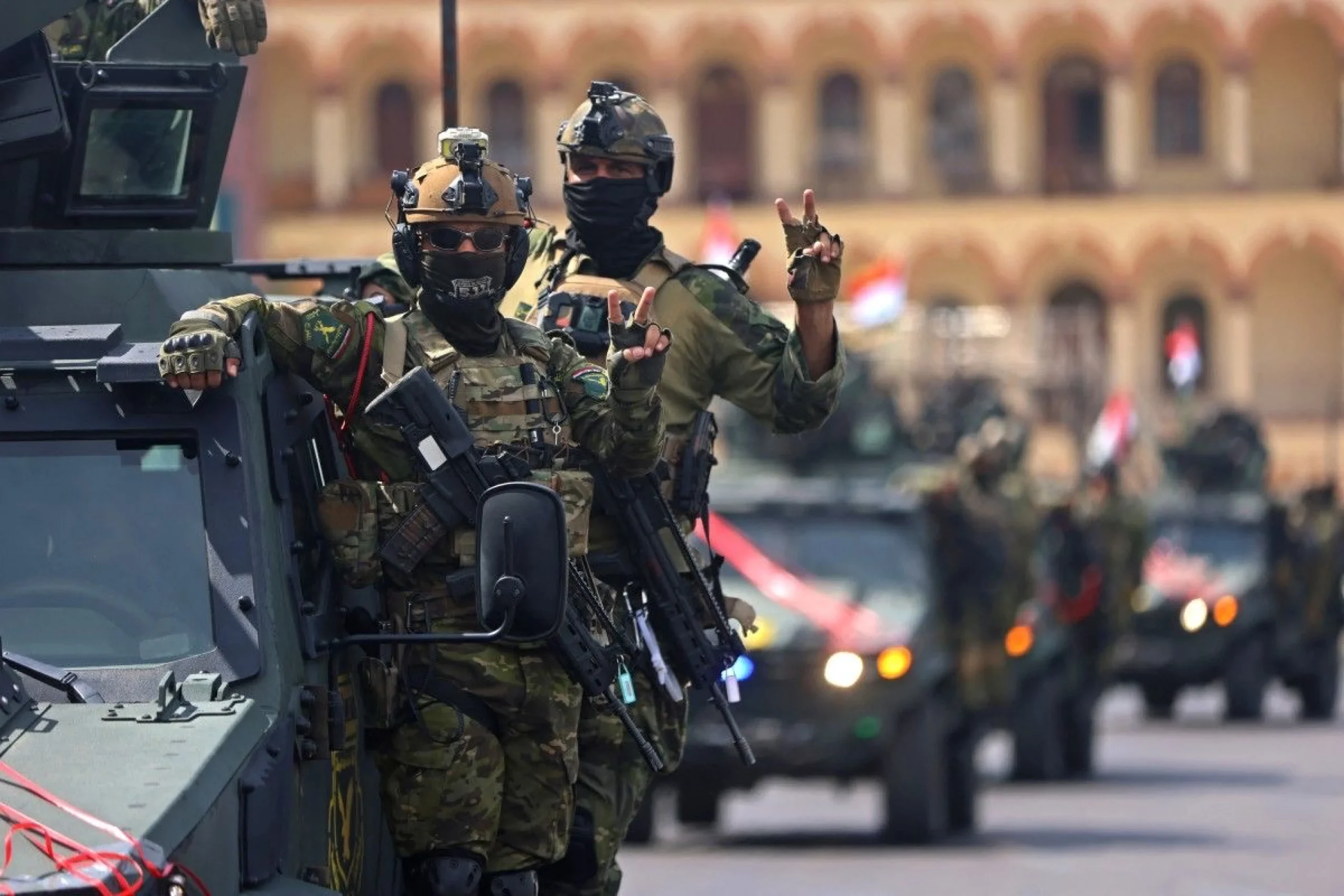
After five years, the US is witnessing another withdrawal after Afghanistan. Unlike the last withdrawal, which was chaotic and messy, the exit from Iraq seems normal, but it leaves the same pattern of security-vacuum crises behind, and the current security situation in the Middle East could have serious consequences.
The Exit
The reason for the exit remains the same for every withdrawal – ending forever wars. But that rationale for ending forever wars seems to be a standard set of reasoning for such actions, because these exits start new phases of forever war, at least of forever security anxiety, in the region. To reduce external and internal fatigue in the US Security establishment and ease mounting pressure, a move to remove boots from the ground comes into view. The initial exit of US troops from Iraq came in 2011 after the Iraq War. Later, the forces returned for counter-terrorism operations against ISIS.
Security Questions
The security questions loomed five years after the Kabul episode and are now looming again after the exit from Iraq. If we pay close attention to the security scenario in Afghanistan post-exit, the situation has become grimmer after the Taliban takeover. ISIS-K was confined to eastern Pashtun enclaves. After the U.S. exit, it strategically shifted north to exploit the ethnic fractures left by the new Taliban regime. By leveraging anti-Taliban sentiments among local Tajik and Uzbek populations, ISIS-K recruited heavily within these northern provinces. Through asymmetric infiltration, ISIS-K has established deep networks within Afghanistan’s key regions, including Kabul province.
The compound situation, utilising its media wings, such as the English-language Voice of Khorasan, and leveraging generative AI tools, has enabled ISIS-K to distribute cross-lingual propaganda aggressively. Most importantly, ISIS-K has capitalised on the marginalisation of non-Pashtun communities. This breeding environment for ISIS-K in Afghanistan has manifested in devastating international attacks, including the mass-casualty strikes in Iran, Turkey, and the March 2024 Crocus City Hall mass shooting in Moscow, and the assassination of a Haqqani leader in Afghanistan two years ago, followed by the Syrian government’s collapse, which further strengthened ISIS-K leadership. ISIS-K has integrated senior figures from Iraq and Syria into its top echelons. For instance, ISIS-K leadership has utilised financial resources, strategic networks, and global propaganda channels originally developed during the peak of the Syrian jihad. The US did end its decades-long Afghan war. Still, we opened a Pandora’s box of multiple security wars, or perhaps a phase of perpetual security anxiety in global security, especially in South Asia. A security vacuum in the South Asian subcontinent has created spillover effects, further disturbing the region’s security equilibrium.
Similarly, in the Sahel, a low-profile withdrawal further deepened the security vacuum caused by the French withdrawal and internal instability. The United States, meanwhile, has maintained a low strategic priority for the Sahel, perceiving a limited direct threat. Past experiences, such as the failure of Operation Gothic Serpent in Somalia, have made U.S. engagement cautious. Although the U.S. maintained a presence in Niger, focused on surveillance and reconnaissance, it withdrew in 2024 alongside France. Despite these withdrawals, terrorist groups remain resilient and capable of resurgence.
The Iraq Case
The sustained operational presence in Iraq since 2014 was to fight against ISIS under Operation codenamed Inherent Resolve, which, with this withdrawal, has ended. The question is the security vacuum and the current scenario in the Middle East, where this vacuum is being strengthened from two ends. First, internally: the Shia militia and Iran’s growing political clout in Iraqi affairs, especially after Shia leadership assumed power in Iraq’s hybrid regime in recent elections. The Popular Mobilisation Forces (PMF) Shia militia has hardened recently and is targeting Sunni pockets in Iraq. If this internal dominance and Iranian influence further deepen, then ISIS sleeper cells can exploit that resentment to position themselves as the “defenders” of the Sunnis, aiding their recruitment.
ISIS-K adopted a similar tactic in Afghanistan to strengthen its recruitment of Sunni youth after the Taliban began a crackdown against them. Young Salafis who were marginalised, harassed, or saw their families targeted by Taliban intelligence felt pushed into a corner. With no political voice left, many joined ISIS-K out of survival or a desire for revenge. Political and security factors are deepening the vacuum in Iran’s favour and exposing the strong likelihood of an ISIS-K resurgence. The situation perhaps seems to be moving in the same direction as after the 2011 withdrawal.
The 2011 Exit Vacuum
A similar vacuum is building in Iraq, as it did in 2011 when the US withdrew from Iraq, ending the nearly nine-year conflict that began with the 2003 invasion. At both the internal and external fronts, the security vacuum was deepened by politico-security factors. On the internal front, Iran attempted to deepen its influence, capitalising on the vacuum. Tehran strongly backed the increasingly authoritarian and sectarian policies of then-Iraqi Prime
Minister Nouri al-Maliki, free from U.S. oversight, the Maliki government marginalised Sunni political leaders. It sidelined Sunni officers in the Iraqi military, polarising the country and creating internal fractures that Iran systematically exploited. With U.S. troops gone, Iran’s Islamic Revolutionary Guard Corps (IRGC) Quds Force accelerated its integration into Iraq’s security architecture. Iran-backed paramilitary groups and political proxies—such as the Badr Organisation, Asa’ib Ahl al-Haq, and Kata’ib Hezbollah grew more influential, quietly embedding their operatives.
This exit and the developing vacuum in Iraq coincided with the Arab Spring and the Syrian civil war. Controlling Iraqi territory became an absolute existential priority for Tehran. By strengthening its grip on Iraq after the U.S. left, Iran successfully established an uninterrupted land corridor running from Tehran through Baghdad and Damascus to Hezbollah in Lebanon. This allowed Iran to seamlessly move weapons, funds, and thousands of militia fighters to defend the Assad regime in Syria. In short, Iran capitalised on the Iraqi security vacuum as a strategic land bridge. By 2014, two significant developments had occurred. First, Iran’s continued consolidation of influence created a strong Shia proxy in Iraq, what we know today as the Popular Mobilisation Force(PMF). Second, ISIS emerged and captured vast swathes of western and northern Iraq in 2014. The regular Iraqi army collapsed, and ISIS further capitalised on the marginalised Sunni population, partly because of the increasing Iranian strategic footprint in Iraq.
Though the U.S. military returned in 2014 to provide the massive airpower needed to defeat ISIS, Tehran successfully converted the security vacuum into permanent political and paramilitary dominion, which was followed by the emergence of a major global terror threat. The same pattern appears to be repeating itself. First, Iran’s political depth in Iraq is increasing, along with its Shia militant capabilities, which may further increase due to the further weakening of Kurdish autonomous regions after the withdrawal of US air defences like Patriot missiles. Iranian militants will attempt to further consolidate their ground by targeting weakening Iranian-Kurdish dissident factions residing in northern Iraq. Second, there is an increasing attempt at ISIS resurgence, and this exit may give ISIS more room to capitalise on the security vacuum for resurgence, as it did in Afghanistan in 2021, by at least attaining demonstrable striking capabilities in the region.
While the US banks on bilateral security cooperation with Iraq, it must remember that past security nightmares may return, as security vacuums and regional geopolitics have allowed them to return, making this security vacuum another perpetual security war for the region.