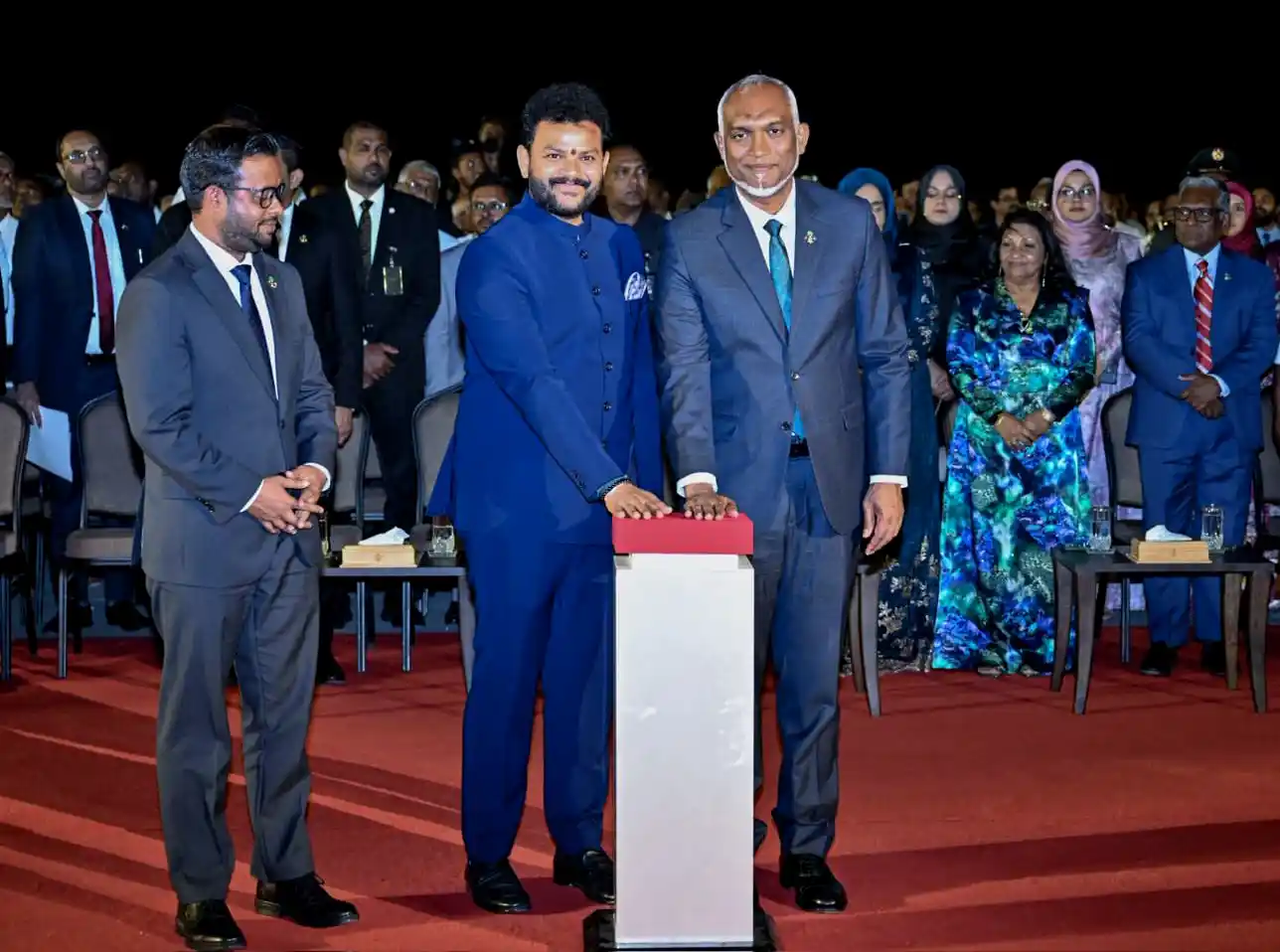
Returning from a state visit to China in 2024, the then-newly elected Maldivian President Mohamed Muizzu took a swipe at India, declaring that the Indian Ocean does not belong to one country and that the Maldives is not anyone’s backyard. After being elected to office, the Maldivian president vowed to review all the agreements his country had signed with India under the previous Mohamed Solih government, whom he accused of working under foreign influence. However, the hard reality of economic and strategic compulsions led the president to drop such tomfoolery and recognize the positive aspects of good relations with India that would benefit the Maldives. The result has been the rapid improvement in bilateral relations, the latest being India’s Line of Credit worth $507 million to the Maldives, which came into effect on 27th August this year. India had agreed to provide line of credit to the Maldives in July 2025 via the Export-Import Bank to finance various developmental projects in the country. India has proven to be a helpful partner to the Maldives, which the government in Male has recognized, helping restructure bilateral relations.
India and Maldives seem to have overcome the initial hiccups in their bilateral relations caused during the initial days of the current regime in Male. This massive recalibration of relations under the same regime, and that too in such a short time, is indeed unusual. However, this rethinking was triggered more by the economic realities the island country was encountering since the Muizzu administration took charge. This economic hardship was triggered by the tectonic impact of the Covid 19 pandemic, which hit the tourism sector, devastating the Maldivian economy, with its GDP declining by 33 percent in 2020. Besides, the fisheries sector kept gasping while major infrastructure spending and generous social assistance programmes over the years, along with loans to address COVID-related challenges, led to a sharp rise in public debt. The World Bank has depicted a grim picture of the Maldivian economy for this year, with its public debt and external debt service pressures remaining high, while the current account deficit is expected to widen in 2026, and the Maldives remains at high risk of debt distress and continues to face significant fiscal and debt sustainability risks. With Maldives reeling under such economic pressure, President Muizzu could hardly afford to indulge in a vacuous anti-India campaign. He even denied promoting an ‘India Out’ policy. However, the fact is that Maldives’ domestic political environment feeds on hyper nationalism sometimes, especially during election years. States have dual identities; one ‘internal’ which provides state cohesion the other ‘external’ which establishes its distinctiveness in the international society of nation-states. This sense of distinctiveness feeds on nationalism, which sometimes influences foreign policy formulation, turning it antagonistic. Maldives’ nationalist zeal is most visible in its political parties’ preferences in election campaign rhetoric, igniting nationalist sentiments to garner electoral dividends. The combined effort of the Progressive Party of Maldives and President Muizzu’s People’s National Congress launching the ‘India Out’ campaign in 2020 is mention-worthy in this context. Triggering fear among the voters on the eve of an election is a vital electoral strategy of political parties. However, winning an election is one thing and running an administration is another. Therefore, with the Maldives grappling with a budget deficit and debt burden and the possibility of defaulting on debt repayments, President Muizzu, after coming to power, visited India in 2024 to mend ties, since India is a key partner in the socioeconomic and infrastructure development of the Maldives.
India, on the other hand, has been handling the Maldives’ affairs with equanimity. President Muizzu was received with warm gestures in New Delhi in 2024, and India agreed to extend financial support to the Maldives to help strengthen its struggling economy, including a $400m currency swap deal and an additional $357million in another swap agreement, which will allow companies to do business in local currencies rather than in US dollars. India also pledged to develop a commercial port on the Maldivian island of Thilafushi to decongest the port in the capital, Malé. In April this year, India approved the first withdrawal of 3,000 crore rupees under its continuing economic and financial assistance to Maldives under the first drawdown of the Saarc Currency Swap Framework.
These gestures, however, are no charity but the result of well-thought-out strategic calculations.
Maldives, located at the heart of the Indian Ocean Sea Lane of Communications (SLOC), has emerged as a vital entity in 21st-century Indian Ocean geopolitics. As a new struggle for dominance over the Indian Ocean Region (IOR) gets unveiled with emerging economic powers of this century, its SLOC becomes important, especially for the ‘rising China’. This geopolitical tussle is making smaller states like the Maldives important, which is strategically located between Seychelles, Mauritius, Diego Garcia, Lakshadweep, and Sri Lanka. Given the strategic significance of the Maldives in the Indian Ocean geostrategic tussle between China and its rivals, including India, and the growing hunger for developmental assistance, the island nation is becoming the subject of assistance competition among the interested big powers. The two prime actors of the region, India and China, have their eagle’s eye focused on bringing the smaller regional countries like Maldives within their respective ambit. India is obligated to ensure its strategic security in the IOR, for which Maldives is very important. On the other hand, Maldives also realizes the risk of putting all its developmental aspirations in the Chinese basket, besides the realization of the economic cost involved in confronting a giant neighbour and an economic power like India. Therefore, it now opts for strategic autonomy, reaching out to India as an act of balance apart from conforming to the economic calculations. Maldives’ economy, heavily dependent on tourism, was up a creek without a paddle due to a decline in Indian tourists in 2023 following criticism of Prime Minister Modi by some ministers of the Muizzu administration. Today, thanks to the improvement in relations, Maldives plans to attract more Indian tourists. Maldives has a tourism-driven economy contributing about 60 percent to its GDP. Maldives today is part of India’s High Impact Community Development Projects meant to assist neighboring countries in developing infrastructure and living standards. Therefore, the current India-Maldives relations are intriguing in the context of their changing course from confrontation to cooperation under the same regime in Male.