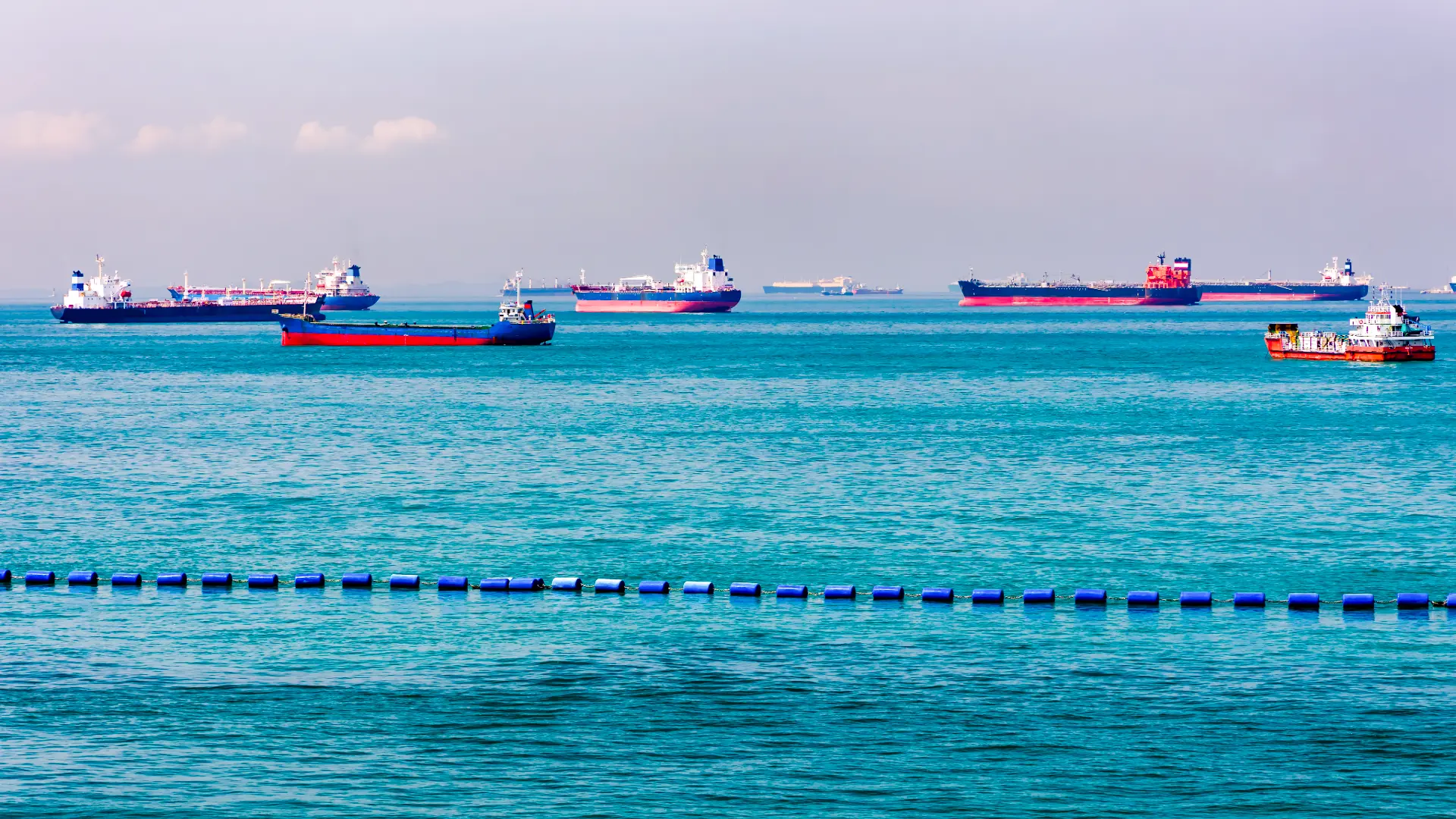
If a container ship is scheduled to sail from either Port Klang or Singapore to Turkey, its route is relatively straightforward and based on shipping timetables, transshipment time windows, Bab el-Mandeb security considerations, Suez Canal transit and insurance. Whether Ankara puts this voyage under the files of Asia, Indo-Pacific, or Middle East has almost no impact on the shipper.
This commercial itinerary reveals an area in which Türkiye’s Asia policy suffers from a blind spot. While the vision of Asia in Ankara remains firmly tied to the connections on the continent, such as Central Asia, China, railways and overland routes to Europe, Southeast Asia tends to be either examined on a country-by-country basis or considered as an interesting market at the very end of the China-centered discussion. However, the major route between Türkiye and ASEAN is a sequence of ports and sea passages across the Mediterranean, the Red Sea, and the Indian Ocean.
The Asia Anew Initiative itself is broader than this. It calls for a “holistic and sustainable” approach and includes infrastructure, transport, logistics and green energy. In public debate, however, the overland Middle Corridor attracts much of the attention. That is understandable. It matters greatly to landlocked Eurasia and to Türkiye’s links with Central Asia. But the Foreign Ministry also notes that 96 percent of the roughly 10 million containers moving between China and Europe each year travel by sea. For a relationship with Southeast Asia, maritime transport is not the alternative route. It is the main one.
None of this diminishes the value of rail. It simply means that a continental map cannot explain a relationship whose commercial life depends so heavily on shipping.
The Red Sea disruptions that began in late 2023 made the point rather brutally. UN Trade and Development states maritime transport carries more than 80 percent of world trade by volume. As ships were diverted around the Cape of Good Hope, voyage times, fuel use and insurance premiums rose, while transshipment hubs including Singapore and major Mediterranean ports became more congested. Turkish and Southeast Asian firms were not watching a crisis on a neighbouring route. Their cargo was on that route.
Energy travels the same geography. The US Energy Information Administration recognizes Hormuz and Malacca as two of the most critical strategic choke points for oil shipments by volume. Bab el-Mandeb and Suez are gateways connecting the flow of energy from the Gulf region to the Mediterranean Sea, and Malacca is the gateway connecting many of these flows to markets in East and Southeast Asia. Typically, Türkiye talks about energy security in terms of suppliers, pipelines, LNG terminals, and domestic production. All of these things are critical, but so too is tanker transportation, ports, safe passage and insurability for energy supplies that are imported into Türkiye by sea. Several Southeast Asian countries are vulnerable to the same problem but on the receiving end of the journey.
Ports are where the broad map gets down to practical issues. The competitive edge of Turkish ports is determined by what happened at earlier hubs like Singapore, Port Klang, and Tanjung Pelepas. A missed connection, a delayed document check, or a few extra days at the terminal means the profit in a shipping transaction has evaporated long before the ship ever arrives in Türkiye.
A realistic port agenda for Türkiye-ASEAN relations needs to begin with such everyday issues. Can advance information about customs clearances be provided before the ship arrives? Do electronic documents facilitate a successful transit through both ports? Can small exporters efficiently consolidate their shipments, and can perishable cargo be moved from one terminal to another without losing days? Such matters will not provide a dramatic photograph of the summit, but they frequently make or break the success of an international supply chain. Governments can’t announce a commercially viable direct shipping lane into existence; but they can create the conditions for such a shipping line to become viable.
The same sea lanes also carry traffic that is invisible from the quayside. Submarine cables carry more than 99 per cent of international data traffic, and the International Telecommunication Union describes the Red Sea as a key cable route where access constraints can delay repairs. A damaged cable may attract less attention than a blocked canal, but banks, cloud services, manufacturers and government agencies notice the disruption quickly.
This gives Türkiye and ASEAN a concrete digital agenda. ASEAN’s digital cooperation priorities already include intra-ASEAN submarine-cable resilience, network security and protection of critical information infrastructure. Cooperation with Türkiye could focus on the security of landing stations, geographic redundancy, faster repair permits and information-sharing during outages. Most cables are privately owned, so governments will not manage the networks themselves. They can still remove regulatory delays and make it easier for repair vessels to work.
This economic dependence also has a security dimension. In Ankara, maritime security is often discussed through naval deployments or defence exports. That is understandable, but too narrow. The ASEAN Outlook on the Indo-Pacific treats maritime cooperation more broadly, covering safety, freedom of navigation, piracy and transnational crime, connectivity, marine pollution and technical capacity.
The coastguard, port authority, and rescue services should not be ignored, along with the navy. Türkiye can provide services for capacity building in search and rescue, humanitarian assistance and disaster relief, cooperation in port security, pollution control and selected maritime surveillance operations. This list of potential cooperation is especially valuable since these activities do not force Southeast Asian states to choose their geopolitical side.
Turkey’s “Indian Ocean strategy” with an impressive brand will hardly get much resonance in ASEAN. There are no shortages of concepts of the Indo-Pacific in Southeast Asia provided by other states. Being helpful instead of showing off is the best way for the country to be of use – assisting ports in their operation, providing technical know-how and helping regional institutions without making each project an announcement of great-power competition.
There are also countries in-between which bilateral policies tend to ignore. Countries of the Gulf, the Horn of Africa, East Africa and South Asia contain energy producers, transshipment facilities, cable stations, repair harbors and possible alternatives when the traditional route is no longer functional. Practical initiatives will most likely be triangular in nature instead of Turkish-ASEAN.
Ankara’s bureaucracy is another problem. The first department deals with Southeast Asia, while the second works in the Gulf or East Africa; energy officials monitor the suppliers, the transport officials work with the ports, trade officials focus on the customs, and the digital agencies on the cables. Ships do not recognize such divisions.
There is no need to create another large institution. The coordination machinery already established under Asia Anew could maintain a small Indian Ocean working track that includes both public agencies and commercial operators. Its first task should be to map Türkiye’s real exposure along the route: the ports and transshipment hubs it relies on, the location of major cable paths, energy flows and the insurance risks that arise at each chokepoint.
The same entity might select two or three port-to-port projects from ASEAN partners and set realistic goals on issues like electronic documentation, cold chains, data exchange or greener transport. Disruption scenarios must also be carried out regularly. If Suez and Bab el-Mandeb are closed for a month, what options remain commercially viable? Who pays for those extra costs, and what cargo should come first? Resilience is about having another route open, but not necessarily any route.
Türkiye considers itself to be a bridge connecting continents. This is a good image for its connection with Southeast Asia, except that it focuses more on the land and its two extremes while neglecting the waters filled with container vessels, oil tankers, cables and institutions between them.
Those vessels and cables are already connecting Türkiye and Southeast Asia. Only policy is yet to catch up with that reality.