From strategic reserves to green ammonia, a changing geopolitical landscape is reshaping bilateral cooperation.
Less than a year after Prime Minister Modi travelled to Tokyo to meet then Prime Minister Ishiba, the strategic environment looks markedly different. The conflict in West Asia is exposing vulnerabilities in global energy supply chains and maritime trade routes. Renewed trade tensions have accelerated the search for trusted industrial partners, and rising electricity demand, driven by artificial intelligence and advanced manufacturing, has further broadened the definition of energy security.
Against this backdrop, Japanese Prime Minister Takaichi’s visit to New Delhi for the 16th Annual Summit underscored the need to reassess the India-Japan energy partnership in a rapidly evolving geopolitical landscape.
That shift is already reflected in the language emerging from the summit. Recognising their shared status as major energy-importing economies exposed to volatility in global energy markets, both Prime Ministers underscored the need to deepen cooperation on energy security and welcomed the adoption of a Joint Statement on Energy Resilience.
Alongside advancing the clean energy transition, they agreed to strengthen cooperation on strategic petroleum reserves (SPR) by exchanging best practices and collaborating on strategic stockpiling ecosystems, while also supporting stronger coordination among major energy consuming countries. The energy-resilience statement goes further, identifying cooperation on arrangements with producing countries, emergency response and market stabilisation, as well as joint opportunities across the maritime energy-transport value chain.
These discussions are expected to further develop under the India–Japan Joint Working Group on Petroleum and Natural Gas, operating under the India–Japan Energy Dialogue. Whether this eventually evolves into strategic stockpiling arrangements similar to those India has pursued with producers such as the UAE remains to be seen.
Japan is also one of the world’s largest LNG importers, with decades of expertise in procurement, shipping, storage and regasification. As India revisits questions about gas security and long-term LNG resilience, there is considerable scope for bilateral cooperation that extends beyond supplies to include LNG logistics, carrier technology, infrastructure planning and market development.
As tensions around the Strait of Hormuz remain highly uncertain, both India and Japan are grappling with the broader consequences of supply uncertainty. For import-dependent Asian economies, energy security increasingly encompasses diversified fuel sources, strategic reserves, resilient electricity networks and robust industrial supply chains.
Nearly two decades after the India-Japan Energy Dialogue was established in 2006, cooperation has expanded through the India-Japan Clean Energy Partnership, sectoral working groups, the Joint Crediting Mechanism, and, more recently, the Joint Vision for the Next Decade announced during Modi’s 2025 visit to Tokyo. These institutions were largely conceived to advance the energy transition. Today’s geopolitical landscape, however, demands that they also strengthen energy resilience, industrial competitiveness and supply-chain security.
One of the clearest manifestations of this shift is Japan’s newly proposed Partnership on Wide Energy and Resources Resilience (POWERR Asia). Initially conceived in response to recent regional energy disruptions, the initiative appears to be evolving into a broader platform for regional energy diplomacy, with India as its first major recipient.
As part of its inaugural project, JBIC, Sumitomo Mitsui Banking Corporation and other Japanese lenders will provide up to ¥80 billion (~US$492 million) in syndicated financing for Power Grid Corporation of India’s high-voltage direct current transmission project linking the renewable energy hub at Khavda in Gujarat with Nagpur in Maharashtra. The project also builds on Hitachi Energy’s earlier transmission equipment contracts in India, and will strengthen India’s ability to integrate renewable electricity while improving overall grid resilience.
Japan will also provide insurance through Nippon Export and Investment Insurance (NEXI) for a US$600 million equivalent, covering bank-financed loans, including those from MUFG Bank, to support Reliance Industries’ battery and solar manufacturing ambitions. The financing is intended to support procurement, manufacturing and research, while strengthening supply-chain cooperation between the two countries and reducing dependence on concentrated manufacturing bases.
The evolution is equally visible in clean fuels. In 2024, ACME Group signed an offtake agreement with Japan’s IHI Corporation to supply 0.4 million metric tons of green ammonia annually from its proposed facility in Odisha; since then, the project has progressed considerably. In 2026, the ACME-IHI joint venture was certified under Japan’s price-gap support scheme, with 228,000 tonnes of annual production eligible for support over 25 years starting September 2030, while another 177,000 tonnes has been earmarked under Japan’s Long-Term Decarbonised Power Source Auction.
Identified Japanese off-takers now include Hokkaido Electric Power, Sumitomo Chemical, Mitsubishi Gas Chemical and UBE, and total investment is expected to reach about ¥480 billion ($3 billion). Mitsubishi Gas Chemical has also signed a 10-year agreement with ACME to procure 100 ktpa of green methanol from ACME’s Paradip facility in Odisha. This illustrates how India will be positioning itself as a future supplier within Japan’s clean energy ecosystem.
The summit also added a more decentralised dimension to the partnership through the India–Japan Biogas Initiative, under which the two countries will support the establishment of 1,000 biogas and organic-fertiliser plants across India. The initiative links clean energy with rural livelihoods and resource recovery, demonstrating that energy resilience need not be confined to large-scale infrastructure.
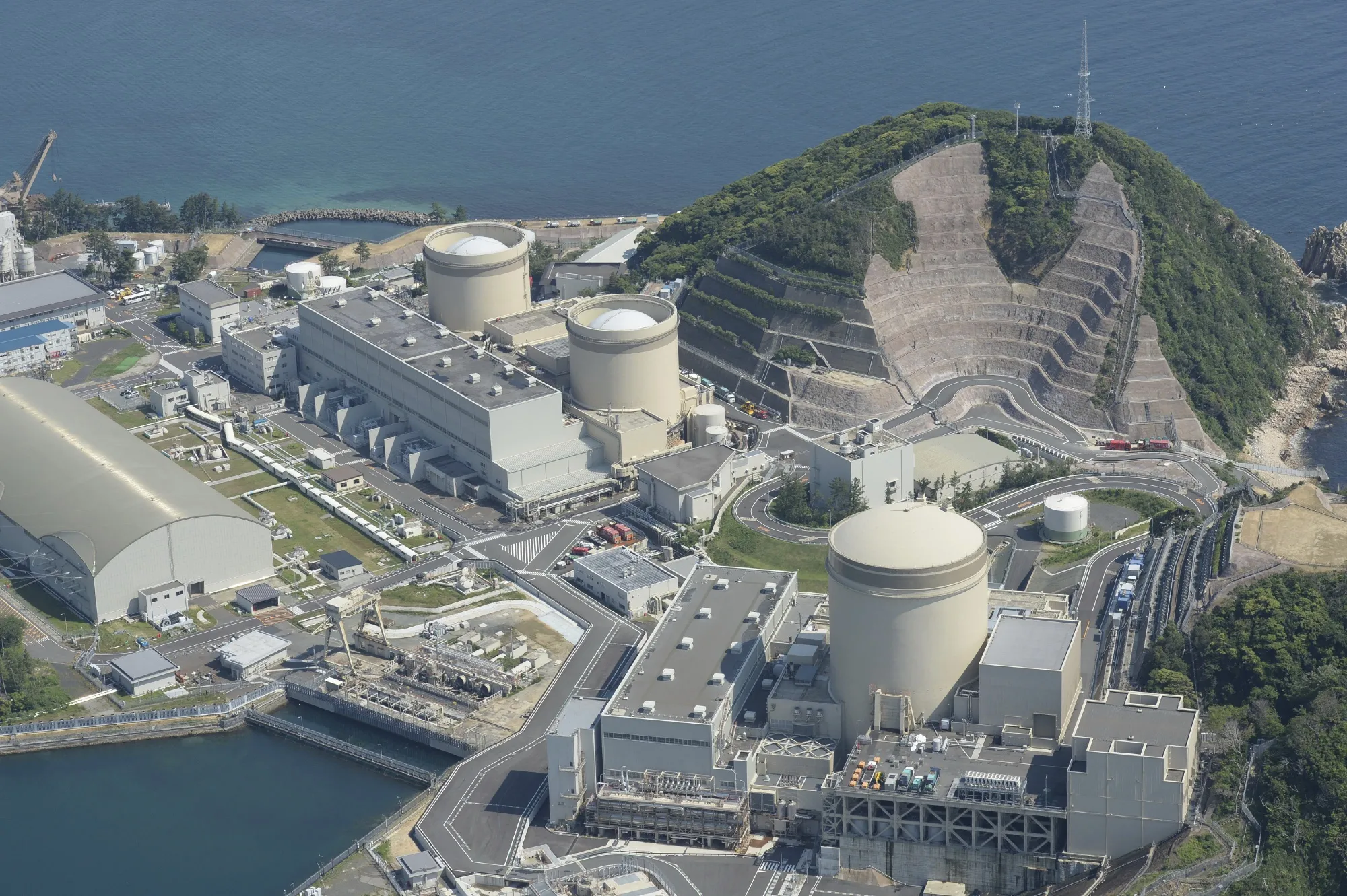
One area that received comparatively less attention at the summit was nuclear energy. As India seeks to expand its clean firm power capacity, Japan’s strengths extend beyond reactor technology to include decades of expertise in nuclear regulation, operational safety, emergency preparedness and fuel-cycle governance. With New Delhi pursuing reforms to facilitate greater private participation in the nuclear sector, closer cooperation on safety standards, workforce training and regulatory best practices could become an important pillar of long-term energy security.
India offers Japan scale, manufacturing potential and one of the world’s fastest-growing energy markets. Japan, in turn, offers patient capital, advanced technologies, engineering expertise and institutional experience. Together, the two countries are increasingly well positioned to build resilient industrial ecosystems rather than simply finance individual projects.
This broader evolution comes at an opportune moment. As Japan marks a decade of its Free and Open Indo-Pacific vision and India and Japan approach the 75th anniversary of diplomatic relations, both countries are seeking to strengthen their positions within an increasingly uncertain geopolitical landscape. Energy is becoming one of the defining intersections between economic growth, climate ambition, industrial competitiveness and regional stability.
From strategic petroleum reserves and resilient electricity grids to clean fuels, India and Japan have an opportunity to demonstrate how two major Asian energy-importing economies can jointly shape a more secure, sustainable and resilient energy future.