Does any Indian city breathe, live, and prosper like a human body? It has a heart, too, and a head and lungs. More than a city made of brick and concrete, it is a living metaphor.
Welcome to City Beautiful, Chandigarh—a North Indian architectural marvel and the world’s most celebrated example of urban planning, inspired by the human body.
“With a heart at its centre and every part performing a vital function, Chandigarh, the joint capital of Punjab and Haryana, is a vital twin engine of India’s economy. Enhancing its looks and environment are the snow-laden peaks of the Dhauladhar mountain ranges in Himachal Pradesh,” says Vijay Uppal, a noted architect who has served in Himachal Pradesh’s top post.
Rising from the shadows of the 1947 Partition trauma, Chandigarh was envisioned as more than a new city, different from traditional Indian cities. It was independent India’s template for modern, orderly, and innovative urban development—the future of Indian urbanisation. Today, Chandigarh proudly holds the essence of its planners, a scientific temper, and a distinct identity of modernism.
Spread over an area of 114 square kilometers, Chandigarh is a Union Territory directly administered by the Indian government while simultaneously serving as the capital of Punjab and Haryana, which were born out of erstwhile Punjab’s bifurcation on November 1, 1966, under the Punjab Reorganisation Act, 1966.
While Punjab, with its several major cities like Amritsar, Ludhiana, Jalandhar, Pathankot, and Patiala, was carved out as a predominantly Punjabi-speaking state, Haryana also became a separate Hindi-speaking state. Himachal Pradesh, because of its geographical location and hills, got some of the hilly states of Punjab to become a full-fledged state.
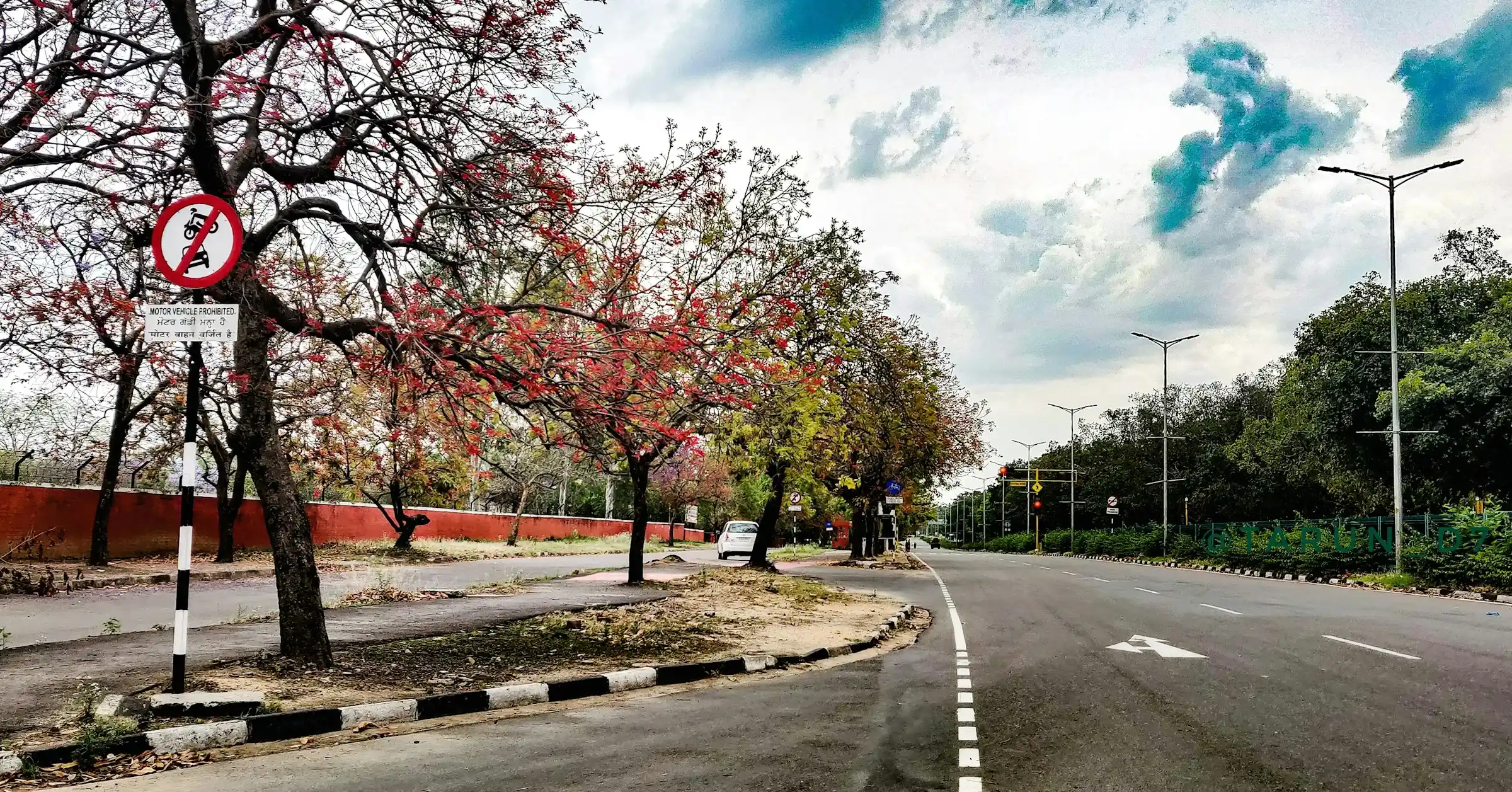
Since then, Chandigarh has consistently witnessed development and expansion of the urban infrastructure and, in its own distinctive framework, stayed as one of India’s cleanest, greenest, and best-planned urban centres. With wide tree-lined roads, extensive green belts, more than 1,600 parks, and the picturesque Sukhna Lake, it takes pride in its high quality of life and environmental sustainability.
The citizens are conscious of Chandigarh’s unique urban benchmarks and never shy away from opposing the central government’s attempts to alter its physical or administrative/constitutional status, whether building flyways or a constitutional setup to appoint the lieutenant governor to administer the Union Territory.
On November 22, 2025, a tentative parliamentary bulletin listed the proposal for the Constitution (131st Amendment) Bill, 2025, which sought to bring Chandigarh under Article 240 of the Constitution. The move sparked an immediate political backlash across Punjab. The Union Ministry of Home Affairs (MHA) was quick to issue a clarification stating that no final decision had been taken to alter Chandigarh’s existing governance.
“The centre has no intention of introducing the bill in the winter session of Parliament,” the MHA said.
Alongside this, when the UT administration tried to push its controversial proposal to build a Rs 247 cr flyover at Tribune Chowk, near the industrial area, the project received stiff opposition as it apparently violated the Statutory Master Plan 2031 of Chandigarh and also the basic aesthetics framework of the city.
The Punjab and Haryana High Court last month permanently halted the flyovers plan, holding that the project threatens the city’s original “sun, space, and verdure” aesthetics. The court, instead, agreed to allow the Chandigarh administration to construct an underpass at the Industrial Area/Sector 30 roundabout as a measure to decongest traffic.
In the same order, the High Court restrained the UT administration from cutting any tree standing in and around the Industrial Area roundabout to maintain the green, unique, and heritage status of Chandigarh.
Chandigarh city was initially planned by American architect and planner Albert Mayer. The project was later entrusted to the legendary Swiss-French architect Le Corbusier after Mayer’s associate, Matthew Nowicki, died in an air crash in 1950. Le Corbusier redesigned the city, introducing a grid of self-contained sectors, each measuring roughly 800 by 1,200 meters.
“These sectors were brilliantly planned and designed as independent units with schools, markets, parks, and public spaces within walking distance. The city was divided into distinct zones for administration, commerce, education, industry, and recreation, reflecting modernist planning principles,” says Chandigarh social activist Mohit Sharma.
Le Corbusier’s concept of Chandigarh was likened to the human body. The Capitol Complex was the head, the commercial centre the heart, green spaces the lungs, the industrial area the limbs, and the road network the circulatory system.
The city has further evolved into a major administrative, educational, healthcare, and information technology hub in northern India. Prestigious institutions such as Panjab University, the Postgraduate Institute of Medical Education and Research (PGIMER) and the Punjab Engineering College attract students and professionals from across the country. It has the best healthcare infrastructure, shopping malls, corporate offices, and IT hub.
Even as Chandigarh consistently continues to develop and evolve, the city remains a contentious political issue over the territorial rights of Punjab and Haryana, with a 7.19 per cent share of Himachal Pradesh in its assets and resources.
Himachal Pradesh Chief Minister Sukhwinder Singh Sukhu, last month, also met Punjab Governor and Chandigarh Administrator Gulab Chand Kataria to reassert the state’s share of 7.19 per cent in the Union Territory under the States’ Reorganisation Act 1966.While Punjab CM Bhagwant Mann used his Republic Day address last year to demand exclusive control over Chandigarh, Haryana had quickly rejected the claim, asserting its equal right to the capital and assets.