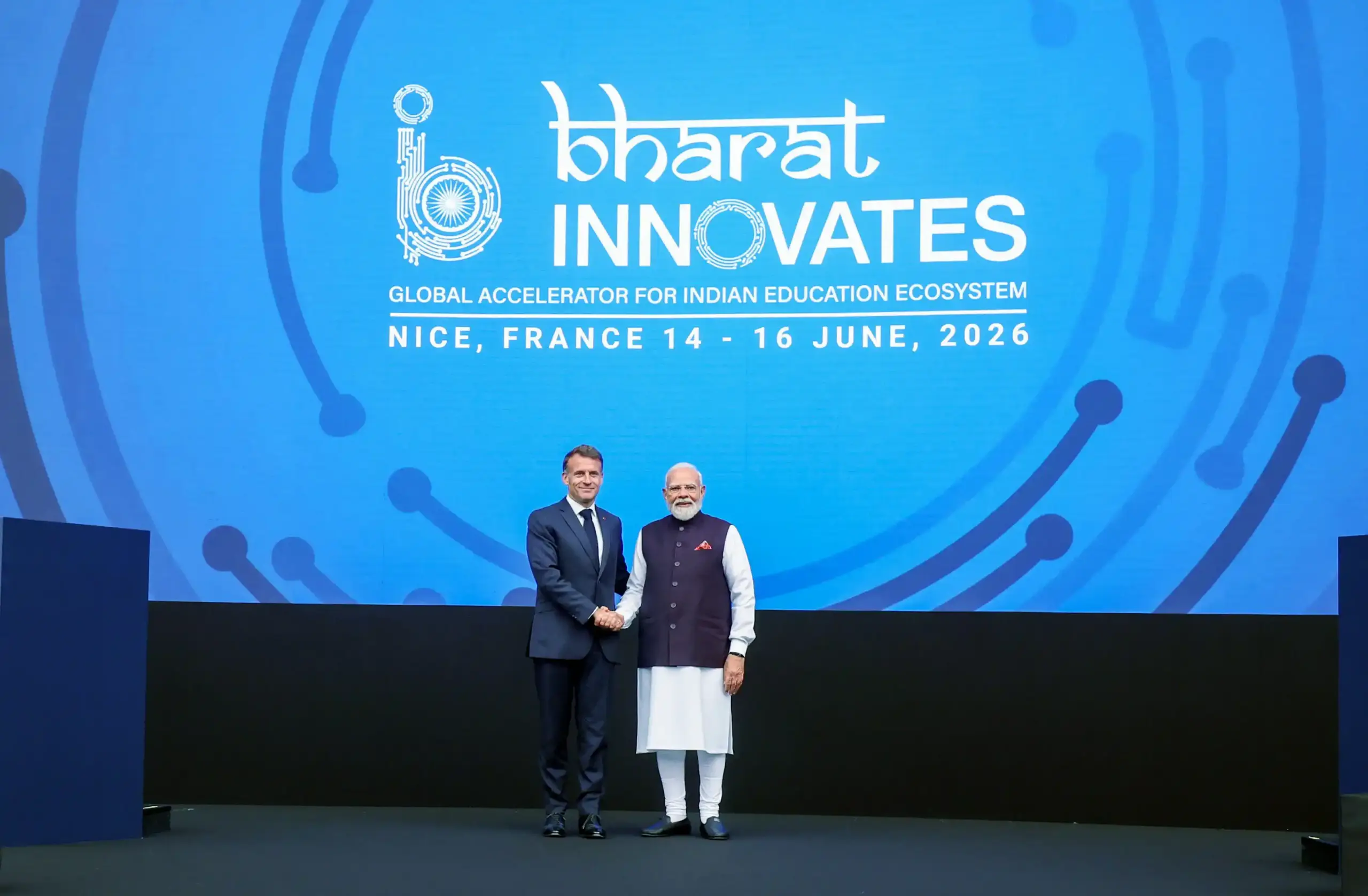
As Indian Prime Minister Narendra Modi stepped off the plane in France, the symbolism was unmistakable. In a world increasingly fractured by geopolitical rivalries and the retreat of multilateralism, India and France represent something far larger than routine diplomacy. This is not merely a state visit; it is a reaffirmation of two nations committed to strategic autonomy, democratic resilience, and the construction of a more balanced global order.
The significance begins with history. Launched in 1998, the Indo-French Strategic Partnership was India’s first-ever strategic partnership—a bold move by Paris to recognize India as a rising power when many Western nations still hesitated. Twenty-five years later, the relationship has evolved into a “Special Global Strategic Partnership,” transcending sectoral cooperation to become a comprehensive alliance for global stability. This upgrade reflects a fundamental shift: from buyer-seller dynamics to collaborative partnership in defense, technology, and security.
The strategic outcomes of this visit carry profound implications. First, defense cooperation remains the cornerstone. Following the 2023 order for 26 Rafale fighter jets and three Scorpène submarines, the two nations have deepened technology sharing between France’s Defence Procurement Agency and India’s DRDO. This is not simply about purchasing weapons; it is about building indigenous capacity. As India pursues its “Aatmanirbhar Bharat” (self-reliable India) agenda, French technology transfer enables India to reduce dependence on third countries—particularly Russia, whose reliability has crumbled since the Ukraine war.
Second, the civil nuclear energy partnership marks a transformative breakthrough. The Declaration of Intent on advanced modular reactors and small modular reactors (SMRs), coupled with new agreements enhancing cooperation, positions France as a critical partner in India’s energy transition. With India aiming to reach 500 gigawatts of non-fossil energy capacity by 2030, French nuclear technology offers a clean, reliable pathway. This is strategic in another sense: it underscores both nations’ commitment to climate action while maintaining energy independence.
Third, the Indo-Pacific dimension has become central to the partnership. France, despite its European roots, maintains a genuine presence in the Indo-Pacific with territories in the region and a naval fleet. India and France now coordinate on maintaining peace and security in this critical waterway, where China’s assertiveness threatens the balance. This alignment is significant because it bridges Europe and Asia in a shared vision of a free, open, and inclusive Indo-Pacific—countering the notion that regional security is solely the concern of nearby powers.
The technological front offers equally compelling outcomes. The India-France Declaration on Artificial Intelligence paves the way for enhanced cooperation in developing AI for human development and the global commons. With the establishment of a Centre of Digital Sciences between India’s DST and France’s INRIA, plus an ICCR India Chair on “AI, Innovation and Culture” at Université Paris-Saclay, the two nations are building intellectual infrastructure for the next generation. This is not just about cutting-edge technology; it is about shaping AI governance around human-centric values, countering the authoritarian models emerging elsewhere.
Trade and economic ties are also being elevated. The setting up of a High-level Mechanism to double bilateral trade in the next five years signals ambition beyond current levels. With expanded use of India’s Unified Payments Interface (UPI) in France and the incubation of 10 additional Indian startups at Station F, the partnership is weaving digital and entrepreneurial ecosystems together. These are the building blocks of a resilient economic alliance that can withstand global shocks.
The broader significance of this visit lies in what it represents for global governance. India and France are acting as “twin pillars of a stable, multipolar world”. Both nations advocate for reform of international institutions that no longer reflect contemporary power realities. Both resist the pressure to align with either Washington or Beijing, insisting instead on independent decision-making. This strategic autonomy is not isolationism; it is the confidence to cooperate selectively based on shared values and interests.
In an era where smaller nations are often pressured to choose sides, the Indo-French partnership offers a third path. It demonstrates that democratic nations can forge deep alliances without becoming dependent on hegemonic powers. It shows that strategic independence and international cooperation are not contradictory but complementary.
For India, France is a reliable partner that has never questioned its rise. For France, India is a counterweight to Chinese dominance and a voice for the Global South. Together, they embody a vision of world order where power is distributed, not concentrated; where multilateralism is strengthened, not abandoned; and where democracy remains a force for global good.
As Modi and Macron declare new initiatives, the world should recognize what is happening: the quiet construction of a new geopolitical architecture. This visit is not about grand speeches or photo opportunities. It is about building the infrastructure—defense, energy, technology, trade—that will define the 21st century. And in doing so, India and France are proving that strategic partnerships rooted in mutual respect and shared values can still shape the future.