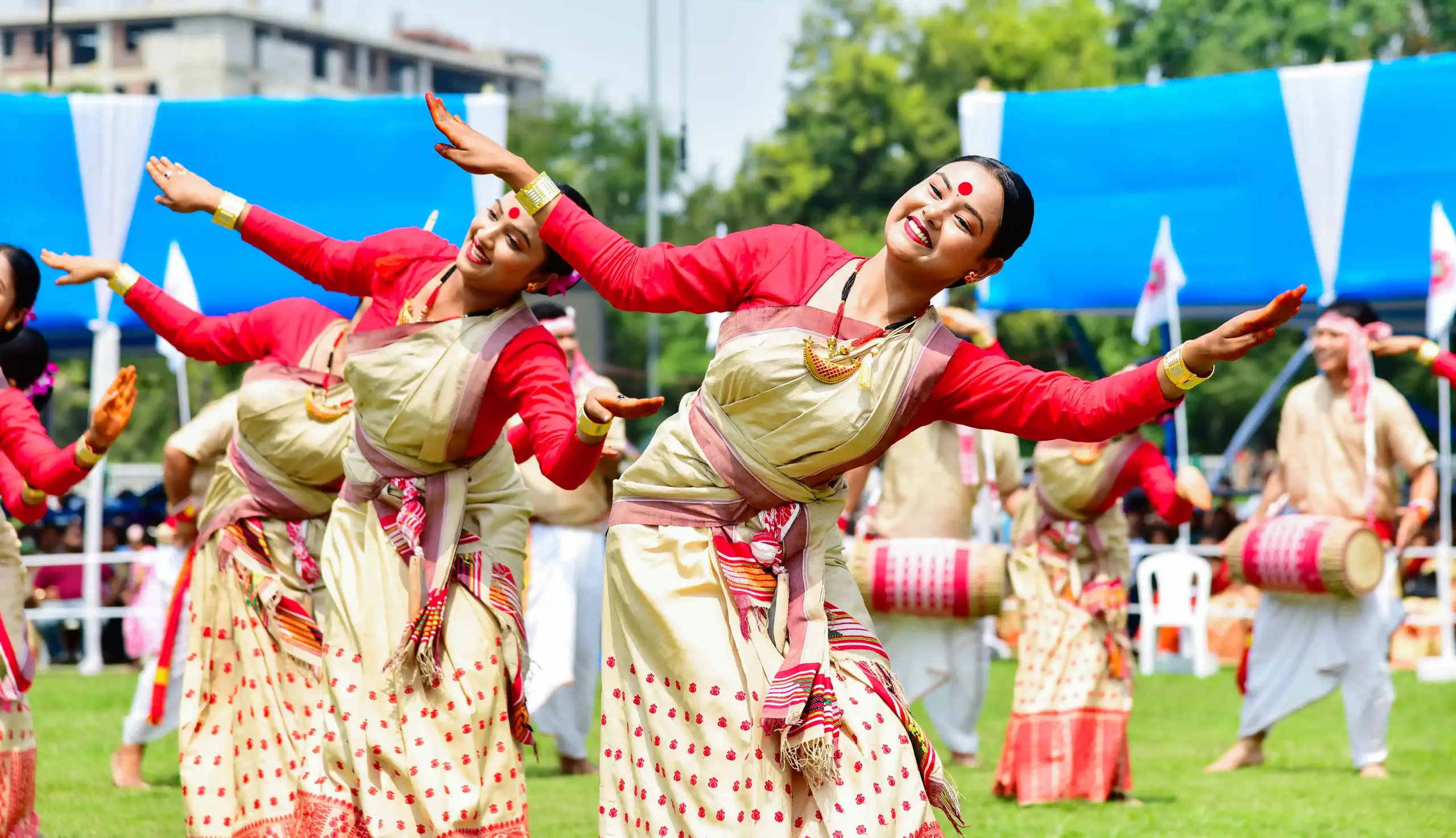
Article 1 of the Indian Constitution states, “India, that is Bharat, shall be a Union of States.” For years, Bharat has seen the co-existence of diverse communities, each with their own unique language, culture, art forms, religious beliefs and practices, etc., all sewn into one political framework, rendering credence to the adage of ‘unity in diversity’. The country is home to more than 705 officially recognized tribes. The strong repository of culture has contributed to enhancing the country’s global cultural image.
In this regard, the Northeastern region has played a prominent role. The region hosts more than 200 tribes, each with its distinctive culture, contributing to the cultural richness of the country. From local festivals to eminent sports personalities, attractive tourism, culinary heritage, and performing arts, the region allows tourists to experience diversity in all its forms. These immersive cultural experiences help shape perceptions of the region and establish connectivity among diverse communities and peoples.
This article argues that Northeast functions as a critical cultural corridor in Bharat’s soft power diplomacy, where tourism, cuisine, sports, and heritage collectively function as instruments of cultural diplomacy under the broader vision of the Act East policy.
Performing Arts and Cultural Symbols in Soft Diplomacy
In the state of Assam, international tourists have engaged in the different performing arts of the state like Sattriya dance, Bihu, Bhaona (devotional theatrical performances), etc., fostering cultural connectivity by opening these art forms to the global stage. Sualkuchi, known as the ‘Manchester of Assam’, famous for Muga silk with its characteristic golden sheen, has crossed borders as ace designers such as Sanjukta Dutta have carried the golden thread of Assam to the world stage with her exquisite Muga creations, in events in Cannes and New York, transporting indigenous craft to the world at large.
Other cultural symbols of Assam like the famous hand-woven textile, ‘Gamucha’ made news when the rock band Linkin Park was greeted with the same by well-known artist of Assam, Shantanu Hazarika. Bihu dance captured global attention when it was performed by American astronaut Mike Fincke in space, signifying the global reach of Bihu. In fact, on April 14, 2023, Assam set a Guinness World Record for the largest Bihu dance performance in a single venue. From the rural areas of Assam to international platforms, the culture of the state has found increased representation and has redefined Bharat’s soft diplomacy by means of cultural visibility.
Role of Culinary Heritage
In 2009, when famous international chef Gordon Ramsay visited the Northeast to document the ‘Gordon’s Great Escape’, his interest in the traditional cuisines highlighted the soft power of the local fare and its untapped potential to redefine Bharat’s cultural diplomacy. During his visit to Nagaland and Assam, the chef collaborated with the locals to make tribal preparations like smoked boar, chicken with papaya, and regional fish curry. In fact, the chef showered abundant appreciation upon the sui generis style of cooking traditional dishes with local spices. Apart from this, local beverages like Apong, Zu, and Kiad have earned international appreciation and renown, prompting international tourists to revisit the region for a second experience.
Furthermore, Assam’s orthodox tea and local lemon (kaji nemu), Nagaland’s Akhuni (axone, a traditional fermented product made out of soyabean), Mizoram’s smoked and fermented pork delicacies, the momo and thukpa of Sikkim and Arunachal Pradesh, Ngari (fermented freshwater fish) of Manipur, and Tungtap (traditional fermented fish delicacy of the Khasi tribe) of Meghalaya and many other dishes specific to tribal communities highlight the shared fermentation culture across Northeast holding tremendous power in making rich contributions to the cultural diplomacy of Bharat.
Sports Power in Diplomacy
The Northeast is a sports powerhouse too, as athletes from the region have earned laurels for the nation in several international sporting events like the Olympics, World Championships, Asian Games, Commonwealth Games, or other international competitions. Despite limited infrastructure and geographical isolation from the so-called mainland, the region has produced talents like Mary Kom, Baichung Bhutia, Hima Das, Mirabai Chanu, and Lovelina Borgohain, deserving of the greatest acclaim. In this context, sports functions as a powerful medium of soft power, enabling athletes to represent both their regional identities and the nation on global platforms.
These athletes are cultural icons and regional representatives, playing a crucial role in soft diplomacy. Their accomplishments, apart from their personal success, bring more visibility and recognition to a region often underrepresented in the national discourse. As women athletes, the success of Mary Kom and Mirabai Chanu brought world attention to the territorially small state of Manipur. Celebrated track athlete Hima Das, popularly known as ‘Dhing Express,’ and boxing champion Lovlina Borgohain brought focus to Assam. The same can be stated for the “Sikkimese Sniper,” Baichung Bhutia, who had played a pivotal role in popularizing football in India, bringing greater visibility to the region. When these sporting champions represent the country on the global stage by means of press conferences, media interviews, social media presence, etc., they transport the culture of their respective regions, functioning as cultural intermediaries, engaging thereby in soft power diplomacy.
Ecological Sites and Tourism
In the Brahmaputra floodplains, Kaziranga National Park, a UNESCO World Heritage Site, annually hosts lakhs of domestic and international tourists for its one-horned rhinoceros, a symbol of pride for Assam. This enhances the ecological identity of the state.
Assam has the largest inhabited river island, Majuli, well-known for its satras, educational and cultural centers, imparting religious discourses to young boys on the life of Lord Krishna. Majuli masks are earning slow acclaim for their exquisite craftsmanship with a recently conferred GI (geographical indication) tag. Over the years, the island has witnessed a consistent flow of international tourists.
The living roots bridge of Meghalaya represents indigenous ecological innovation, showcasing the fusion of human settlement with natural systems. The Hornbill festival of Nagaland, Tsomgo Lake and monasteries in Sikkim, Tawang monastery in Arunachal Pradesh and Loktak lake of Manipur are prime examples of the ‘Brand Northeast’, showcasing the power of the state in tourism diplomacy.
Nature and human life have an intricate connection in the region, which is reflected in these sites along with the arts and crafts, cultural practices, and culinary habits of the locals of the region. Values like sustainability, community engagement, and social cohesion can be seen in the everyday life of the people. Tourism and, for that matter, every other form of culture, including sports, reshapes perceptions, offering opportunities for rebuilding bonds and ensuring greater people-to-people exchange.
Act East Policy and Increasing Connectivity
The policies of the ruling government have been instrumental in placing the strategically located Northeastern region at the center stage. The Act East vision, a key foreign policy of the Central Government, has allowed for the transition of the Northeast from a gateway to the frontier of Southeast Asia. With major projects and initiatives like India-Myanmar-Thailand Trilateral Highway, Kaladan Multi-Modal Transit Transport Project, connecting Kolkata, Myanmar and Mizoram, border haats (cross-border markets); the global profile of the region aims to be upgraded as a point of cultural, infrastructural and economic connectivity between India and the ASEAN countries. The Act East Policy not only enhances trade and strategic cooperation but also strengthens Bharat’s cultural diplomacy by repositioning the Northeast as a bridge between South and Southeast Asia. This dual role of geographical connectivity and cultural connectivity contributes significantly to India’s soft power diplomacy.
Thus, the Northeastern region has made immense contributions in the cultural diplomacy of Bharat as it projects the region’s unique cultural landscape, strengthens the country’s soft power, and fosters dialogue between communities within and beyond national borders.