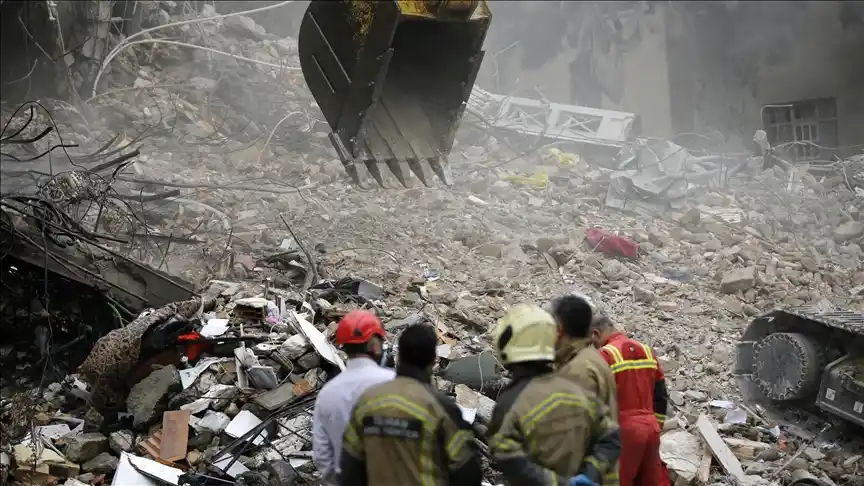
Recent US strikes on Iranian missile sites and strategic installations have injected fresh uncertainty into already fragile negotiations between Washington and Tehran. For months, the United States had relied on threats, military signalling, and coercive rhetoric to pressure Iran into accepting a deal. Yet the credibility of those threats was demonstrated when Washington followed through with targeted strikes within days of issuing warnings.
The timing of these operations is significant. Coming at a delicate stage in negotiations, the strikes have further complicated prospects for a diplomatic breakthrough. More importantly, they may represent a broader strategic shift: an attempt by the United States to strengthen its bargaining position while avoiding a larger regional conflict.
Three Strategic Dilemmas
Despite months of negotiations, the prospects for an agreement remain uncertain.
The first challenge is the deal’s underlying fragility. Iran has maintained a firm position on two core issues: its nuclear programme and control over the Strait of Hormuz. The United States, meanwhile, has shown little willingness to make major concessions, particularly on sanctions relief.
The second challenge is Washington’s growing sense of urgency. The prolonged deadlock has left the United States in an uncomfortable position. It has struggled to secure its objectives while also finding it difficult to negotiate entirely from a position of strength.
The third challenge concerns perceptions of effectiveness. Reports of military and economic costs, combined with concerns that Iran may be rebuilding elements of its missile and strategic capabilities, have intensified scrutiny of US policy. At the same time, developments within the US national security establishment have fuelled debate about the direction and sustainability of Washington’s approach.
Taken together, these factors create pressure for policymakers to pursue increasingly risky options—moves that could unintentionally reignite a broader confrontation.
Exhausting Traditional Options
Coercive diplomacy has so far failed to compel Iran to accept a deal on US terms. Efforts to pressure Tehran through military signalling and restrictions affecting maritime access have also fallen short of producing decisive results.
The resulting stalemate has implications beyond the negotiating table. Continued uncertainty surrounding the Strait of Hormuz has heightened concerns about energy security and global markets, particularly across Asia.
As a result, Washington appears to be recalibrating its strategy. Rather than relying solely on diplomacy or economic pressure, it is increasingly signalling that the costs of continued resistance could rise while simultaneously preserving an avenue for eventual de-escalation.
The Logic of the “Left-of-Launch” Approach
One possible framework for understanding recent US actions is the concept of “left-of-launch” strategy.
Historically, when direct military action was considered too costly or politically risky, Washington often turned to measures designed to disrupt an adversary’s capabilities before they could be effectively employed. These efforts have ranged from sanctions and diplomatic isolation to covert actions aimed at degrading missile, cyber, or military infrastructure.
The broader objective has been to remain below the threshold of full-scale war while still imposing strategic costs on an opponent.
A Sub-Kinetic Shift in the Iran Confrontation
Recent US actions suggest elements of this logic may now be shaping policy toward Iran.
After years of sanctions and diplomatic pressure, Washington appears to be combining limited military operations with broader political and economic measures. These include efforts to strengthen regional partnerships and encourage greater alignment among Middle Eastern states, potentially increasing Tehran’s strategic isolation over time.
Viewed through this lens, the recent strikes may be intended less as preparations for a wider war and more as instruments of coercive leverage. The objective would be to increase pressure on Iran while creating conditions that allow both sides to step back from escalation.
Historical precedent suggests that such managed confrontations can sometimes produce an off-ramp. The cycle of escalation and de-escalation that followed the 2020 killing of Major General Qasem Soleimani demonstrated how both sides could engage in limited retaliatory actions while ultimately avoiding a broader conflict.
A similar dynamic may now be emerging, with carefully calibrated actions designed to signal resolve without crossing the threshold into full-scale war.
The Deal Conundrum
Despite these efforts, the fundamental obstacles to an agreement remain unresolved.
For Iran, the nuclear issue and the Strait of Hormuz remain central concerns. For the United States, preventing Iran from advancing toward a nuclear weapons capability remains a core objective.
Washington therefore faces a difficult choice. It can continue pursuing a strategy of “escalation control through strength,” using limited military pressure to shape negotiations and create an eventual exit strategy. Alternatively, it can prioritise securing a diplomatic agreement, even if that requires compromises that have so far proven politically difficult.
Ultimately, the success of either path will depend not only on US decision-making but also on Tehran’s response. If neither side is prepared to adjust its position, the risk remains that efforts to manage escalation could instead trigger a renewed cycle of confrontation—placing both a negotiated settlement and a stable exit strategy in jeopardy.