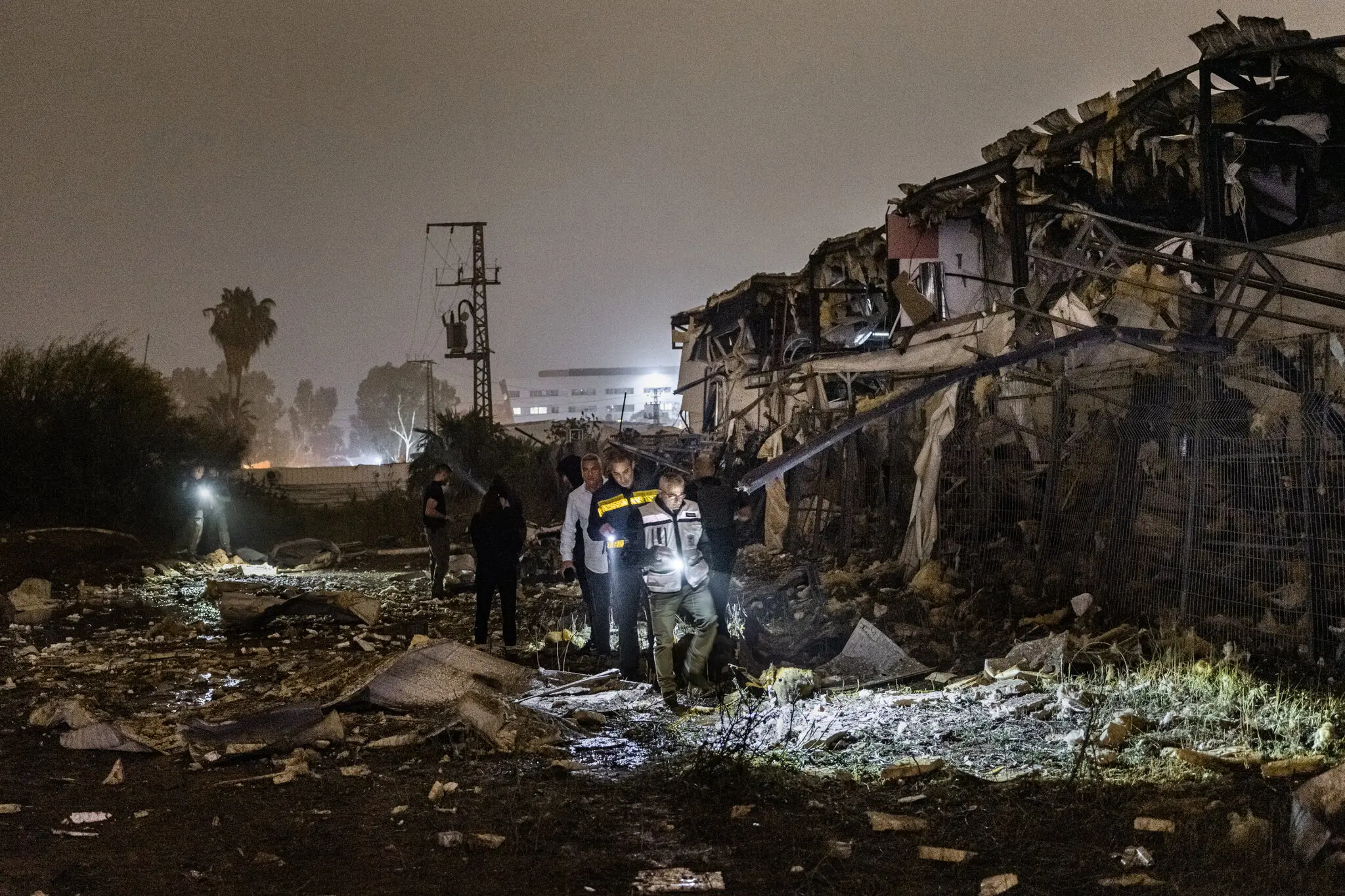
The trajectory and eventual outcome of the ongoing Iran-Israel-United States conflict cannot be understood through the actions in the conflict theatres alone. Rather, it hinges on a set of interconnected strategic, political, and societal variables. Various factors, such as leadership survival, internal cohesion, military effectiveness, nuclear, regional escalation, and political scenario, collectively shape the direction of the conflict along with its outcome. A comprehensive assessment of these dimensions shows whether the strategic indeterminate military dynamic will depend on factors far beyond immediate tactical accomplishments.
In the ongoing West Asian conflict, the targeted killing of senior Iranian leadership has undeniably disrupted command hierarchies. In the case of Iran, succession mechanisms remain intact, with new political figures filling the vacuum. This suggests that while the coordinated strikes by the United States and Israel degraded coordination in the short term, they were unable to derail the political process to lead to systemic collapse. Instead, visibly, the leadership resilience has reinforced ideological rigidity, prolonging conflict rather than hastening its resolution. So, the inherent question to ask is whether this escalation was able to fragment the structure sufficiently to undermine regime coherence—an outcome that remains unlikely at present.
Further, the external military pressure did not automatically translate into an internal uprising. Even though the pre-war unrest and protests indicated underlying discontent, it once again demonstrated that warlike conditions often generate a “rally around the flag” effect. Iranian narratives portraying the United States as an external aggressor have been reinforced, eventually strengthening the nationalist sentiment, complicating assumptions that military pressure would catalyse regime change. So, it is clear that the durability of the regime depends less on external military damage and more on whether the internal legitimacy of the regime collapses.
Another question is whether the military operation was able to achieve the desired strategic objectives. The United States and Israel, through their missile and drone strikes, have inflicted significant damage on Iranian military infrastructure, including airpower, naval assets, and missile capabilities. However, there remains a gap between tactical success and strategic victory. Iranian retaliatory capabilities have clearly demonstrated that Iran retains sufficient capacity to sustain conflict. Furthermore, the conflict is likely to develop into a prolonged war of attrition rather than a rapid campaign. Missile strikes have targeted nuclear infrastructure; however, the central challenge lies in securing or neutralising fissile material. This creates a paradox, as military action intended to restrain nuclear proliferation may instead accelerate it by weakening monitoring mechanisms and encouraging covert weaponisation. Consequently, the conflict may lead to a more opaque and dangerous nuclear environment rather than resolving the underlying proliferation risk.
Another challenge is Iran’s alleged network of allied non-state actors and its capacity to project this influence beyond its borders. The geography of conflict has already expanded with Iran’s retaliatory actions targeting multiple countries and maritime routes. Disruptions to critical chokepoints such as the Strait of Hormuz underscore the global implications of regional escalation. Moreover, the involvement of proxy groups introduces a multi-front dynamic that can further complicate the scenario to bring this conflict to an end. Even if direct hostilities between states diminish, proxy warfare could persist resulting in much wider instability across the West Asian region.
In the current ongoing conflict, the aim was to reduce Iran’s military capabilities, regional influence and proliferation of nuclear weapons in the region. But regime change was never formally articulated as a policy objective. This ambiguity creates strategic unease. This could lead to diminishing returns and political fatigue amongst regional and external actors. The outcome of the conflict is not determined solely by battlefield metrics but by the interaction of military, political, and societal dynamics. Leadership resilience, domestic cohesion, and the adaptability of Iranian institutions clearly indicate that the collapse of regime as anticipated by the United States and Israel seems unlikely. At the same time, the inability to fully offset the nuclear risks or prevent regional escalation indicates that even a militarily successful campaign may fail in terms of achieving its strategic objectives.
The broader implication is that the conflict may evolve into a prolonged phase of managed confrontation rather than a decisive conclusion. Military operations may continue to degrade Iranian capabilities incrementally. However, the lack of clear political framework for conflict termination any such degradation risks will not be successful. Meanwhile, Iran’s capacity for asymmetric retaliation, through asymmetric means ensures that the costs of conflict will extend beyond the immediate geography of conflict. In this context, the key challenge is not merely “how this conflict will end,” but whether this conflict will end at all in a conventional sense. The interplay ambiguous political objectives suggests that the conflict may evolve into a new and a more persistent low-intensity confrontation. Such an outcome would result in broader patterns in contemporary warfare, where conflicts produce enduring zones of instability. The survival of the Iranian regime, the resilience of its society, the limits of military power, the persistence of nuclear risks, the dynamics of regional escalation, and the absence of a clear agenda collectively indicate a protracted and complex strategic landscape. In this context, the most plausible outcome is not resolution, but transformation where the current phase of high-intensity conflict gives way to a sustained period of strategic contestation across multiple domains.
The views expressed are of the author and do not represent the institution.