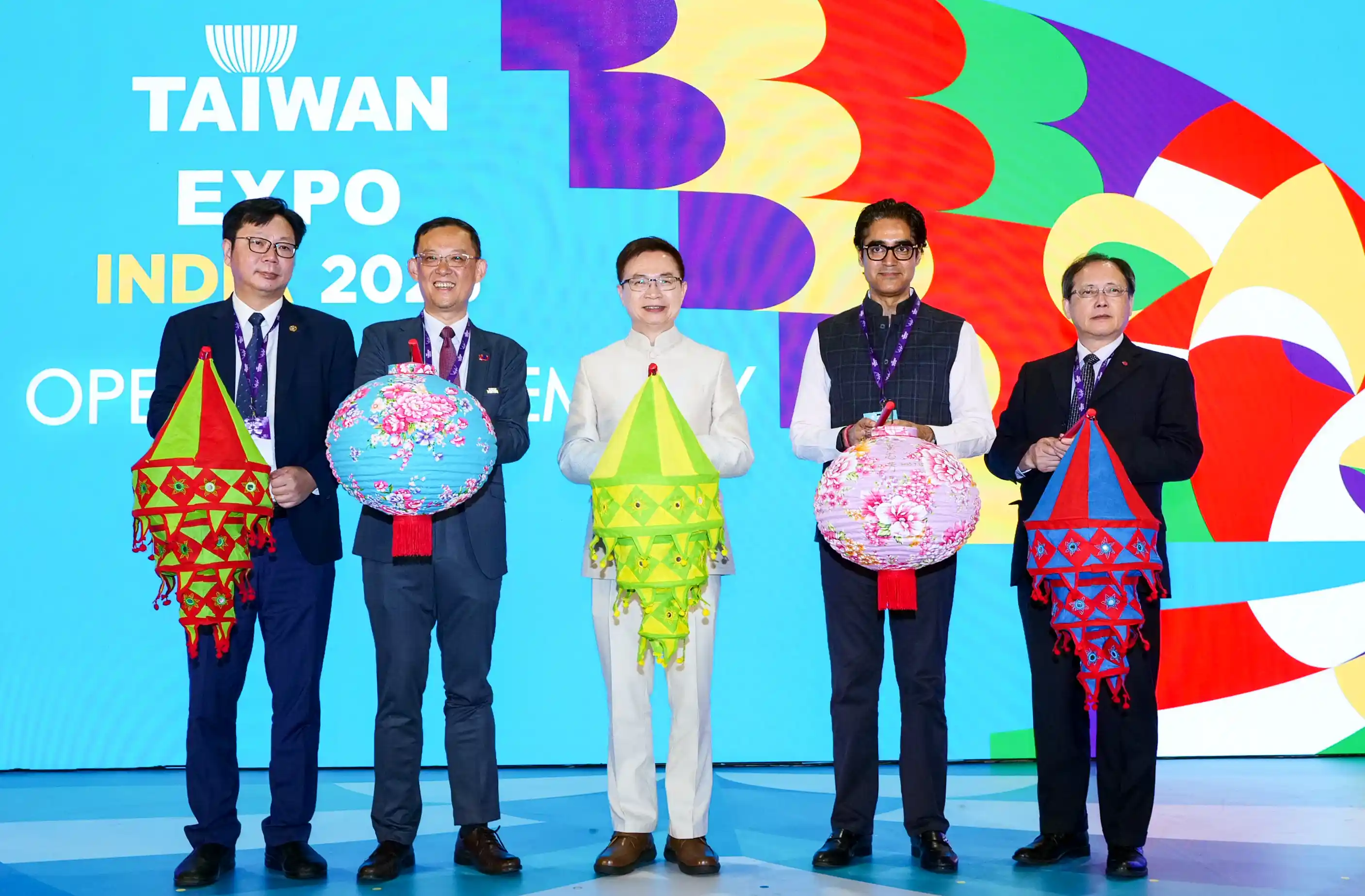
Amid the intensifying geopolitical contestation across the Indo-Pacific, India’s foreign policy has pivoted toward diversified alignments that transcend conventional alliances. The India-Taiwan strategic partnership, constrained by the absence of formal diplomatic recognition due to China’s One China policy, has evolved into a robust, multifaceted framework of cooperation. Spanning technological innovation, supply-chain fortification, economic interdependence, labor mobility, and substantive dialogues on regional security, this relationship exemplifies calibrated realpolitik. As China’s expansionist posture escalates—marked by intensified People’s Liberation Army (PLA) activities in the Taiwan Strait and South China Sea—this partnership gains paramount importance for restoring strategic equilibrium in a volatile region.
India’s Act East Policy and Taiwan’s New Southbound Policy converge to foster this unofficial yet deepening bond. Recent developments, such as the structured bilateral dialogues formalized in early 2026, signal a maturing partnership that prioritizes resilience over confrontation. With bilateral trade doubling in recent years and investments pouring into critical sectors, both nations are hedging against overdependence on mainland China while advancing shared interests in a multipolar order.
Technological Convergence as a Strategic Imperative
The technological domain forms the bedrock of India-Taiwan collaboration, harnessing Taiwan’s semiconductor supremacy to address India’s manufacturing gaps. Taiwan Semiconductor Manufacturing Company (TSMC), commanding over 60% of global foundry capacity, aligns seamlessly with India’s “Make in India” initiative and the Semicon India Programme. The 2023 India-Taiwan Industrial Collaboration Partnership paved the way for investments exceeding $1.5 billion from Foxconn in Tamil Nadu and Karnataka, generating 50,000 jobs and reducing electronics imports from China by 15%.
This momentum accelerated in 2025-2026. Tata Electronics partnered with Taiwan’s Powerchip Semiconductor Manufacturing Corp (PSMC) to establish a 12-inch wafer fabrication facility in Gujarat, marking India’s entry into advanced chip production. Similarly, HCL-Foxconn’s joint venture in Uttar Pradesh focuses on display driver chips, bolstering domestic capabilities amid global supply disruptions. Indian officials’ participation in SEMICON Taiwan 2025 underscored commitment, with high-level delegations promoting bilateral tech ties and exploring AI and quantum computing synergies.
The Taiwan-India Semiconductor Alliance, formalized in 2024, has trained over 10,000 Indian engineers through programs at Taiwan’s Hsinchu Science Park. Joint research under the India-Taiwan Initiative has yielded breakthroughs in 5G architectures and edge AI applications. India’s $10 billion semiconductor incentives have lured firms like MediaTek, helping Taiwan mitigate locational risks exacerbated by the U.S. CHIPS and Science Act. These efforts not only enhance India’s self-reliance but also diversify Taiwan’s production base, creating a symbiotic shield against geopolitical coercion.
Supply-Chain Resilience and Economic Interlinkages
Supply-chain resilience anchors this partnership, directly countering vulnerabilities laid bare by COVID-19 disruptions and China’s economic coercion tactics. Bilateral trade skyrocketed 75% to a record $11.78 billion in 2024-25, up from $5.65 billion five years prior, with 2025 projections nearing $12 billion and forecasts of $15 billion by 2030. Taiwan’s Formosa Plastics pledged $2 billion for petrochemical projects in Gujarat, while Delta Electronics expanded India’s solar infrastructure, aligning with green energy goals.
The Production Linked Incentive (PLI) scheme has localized production through partnerships like Tata-Yageo for electronics components and AUO for displays. The 2025 Supply Chain Cooperation Memorandum introduced AI-driven disruption-forecasting protocols, enabling predictive resilience. In critical minerals, Taiwan aids India’s rare earth processing, challenging China’s 80% global dominance and securing inputs for EVs and renewables.
A landmark 2026 development is the Talented Labour Agreement between the Taipei Economic and Cultural Center and Mizoram’s government, facilitating skilled Taiwanese workforce mobility to India. This addresses labor shortages in high-tech sectors while allowing Taiwan to tap India’s demographic dividend. Taiwanese FDI hit $4 billion in 2025, spanning electric vehicles, biotechnology, and renewables, reinforced by the annual India-Taiwan Economic Dialogue. These interlinkages reduce bilateral vulnerabilities, fostering economic security in an era of deglobalization.
Regional Dynamics, Maritime Security, and Strategic Stability
Indo-Pacific regional dynamics elevate this partnership to geostrategic heights, with maritime security as a focal point. Taiwan’s vulnerabilities in the Taiwan Strait mirror India’s challenges in the Malacca Strait, both threatened by PLA gray-zone tactics—including over 1,700 sorties in 2025. The 2024 India-Taiwan Maritime Dialogue launched joint coast guard maneuvers in the Andaman Sea, enhancing domain awareness against anti-access/area-denial (A2/AD) strategies.
Cooperation now includes hydrographic data-sharing, unmanned surface vessel (USV) trials, and capacity-building for littoral operations, fortifying chokepoint security amid South China Sea escalations. These initiatives counter Beijing’s salami-slicing while upholding freedom of navigation, a linchpin of regional stability. India’s 2025 Indo-Pacific Security White Paper echoes Taiwan’s UNCLOS advocacy, directly challenging China’s nine-dash line claims.
Covert infrastructure support, including Taiwan’s $500 million aid for Andaman naval bases, boosts maritime interoperability for hybrid threat responses. Emerging talks on submarine production collaboration—leveraging Taiwan’s expertise and India’s shipyards—signal deeper defense ties without formal alliances. People-to-people links flourished, with 200,000 Taiwanese visitors in 2025 fostering cultural affinities and soft power. This multidimensional engagement stabilizes the Indo-Pacific, aligning with Quad and ASEAN frameworks.
Prospective Trajectories
Challenges persist: India’s regulatory bottlenecks hinder FDI absorption, Taiwan’s domestic politics add uncertainty, and U.S.-China frictions risk spillover effects. Yet, opportunities gleam brightly. The WTO’s deferral of an ICT import duties dispute to April 2026 supports ongoing talks, while 2026 Free Trade Agreement (FTA) negotiations eye $50 billion in trade volume.
This partnership embodies multipolar prudence, propelling India’s Atmanirbhar Bharat and Taiwan’s diversification beyond China. By privileging resilience over confrontation, India-Taiwan collaboration offers a blueprint for Indo-Pacific stability, navigating great-power rivalry with agility and foresight.