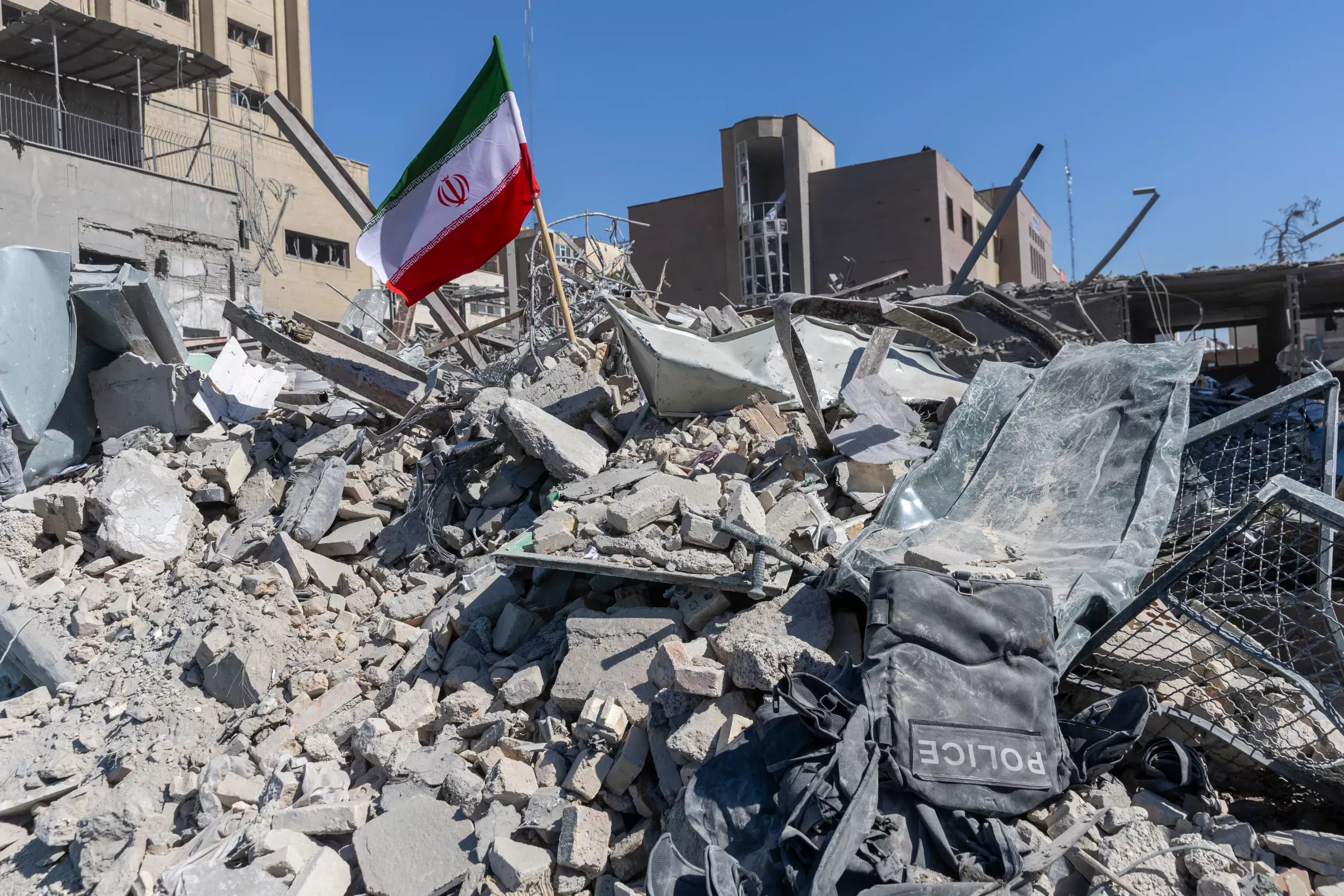
As the US-Iran war enters its 13th day, there are no strong visible signs of disengagement or exiting from the conflict; both sides seem to be following a risky escalation strategy aimed at escalating to a peak, forcing de-escalation phenomena. However, even these escalatory tactics are failing to impose caution on both sides as Iran is ensuring its survivability despite facing severe blows at one end and on the other hand maintaining sustainable power to retaliate and counter strike US and Israel strategic positions to further destabilise the region and inflict economic pain.
The Escalatory Tactics
The common strategy for finding an exit through superior power is to dominate and establish superiority over the enemy, forcing the enemy to sit at the table and negotiate. The risky gamble begins with full escalation of the conflict to a level where the enemy can’t sustain it, and its will to fight is exhausted. This escalatory tactic has been the US’s key exit strategy whenever it is stuck in the conflict.
Sledgehammer tactics and gaming the escalation ladder to dominate had led to successful, honourable exits from conflict for the US. In the Iraq war, when the US toppled Saddam’s regime and a power vacuum was soon filled by sectarian tensions, culminating in sectarian violence, the US was stuck in that violence. By 2006, the US was desperately seeking an exit, and the Bush administration, instead of pursuing a negotiating approach, chose the hard way, escalating to dominate and stabilise the exit.
The strategy, which was earlier focused on rapid and hasty withdrawal and negotiations, turned into a calibrated offensive campaign, pumping more force and backing one sect against the other in the case of Iraq, where the Sunni were backed by the US against the Shia militants, which led to Anbar Awakening, which drove Al-Qaeda and other hardliners out of Iraq and created a space for the US’s responsible exit. Though this awakening facilitated the rise of ISIS in later years, tactically, it was a success.
Similarly, in the Bosnian War in 1995, when peacekeeping missions and negotiations with Serbs seemed to be going nowhere, US-NATO switched to offensive measures by launching a sustained and massive air campaign against the Serbs. Similarly, the US backed the Croats to launch ground operations to further dominate and recapture areas from the Serbs. This organised offensive operation and sudden escalation of the conflict by the US and NATO forced the Serbs to sit at the table for negotiations that led to the Dayton Accords, which ended the war. However, these escalatory tactics backfired when the US misread the ground realities, and the exits seemed like a forever-war scenario. The most notable failure was the US’s Vietnam War, where Americans launched a massive war and air campaign to protect their sphere of influence from the Soviet communist influence, which was gradually increasing its footprint in Southeast Asia. The US’s Operation Linebacker and Rolling Thunder aimed towards delivering a shock and awe effect on the Vietnamese people by launching massive bombardment, even chemical bombs.
Along with air operations, the US adopted a madman approach by threatening to use nuclear weapons as well. But such massive sledgehammering against Vietnam didn’t break the will of people in North Vietnam as they saw conflict as a struggle of national survival, independence, and identity, and therefore the massive attrition campaign didn’t break their strategic will that prolonged the war, and the US was stuck in fighting a bloody battle that led to one of the biggest failures in its military and operational history.
US had clear plan in Korean war esclate the conflict through major offensive operations unify the peninsula and end the war by Christmas but as US escalated futher China entered into war in massive numbers and fought with US and UN forces that had out US in quagmire where neither US has ablity to esclalate the conflict further and achive its strategic objectives and nor take an exit as result US was stuck in fighting two year bloody, static trench war. Even in this situation, the US had misread the situation of conflict expansion and strategic possibilities on the ground.
US-Iran War: Gambling Exit
The ongoing US-Iran war again presents another case of a quagmire-like situation in the US-Iran war, where the US-Israel had some implicit strategic objective of regime change that was camouflaged in the age-old issue of Iran, which was breaking Iran’s will of nuclear stockpiling and enrichment.
However, neither the implicit objectives nor the explicit objectives seem to be on the horizon for the US, as both the US and Israel are stuck in the fog of war, where a responsible exit seems to be another strategic struggle. US-Israel initially thought that large-scale strikes with targeted strikes that will not only assassinate Iran’s Supreme Leader but also strategically erode Iran’s will to respond, which will eventually weaken Iran internally and lead to regime change, but that didn’t happen, and the US was stuck as Iran’s massive and expansionary retaliation that destabilising the region and inflicting economic pain on the US has closed an immediate exit door for the US.
The recent statement by US Secretary of War Pete Hegseth said that the US did not anticipate the exact nature of Iran’s retaliation in the Gulf, suggesting that the US misread Iran’s response and its approach to conflict management.
The plan of exit here for the US is to stage a big attack on Iran that will cause a significant setback to Iran’s strategic will and take a responsible exit by stating that the US’s strategic objective is to weaken Iran’s regime and its capability to fight. On the other hand, Iran’s exit would successfully force the US to the negotiating table by continuing sustained missile and drone strikes across the Gulf and blocking the Strait of Hormuz.
Recently, Iran has also laid out three conditions of war, which show that Iran is willing to negotiate but not on the losing side, but through strength. However, there are still larger questions that loom: whether the US’s escalation to dominate and de-escalate is really working?
Will the exit be really on fulfilled objectives, or will it be just a face-saving move by Trump? Answers to both the questions are most likely in a negative tone as the US’s escalation isn’t working that effectively and only inflicting tactical damage to Iran. The only difference is that the power and damage are high. The exit, too, would be a face-saving gamble rather than a genuinely substantive move.
In short, it would be an end that closely resonates with strategic stalemate. However, things would have been quite different if the US had reconsidered its strategic moves by revisiting its own General Powell, who envisioned a doctrine also known as the Powell doctrine that showcases a path of military engagement in conflict where the Powell doctrine says that the use of force should only be a last resort, only when it helps to achieve vital interests, and must have clear objectives with an exit strategy. But as history has shown, the US’s misreadings and quick, knee-jerk reactions to certain security and geopolitical developments have blurred the lines between a sensible strategy and one driven by power and a strategic superiority complex that always judges the enemy through strength rather than strategic foresight.