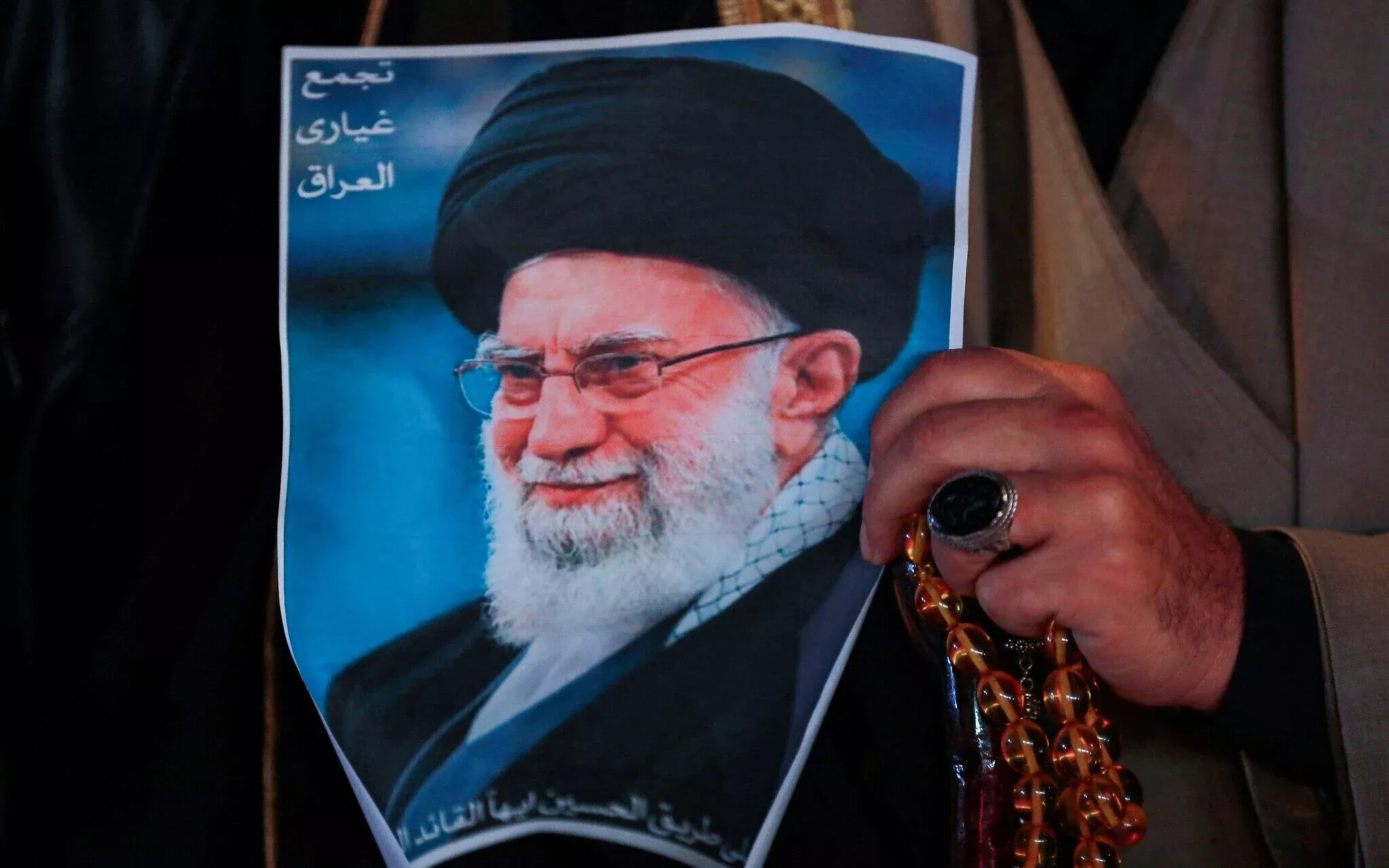
The death of Iran’s Supreme Leader Ayatollah Ali Khamenei marks a historic turning point in the political trajectory of the Islamic Republic. Since 1989, Khamenei had presided over the consolidation of clerical authority, the expansion of Iran’s regional influence, and the strengthening of a hybrid political system combining religious legitimacy with authoritarian governance. His death, reportedly during the US–Israeli military strikes amid escalating regional tensions, has opened a new phase of uncertainty regarding the future of Iran’s political system and its strategic direction. Although Iran’s constitution provides mechanisms for succession, the transition is far more complex in practice. As of the writing of this commentary, no successor has yet been formally announced. Nevertheless, in the context of regime survival—especially amid mounting pressure from the United States and Israel—the succession process carries significance for two main reasons. First, it allows Iran to uphold the precedent established in 1989, the only instance in its history when power was successfully transferred following the death of the founding Supreme Leader, Ayatollah Khomeini. Second, the process enables the regime to project institutional continuity both to domestic critics and to external adversaries, signalling resilience even while facing intense military and geopolitical pressure. Under such circumstances, it remains highly improbable that a moderate or reformist figure would assume leadership and steer Iran toward a substantially different political trajectory.
Institutional Mechanisms of Succession
Under Iran’s constitutional framework, the Supreme Leader is the highest authority in the state, exercising control over the armed forces, the judiciary, state broadcasting, and key political institutions. Upon the death of the Supreme Leader, a temporary leadership council assumes authority until a permanent successor is selected. This council typically includes the president, the head of the judiciary, and a cleric appointed by the Guardian Council. The ultimate responsibility for appointing the new leader lies with the Assembly of Experts which is an 88-member clerical body elected by the public but vetted by the Guardian Council. However, the formal constitutional process masks a more complex political reality. In practice, the selection of the Supreme Leader is shaped by negotiations among powerful political and security institutions, particularly the Islamic Revolutionary Guard Corps (IRGC), senior clerics in Qom, and influential political elites. In the current scenario, the leadership council has assumed temporary governance while clerical authorities emphasise the need for the appointment of the successor to preserve stability during current turmoil.
The Contest for Succession
Several figures have emerged as potential candidates, including hardline clerics, political elites, and members of the current establishment. The succession debate is further complicated by the death of former president Ebrahim Raisi in 2024, who had been widely viewed as a potential successor to Khamenei. His death disrupted earlier succession planning and intensified factional competition within Iran’s ruling elite. Ultimately, the next Supreme Leader may not necessarily be the most charismatic or influential figure. Instead, Iran’s political elites may prefer a candidate who can preserve the balance among competing institutions while maintaining ideological continuity.
The Expanding Role of the Revolutionary Guard
One of the most significant trends in post-Khamenei Iran may be the increasing influence of the Islamic Revolutionary Guard Corps (IRGC). Over the past three decades, the IRGC has more power as a political and economic institution supporting Iran’s strategic interests in the region. It controls major sectors of the Iranian economy and plays a central role in Iran’s regional military strategy. In the post-Khamenei era, there is a possibility to witness a shift toward a more security-dominated political system where IRGC becomes the primary power broker. In such a scenario, the Supreme Leader could gradually become a symbolic religious figure while real authority rests with military and security elites. This possibility reflects a broader transformation within the Islamic Republic. While the system was originally designed as a clerical state under the doctrine of Wilayat al-Faqih (Guardianship of the Islamic Jurist), the increasing militarisation of governance would indicate the emergence of possibly of a “praetorian republic.”
Beyond elite politics, Iran’s leadership transition occurs in a context of significant domestic challenges. Over the past decade, the country has faced repeated waves of protests driven by economic struggles, political repression, and social discontentment. Youth dissatisfaction, lack of job opportunities, and restrictions on civil liberties have intensified tensions between the state and society. In this scenario, the post-Khamenei transition could therefore become a critical moment for internal political contestation. However, despite these pressures it cannot be ruled out that the Iranian regime remains resilient.
Regional and Geopolitical Implications
In the short term, the leadership transition may lead to more assertive regional behaviour as Iranian elites attempt to demonstrate strength and deter external threats. In fact, Iran’s recent escalation strategy of missile strikes and drone operations across the region reflects an attempt to maintain deterrence despite leadership uncertainty. This behaviour is consistent with Iran’s long-standing doctrine of “forward defence,” which emphasises projecting power beyond its borders through missile capabilities, proxy networks, and asymmetric warfare. By signalling operational readiness and retaliatory capacity during a moment of internal transition, Iran’s political and military elites especially the IRGC may seek to reassure domestic population and allied groups that the strategic posture of the Islamic Republic remains integral. Such demonstrations of force also serve to deter adversaries from interpreting the leadership transition as a moment of vulnerability. At the same time, the new leadership could eventually pursue pragmatic adjustments in foreign policy, particularly if economic pressures and domestic unrest intensify. Iran’s economy has been severely constrained by international sanctions, inflation, and structural inefficiencies, all of which place significant pressure on the state’s fiscal capacity and social stability. In this context, the incoming leadership will need to gradually adopt a more calibrated regional strategy that balances deterrence with diplomatic engagement. Such an approach could include limited efforts to stabilise relations with neighbouring Gulf states, reduce the risk of direct confrontation, and explore avenues for sanctions relief through selective diplomatic initiatives. While a fundamental shift in Iran’s ideological orientation is unlikely, the post-transition leadership may prioritise strategic flexibility in order to ensure regime durability amid mounting internal and external challenges.
Possible Futures for Iran
Several broad scenarios may shape Iran’s future after the death of the Supreme Leader. The first scenario is institutional continuity, in which a new clerical leader preserves the existing political structure. This outcome would maintain the core ideology of the Islamic Republic while allowing gradual adjustments in policy. The second scenario involves increasing dominance of IRGC. In this case, the Supreme Leader might become a symbolic figure while real authority shifts toward military institutions. A third scenario is gradual political transformation, driven by internal social pressures and generational change. While unlikely in the short term, sustained economic crises and societal demands could eventually force reforms within the political system. The fourth scenario involves elite fragmentation, where rivalry among political factions weakens the coherence of the regime and creates opportunities for broader political change.
The death of Iran’s Supreme Leader marks the beginning of a new and uncertain phase in the history of the Islamic Republic. While constitutional mechanisms provide a framework for succession, the real outcome will depend on the complex interplay between clerical elites, the Revolutionary Guard, political factions, and societal pressures. The most likely outcome in the near term is a carefully managed transition designed to preserve the continuity of the regime. Yet, beneath this surface stability lie deeper structural tensions that could shape Iran’s political evolution in the years to come. The post-Khamenei era will therefore not simply be a leadership transition; it will represent a defining moment that may determine whether Iran consolidates its existing power structures or gradually evolves into a different political order.
The views expressed are of the author and does not represent that of the institution.