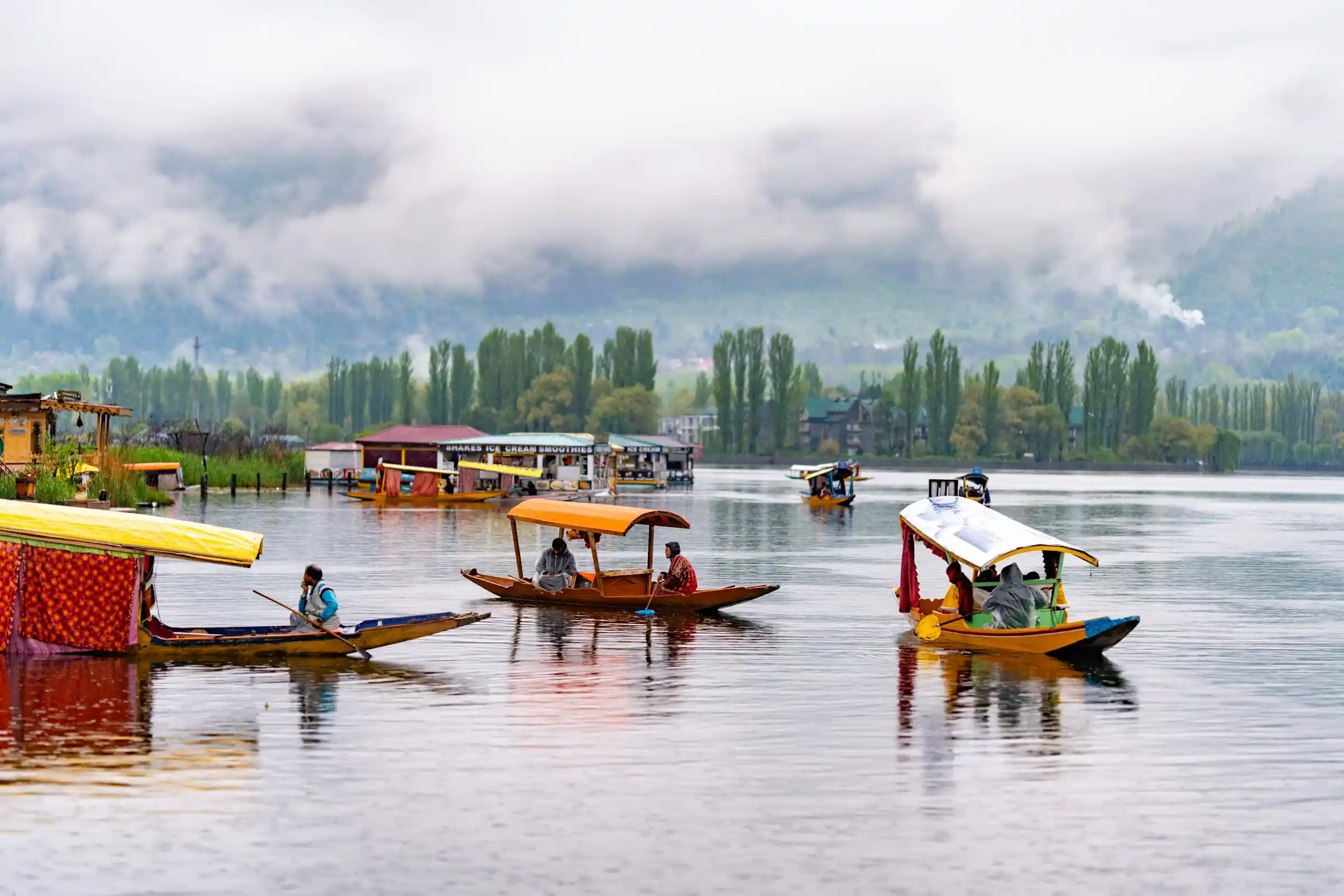
‘gar firdaus bar-rū-e-zamīñ ast
hamīñ ast o hamīñ ast o hamīñ ast
Whoever first uttered these words was surely envisioning the Jammu and Kashmir of today. A land where the world’s highest railway bridge over the Chenab and the transformative Zojila Tunnel symbolize a future of integration and prosperity. True paradise is not found in the extraction of resources and the denial of rights, but in the “Age of Development” currently uplifting the people of J&K through record-breaking tourism, world-class healthcare, and grassroots democracy.
The Line of Control (LoC) that divides Jammu & Kashmir from Pakistan-Occupied Jammu & Kashmir (PoJK) is no longer just a military frontier; it has evolved into a stark developmental fault line. For decades, the narrative surrounding this region was dominated by conflict, but a closer examination of the “Age of Development” reveals a different reality. The partition of 1947 set in motion two contrasting trajectories of governance: one under India’s democratic framework, which has increasingly prioritized inclusion and last-mile delivery, and the other under Pakistan’s centralized order, defined by extraction and stagnation. As we stand in 2026, the data presents an undeniable verdict: while Jammu & Kashmir (J&K) and Ladakh are witnessing structural transformations and economic revitalization, PoJK and Gilgit Baltistan remain caught in a cycle of political subjugation and infrastructural decay.
The Governance Divide: Democracy vs. Subjugation
The divergence in political destiny is perhaps the most fundamental driver of the economic gap. Since the abrogation of Article 370 in 2019, New Delhi has projected the reorganization of J&K and Ladakh as a measure aimed at achieving better governance. This has not been mere rhetoric; it has been followed by tangible efforts to deepen democratic participation. The successful conduct of District Development Council elections in 2020 and legislative polls in 2024 served as critical steps toward restoring representative governance. Welfare schemes such as Ayushman Bharat and PM Kisan have been extended to cover every district, ensuring that the benefits of the state reach the grassroots.
In sharp contrast, governance across the LoC remains opaque and highly centralized. The so-called “Azad Jammu and Kashmir” (AJK) continues to function under the Interim Constitution of 1974, which provides only limited self-governance, while Islamabad retains control over key areas like defense and foreign affairs. The situation in Gilgit Baltistan is even more precarious; despite the 2009 Empowerment and Self Governance Order, the region has yet to receive constitutional status in Pakistan. Decision-making authority, both fiscal and administrative, remains firmly in the hands of the Ministry of Kashmir Affairs in Islamabad, leaving local bodies with minimal autonomy. This systemic disenfranchisement has fueled widespread public discontent, with frequent protests erupting over wheat prices, electricity tariffs, and the exploitation of local natural resources.
The Infrastructure Revolution
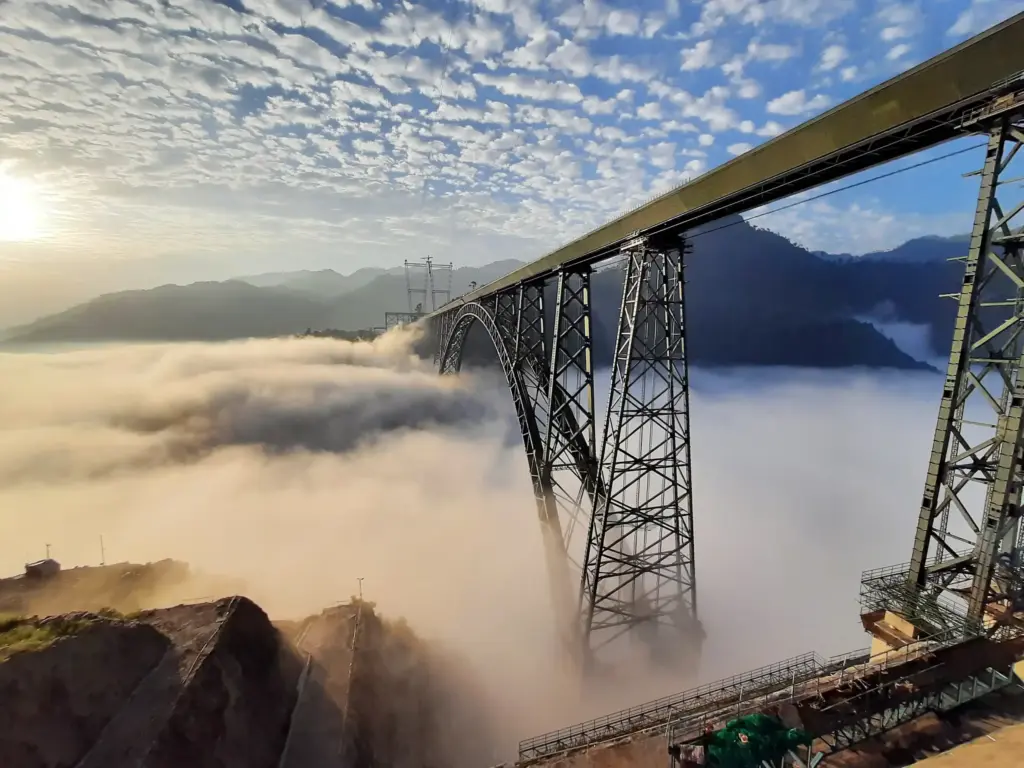
Nowhere is the disparity more visible than in the physical connectivity of the two regions. India has undertaken a “never seen before” infrastructure expansion across J&K and Ladakh, transforming once-isolated areas into hubs of development. Iconic projects like the Chenab Railway Bridge, the highest in the world, now link the Kashmir Valley with India’s national railway grid for the first time, marking a historic milestone in regional integration. Similarly, the Zojila Tunnel, situated at an altitude of nearly 11,500 feet, promises all-weather connectivity between the Valley and Ladakh, ending decades of winter isolation.
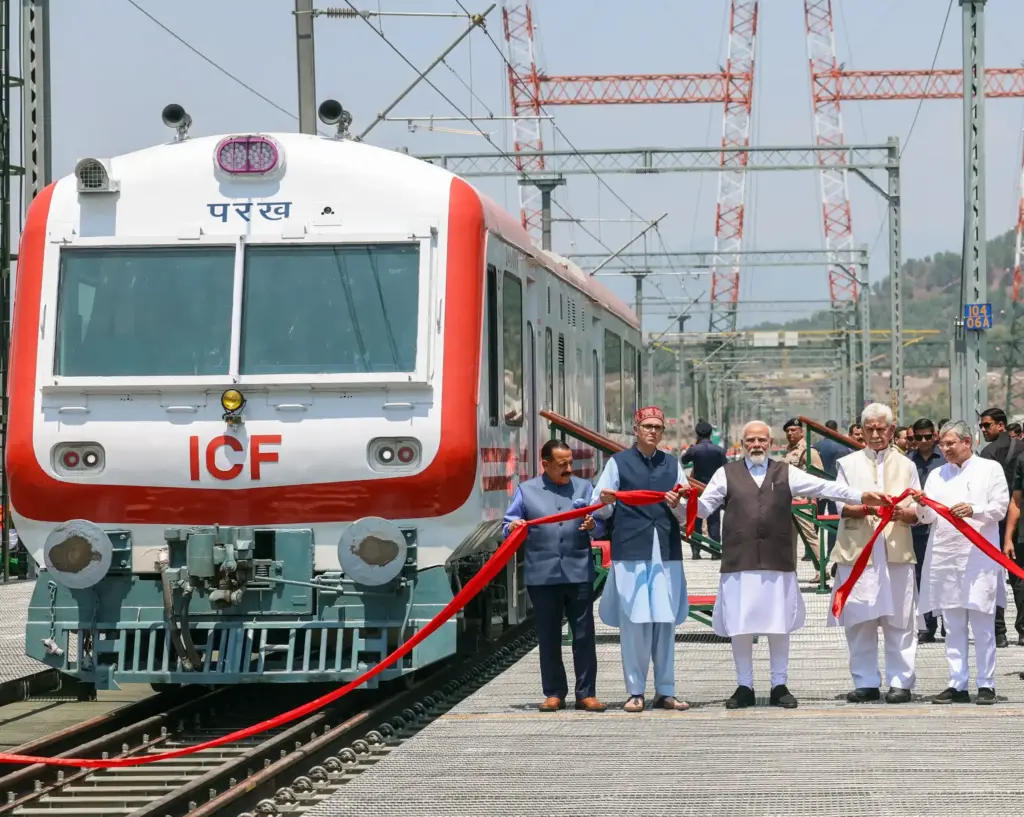
The commitment to rural mobility is equally robust. Under the Pradhan Mantri Gram Sadak Yojana (PMGSY-III), approximately 1,752 kilometers of rural roads and 66 bridges were sanctioned by mid-2025. Furthermore, the strategic Border Roads Organisation (BRO) continues to strengthen infrastructure, with 50 new projects worth ₹1,879 crore inaugurated in May 2025 alone.
Conversely, the territories under Pakistani occupation lag behind in almost every metric of connectivity. There are still no railway links in either “Azad Jammu and Kashmir” or Gilgit Baltistan. The existing road networks remain narrow and poorly maintained, with the region retaining a pure dependency on the Karakoram Highway. While this highway connects Pakistan with China, it has brought limited visible results to local communities. Crucially, major infrastructure projects, including large dams like the Diamer Bhasha, are controlled by Islamabad, with Gilgit Baltistan receiving negligible revenue from the hydropower generated. This reinforces the perception of an economic model that is extractive rather than empowering.
Economic Renaissance vs. Stagnation
The economic indicators further widen the chasm. In J&K, years of instability are being replaced by a renewed focus on livelihood recovery and sustainable investment. The region’s startup ecosystem is budding, supported by the J&K Startup Policy (2024-27), which aims to establish nearly 2,000 startups through incubation centers and funding mechanisms. Tourism, the backbone of the local economy, has experienced a massive revival. Official data records approximately 2.12 crore visitors in 2023, increasing to 2.36 crore in 2024, including more than 65,000 foreign tourists. This influx has revitalized the hospitality, handicrafts, and transport sectors, encouraging the private sector to reinvest in areas previously affected by instability.

Agriculture and horticulture also remain robust pillars of the J&K economy. Projects worth ₹307 crore were sanctioned under centrally sponsored schemes for the financial year 2025-26, supporting a horticulture sector that provides employment to nearly 23 lakh people.
On the other side of the LoC, economic opportunities are severely limited. The unemployment rate in Pakistan stands at a staggering 7.8%, with local factors in PoJK making the situation even more dire. The region serves primarily as a resource base for Pakistan’s national grid; while it contributes significantly to hydropower generation, local populations face high electricity tariffs and receive minimal royalty revenues. The “China-Pakistan Economic Corridor” (CPEC) has further deepened Islamabad’s control over local resources, allowing external corporate entities to dominate construction and mining contracts while local communities bear the environmental costs.
A striking case study compares the tourism economies of Gulmarg in J&K and the Neelum Valley in PoJK. Gulmarg has become a bustling hub of tourism driving economic change, with local artisans and youth finding ample opportunities. In contrast, the Neelum Valley has seen a 20% room rate cut by the hotel industry due to a lack of economic incentives and vision, leading to unprecedented unemployment reminiscent of the late 1990s.
Human Capital: Education and Health
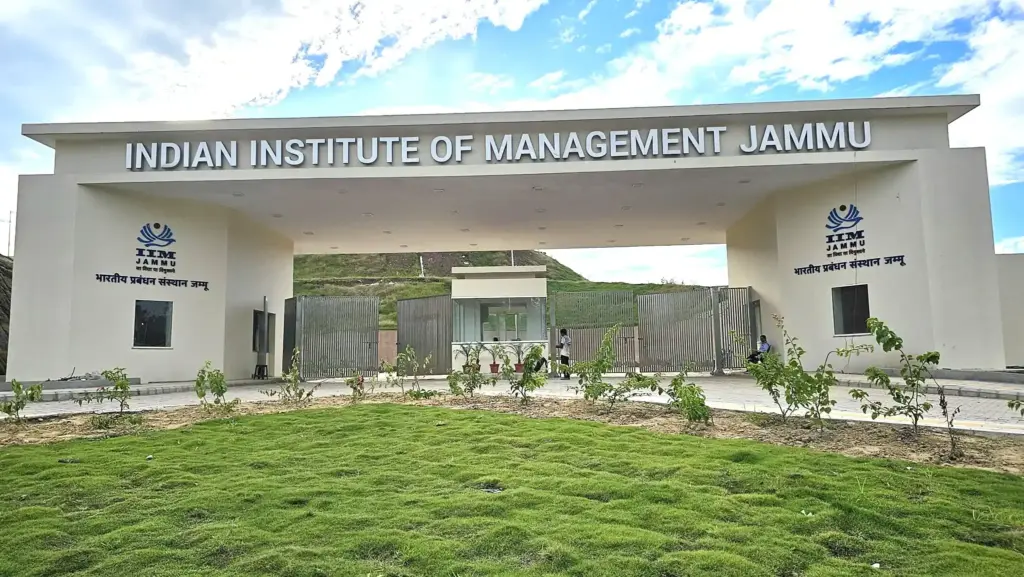
The disparity extends deeply into human development. J&K stands tall with a literacy rate of 77.3% (2025 estimates) and boasts a robust educational infrastructure that includes six institutes of national importance, such as IIT Jammu, IIM Jammu, and two AIIMS. The region hosts a total of 11 universities, ensuring quality education is accessible. In healthcare, J&K possesses 2,812 institutions, a figure that the report notes is staggeringly higher than the 1,276 healthcare institutions reported for the entirety of Pakistan as of 2021. Schemes like PM-Jan Aushadi Kendras ensure cost-efficient medication is available even in remote areas.
In PoJK, while the government claims a literacy rate of 74%, the infrastructure tells a different story. There is no consolidated data for the region, and independent assessments point to a decay in public infrastructure in far-flung areas like Kotli and Bhimber. The curriculum in these areas often prioritizes radicalization over modern education, serving the strategic interests of the Pakistani deep state rather than the developmental needs of Kashmiri youth.
The comparative analysis of J&K and PoJK offers a “broader developmental truth”: where transparency and democratic accountability exist, progress becomes self-sustaining. Where political repression and fiscal centralization prevail, decline is inevitable.
Today, the residents of J&K are beneficiaries of a governance model that balances security with prosperity, evident in the successful integration of welfare schemes and the decline of terrorism. Meanwhile, the people of PoJK and Gilgit Baltistan are left to crowdfund essential infrastructure while their natural wealth is siphoned off to Islamabad and Beijing. As India’s Kashmir trajectory soars on the wings of the “world’s highest railway bridge” and a booming startup ecosystem, the other side of the LoC remains shadowed by debt, dependence, and democratic deficit. The contrast is not merely statistical; it is a human tragedy of lost potential on one side, and a testament to the power of inclusive governance on the other.