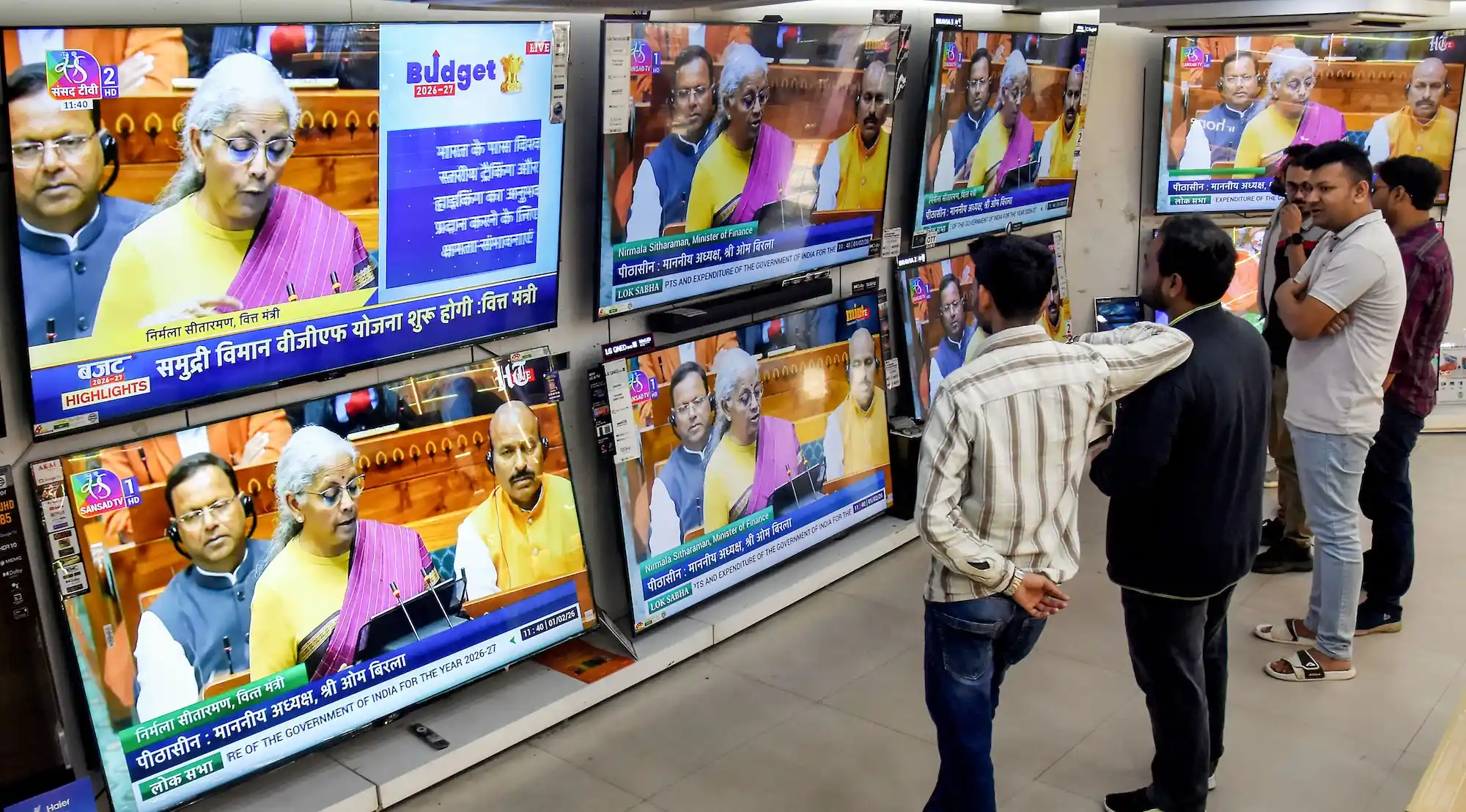
The Budget 2026-27, presented in Parliament by Union Finance Minister Nirmala Sitharaman on Sunday, has placed tourism among the top-priority sectors to boost economic activity in the hill states and support year-round employment.
“This is also a dispersal of economic growth beyond the big urban centres and oversaturated areas. The budget also emphasises creating a world-class tourism infrastructure, policy initiatives, and one of the growth engines,” says R D Nautiyal, a professor of economics at Dehradun in Uttarakhand.
The measures announced in the budget, such as the development of archaeological sites, Buddhist circuits in the Northeast, mountain and scenic trains, and eco- and astro-tourism initiatives, will help expand tourism beyond major popular destinations in the hill states.
“India will develop ecologically sustainable mountain trains and hiking trails in key hill regions”, the Union Finance Minister announced while presenting the 2026 Budget, also adding, “The government plans to introduce mountain trains in Himachal Pradesh, Uttarakhand, and Jammu & Kashmir, as well as in the Araku Valley in the Eastern Ghats.”
Special wildlife tourism trails are also planned, including turtle trails along nesting sites in Odisha, Karnataka, and Kerala, and bird-watching routes around Pulicat Lake.
“India has the potential and opportunity to offer world-class trekking and hiking experiences,” Sitharaman said.
Also, it outlines a major push for environmentally sustainable passenger transport. Seven high-speed rail corridors are planned, linking Mumbai-Pune, Pune-Varanasi, and Varanasi-Siliguri. Hyderabad, Hyderabad-Bengaluru, Hyderabad-Chennai, Chennai-Bengaluru, and Shiliguri.
These routes will cut travel times, reduce emissions, and connect major economic technology hubs.
On the infrastructure side, the budget proposed new dedicated freight corridors and the operationalisation of 20 national waterways over the next five years, reinforcing its focus on cleaner, faster, and more sustainable transport.
India is currently developing its first high-speed rail corridor, the bullet train project, between Mumbai and Ahmedabad.
Another area of focus for the finance minister was the MSME sector, which is seen as a key driver of economic growth in rural areas and is also important for job creation. The finance minister also proposed a slew of customs duty cuts to boost exports.
Sitharaman also announced the establishment of new Dedicated Freight Corridors connecting Dankuni in the East to Surat in the West.
Operationalise 20 new National Waterways (NW) over the next 5 years, starting with NW-5 in Odisha to connect mineral-rich areas of Talcher and Angul and industrial centres like Kalinga Nagar to the Ports of Paradeep and Dhamra.
The Union Budget 2026 also focused on boosting domestic manufacturing and easing the burden on the middle class. Items such as life-saving drugs, EV batteries, and leather and textile products will become cheaper, while items such as alcohol and cigarettes will become more expensive. Seventeen life-saving drugs for conditions like cancer and diabetes will be cheaper now.
Components for mobile phones and tablets are due to duty relief. Solar panels and microwave ovens will also get cheaper due to the government’s decision to exempt basic customs duty on specified parts used in their manufacture. The Tax Collected at Source (TCS) was reduced for overseas education, medical purposes, and tour packages.
Meanwhile, Himachal Pradesh Chief Minister Sukhwinder Singh Sukhu, a non-BJP-ruling state CM, has criticised the Union Budget, terming it a “betrayal” of the people of Himachal Pradesh and alleging that it has pushed the hill state into deeper financial turmoil.
He said the budget made no mention of disaster relief funds, revenue deficit grants, or any special financial package for Himachal Pradesh, despite the state having suffered significant losses from recurring natural disasters in recent years. “The Centre has completely ignored the genuine financial needs of Himachal Pradesh,” he said.
He pointed out that Himachal Pradesh found just a solitary mention in the budget, limited to the development of eco-sensitive trekking sites, which he described as “cosmetic and inadequate” in view of the state’s pressing fiscal challenges. He recalled raising the issue of creating a Rs 50,000 cr green fund for the hill states to cover the cost of ecological services, but it has not been considered. Sukhu further said the budget has overlooked the long-pending issue of expanding the rail network in Himachal Pradesh, noting that no allocations have been made for railway expansion in the state, including key projects such as the Bhanupali-Bilaspur and Baddi-Chandigarh lines. He stressed the need to increase the loan limit to 4 percent instead of the present 3 percent, but the demand has been overlooked, he remarked.
It is a sad state of affairs that, despite Himachal Pradesh being home to world-renowned tourist destinations, the budget makes no specific provisions for tourism infrastructure development. While a Buddhist Circuit has been proposed for the northeastern states, it would have been appropriate to include the Buddhist Circuit of Himachal Pradesh as well. The budget mentions the development of mountain trails, but the state’s concrete benefits will depend on the detailed guidelines yet to be issued.