
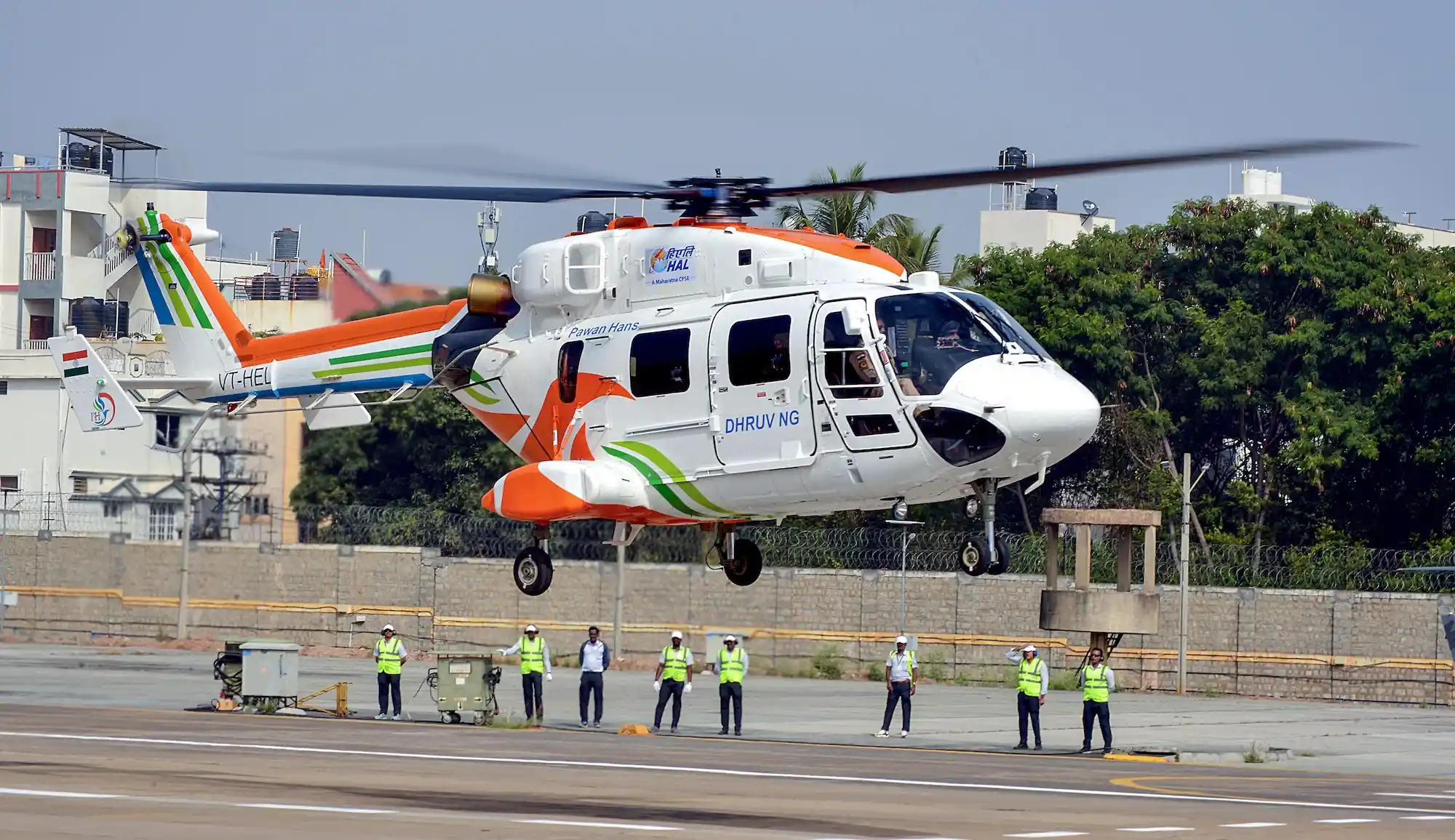
Hindustan Aeronautics Limited’s Dhruv NG, a next-generation civil multi-role helicopter, completed its successful maiden flight in Bengaluru on December 29, 2025, flagged off by Union Civil Aviation Minister Ram Mohan Naidu. This 5.5-tonne twin-engine platform, upgraded from the military Dhruv lineage, marks HAL’s strategic entry into the civil aviation market, targeting roles like VIP transport, offshore operations, air ambulances, and disaster relief.
The Dhruv NG achieves a top speed of 285 km/h, a range of 630 km, endurance up to 3 hours 40 minutes, and a service ceiling of 6,000 meters, enabling operations in India’s diverse terrains including high-altitude mountains. Powered by indigenous twin Shakti 1H1C engines with domestic maintenance support, it carries up to 14 passengers or 1,000 kg internal payload plus 1,500 kg underslung cargo. A civil-certified glass cockpit with advanced avionics and 3D synthetic vision enhances pilot situational awareness in challenging conditions like monsoons or fog.
Crashworthy seats, self-sealing fuel tanks, high-redundancy twin engines, and advanced vibration control ensure passenger comfort and reliability for medical evacuations or VIP flights. These features meet global civil standards, positioning the helicopter as a cost-effective alternative to imports with reduced downtime via HAL’s “one-stop solution” including Power-by-the-Hour logistics. HAL aims for 80% indigenization within a decade, building on the Shakti engine’s DGCA certification for indigenous production.
Strategic Significance for India
The flight symbolizes Aatmanirbhar Bharat, reducing reliance on foreign suppliers amid projections of 1,000-1,500 helicopter needs against current 300 units. It supports district-level heliports for Northeast connectivity, heli-tourism, and high-altitude logistics, while HAL eyes 25% civil revenue and exports to South/Southeast Asia and Africa. Minister Naidu highlighted faster domestic delivery over long import lead times, boosting aerospace self-reliance shared between defense and civil sectors.
Full civil certification is expected in 3-4 months, with initial deployments like eight units to Bombay High for offshore ferrying. Interest from state governments, Pawan Hans, and Border Security Force signals strong domestic uptake, alongside plans for pilot training expansion. This milestone elevates India’s rotary-wing capabilities, promising economic viability and strategic autonomy in aviation.

