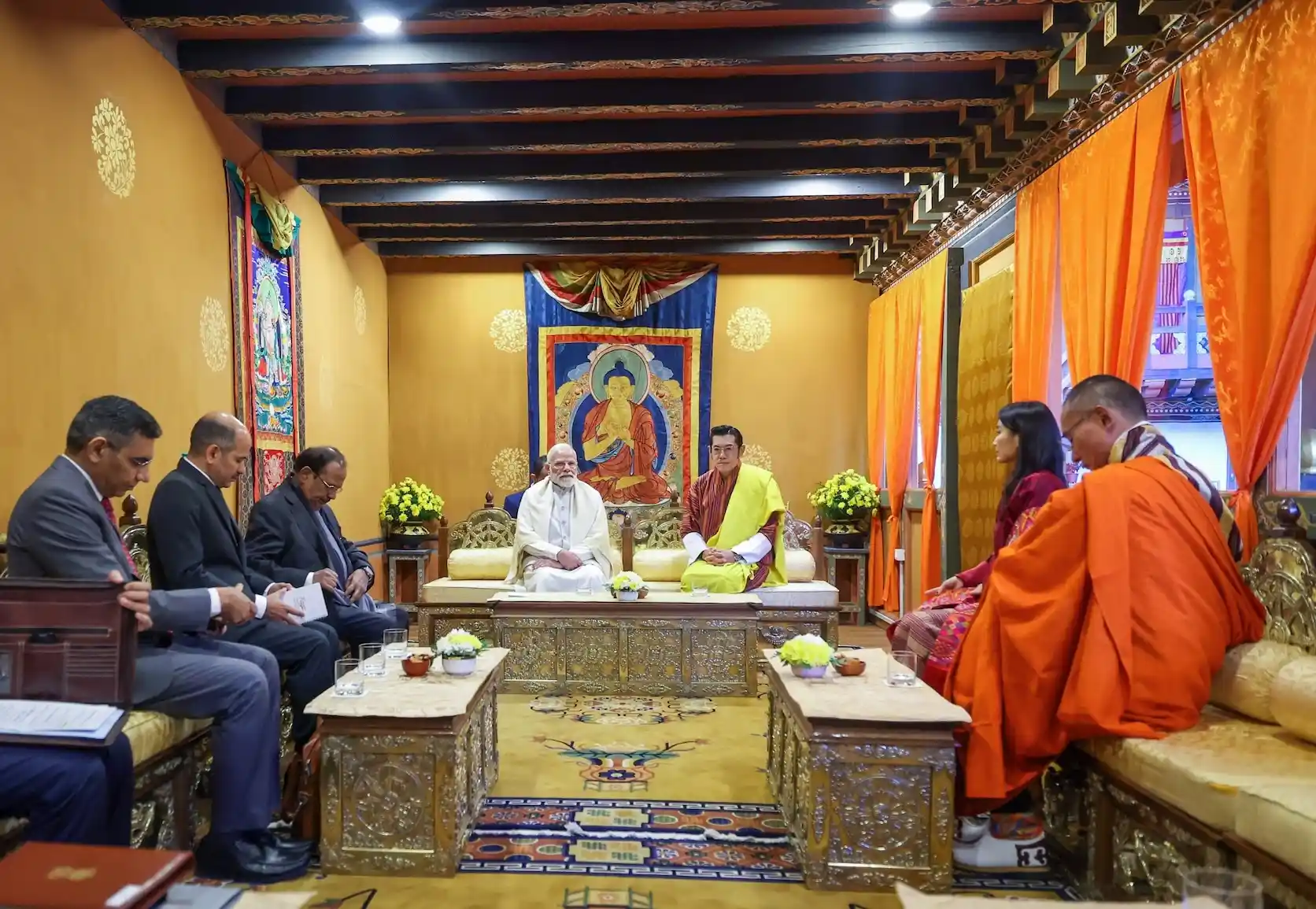
Prime Minister Narendra Modi’s visit to Bhutan on November 11–12, 2025, was more than ceremonial diplomacy. The visit elucidated how India and Bhutan are forging a partnership that surpasses transactional infrastructure development. However, beneath the geopolitical pressures of a changing region, the partnership will also have to face the persistent challenge of translating ambitious commitments into redefining growth.
Future Trends of Collaboration
The trajectory of India-Bhutan collaboration is shifting from traditional development assistance to an integrated, multi-sectoral partnership anchored on shared values. The collaboration pivots towards a sustainability-first approach with a repeated emphasis on values, emotions, peace, and progress. In addition, a youth-centric growth mindset is being highlighted through the collaborative satellite-building project between Indian and Bhutanese youth, prioritizing innovation, technology, and human capital development rather than infrastructure alone. In this light, certain key areas of cooperation emerging are:
- Energy Sector (Beyond Hydropower): The expansion beyond hydroelectric projects to solar energy partnerships. This diversification suggests both nations recognize the need for multiple renewable energy pathways and resilience against single-sector dependency.
- Digital and Financial Integration: The efforts enabling Bhutanese citizens to access UPI services in India signal a deepening of financial technology integration; a relatively new dimension.
- Youth and Innovation Ecosystems: Perhaps, one of the most crucial collaborations to curb ‘out-migration’ will be the development of a youth market for satellite-building, education, skill development, sports, and space exploration; moving cooperation beyond infrastructure into knowledge economies.
- Cultural and Spiritual Infrastructure: While rooted in civilisation bonds, Bhutanese temple projects in Rajgir and Varanasi suggest a robust cultural-spiritual architecture forming a pillar of engagement.
- Border Infrastructure and Connectivity: Railway connectivity (Gelephu-Samtse corridors) and immigration checkpoint (newly announced at Hatisar) indicate a seamless cross-border movement.
New Frontiers of Soft Power Development
The partnership is engaging customised elements as parameters for the development paradigm. India’s endorsement of Bhutan’s GNH as a globally recognized metric for defining growth and its emphasis that nation-building is not solely about GDP has created space for India-Bhutan joint advocacy at international forums (UN, G20, BRICS) for redefining prosperity beyond economic metrics. A proposed ‘GNH-aligned Development Index’ as a complementary metric to GDP could be advanced.
In addition, India’s support for expanding hydropower and solar capacity, combined with Bhutan’s global environmental recognition, positions both as climate action leaders offering alternatives to the fossil-fuel-dependent Western development model.
The Indian leadership’s participation in the Kalachakra Empowerment ceremony, one of Tibetan Buddhism’s most elaborate and spiritually significant rituals, conferred blessings aimed at enlightenment, signalling India’s development and strategic ambitions rooted in universal Buddhist principles of peace, compassion, and enlightenment.
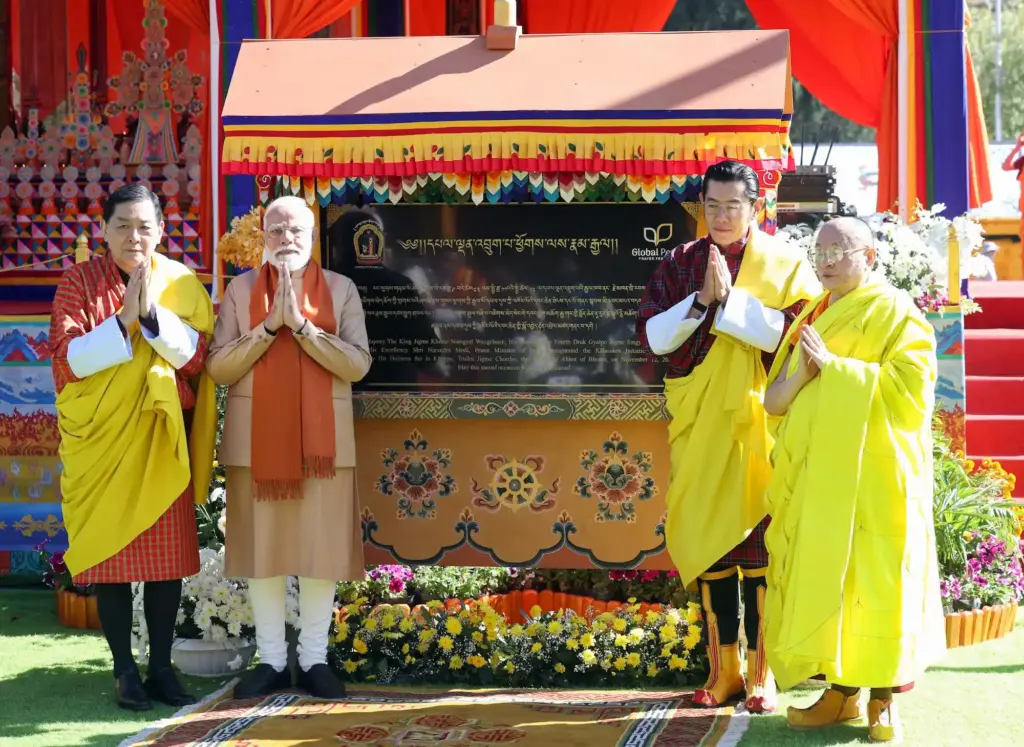
Furthermore, temples as cultural diplomacy anchors in Varanasi, Rajgir, and other Indian cities, coupled with reciprocal Bhutanese cultural institutions, represent a form of architectural soft power creating permanent, visible symbols of India-Bhutan solidarity. This will ensure sustained public engagement and emotional investment.
Viewing it from a geopolitical lens, the strengthening of India-Bhutan ties serves as a consolidation of India’s northeastern frontier security architecture. This particular partnership suggests a deliberate effort to rebrand and reinvigorate India’s Neighbourhood First policy by potentially signalling to other South Asian nations that India remains committed to partnership-based engagement rather than hegemonic domination.
Critical Assessment
PM Modi’s visit and the strategic outcomes reveal a clear intent to transform India-Bhutan relations. The ₹4,000 crore renewable energy LoC, the railway connectivity commitments, the cultural institution projects, and the institutional collaboration frameworks (renewable energy MoU, mental health cooperation, institutional linkages) provide material substance. However, concrete commitments require sustained resource deployment and continuous institutional coordination- only time will tell.
Despite the continuous support, the sustainability of this partnership depends on India maintaining a long-term commitment even as Bhutan’s strategic priorities diversify. As India–Bhutan integration deepens, both countries will need to continue ensuring that Bhutan’s foreign policy autonomy remains fully respected. While a small segment in Bhutan occasionally expresses concern about perceived asymmetries in the relationship, the broader partnership remains rooted in mutual trust, consultation, and a shared commitment to safeguarding each other’s interests.
In conclusion, the success of the partnership will continue to rely on sustained political commitment beyond the current leadership, inclusive development that benefits ordinary Bhutanese citizens, and ongoing dialogue that supports Bhutan’s sovereign decision-making — including its approach to external engagements and long-term economic diversification. Furthermore, India’s capacity to adapt its special relationship with Bhutan—one that is less paternalistic and more genuinely empowering will determine the resilience of this unique alliance in an evolving South Asian landscape.