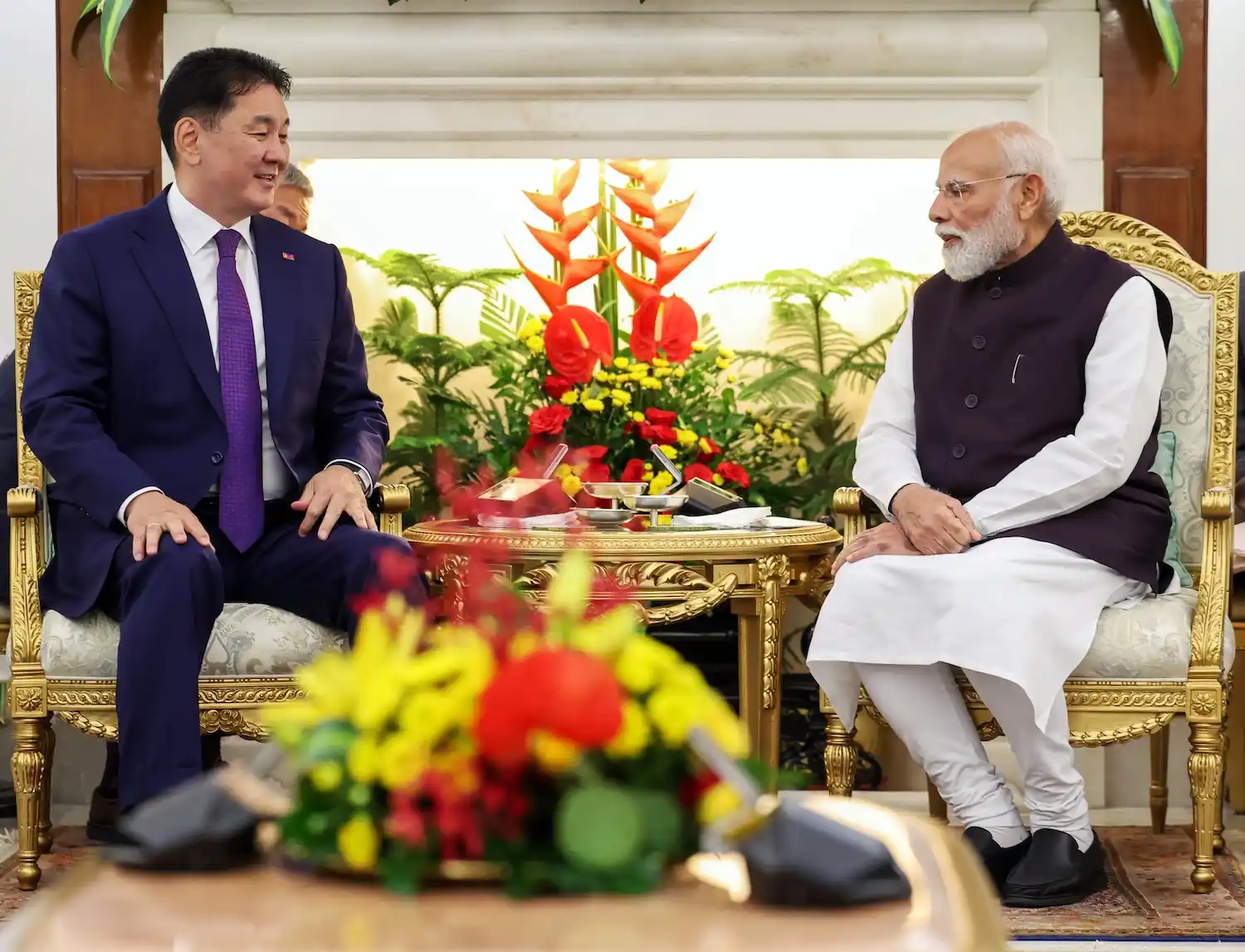
Across the windswept Mongolian steppe, where history whispers through the grasslands, two democracies are scripting a new chapter in Asian diplomacy. India and Mongolia — civilisational cousins divided by mountains but united by faith — are once again proving that the most powerful alliances are not always born of economics or arms, but of shared spirit.
President Khurelsukh Ukhnaa’s recent visit to India, marking 70 years of diplomatic relations, underscored a truth both ancient and urgent: soft power can be hard-edged. While trade and oil refineries dominate headlines, the real substance of this partnership lies in something intangible — the Buddhist bond that has outlasted empires and ideological shifts.
Prime Minister Narendra Modi’s phrase “deep, soulful, and spiritual bond” wasn’t diplomatic poetry; it was strategy cloaked in sanctity. When India sends the sacred relics of Sariputra and Maudgalyayana to Mongolia next year, it will not just be a religious gesture — it will be a reaffirmation that cultural continuity can outmaneuver geopolitical coercion.
The Dalai Lama Dimension: Faith as Geopolitics
The subtext that makes Beijing uneasy is impossible to ignore. The looming question of the 14th Dalai Lama’s reincarnation sits at the heart of the India-Mongolia dynamic. Mongolia’s centuries-old role in Tibetan Buddhist succession — and the Dalai Lama title’s very Mongolian origin — transforms this relationship from spiritual nostalgia into strategic leverage.
When the Dalai Lama recognized a young Mongolian-American boy as the 10th Jebtsundamba Khutuktu in 2023, it sent ripples through Beijing’s corridors. China’s attempt to bureaucratize reincarnation — a contradiction in terms if ever there was one — reflects its insecurity over moral legitimacy. Mongolia, by contrast, stands as a democratic counterpoint, where faith and freedom still intersect.
India’s quiet support here is telling. While it rarely comments openly, New Delhi’s stewardship of Tibetan traditions, combined with Mongolia’s monastic revival, creates an axis of spiritual autonomy that Beijing cannot easily neutralize. In the coming decade, this “Buddhist coalition” could become Asia’s most unexpected instrument of soft resistance.
Beyond Faith: The New Silk Route of Cooperation
Yet this relationship is not built on incense alone. India’s $1.7 billion oil refinery in Mongolia — its largest overseas development project — is a statement of intent. It says: we believe in you enough to invest in your independence. As Mongolia diversifies its energy and uranium partnerships, India emerges not as a patron, but as a partner in self-reliance.
Defence ties, too, have quietly deepened. From cyber security collaborations to the “Nomadic Elephant” military exercise, New Delhi and Ulaanbaatar are crafting a blueprint for strategic solidarity without confrontation. In an era of great-power fatigue, their cooperation stands as a model of what middle powers can achieve through shared values rather than shared enemies.
India’s decision to help digitize a million Mongolian manuscripts or connect Nalanda University with Gandan Monastery might seem cultural, even quaint. But in reality, this is soft power at its most strategic — an investment in narrative dominance. Whoever controls the story of Asian spirituality also shapes its moral geography.
Cultural diplomacy, as this partnership shows, is not a sideshow; it’s the main event. E-visas, educational exchanges, and sister-province agreements between Ladakh and Arkhangai are not small gestures — they are roots being planted in fertile ground.
Riding Into the Future
As India and Mongolia gallop together across the geopolitical steppe, they represent more than bilateral cooperation. They embody an emerging model of diplomacy rooted in civilisational confidence. Their partnership suggests that in a world obsessed with military posturing, it is still possible to wield history as an instrument of hope.
The next Dalai Lama may or may not be born in Mongolia — but the rebirth of an ancient alliance is already underway. And this time, the reincarnation is political, cultural, and profoundly strategic.