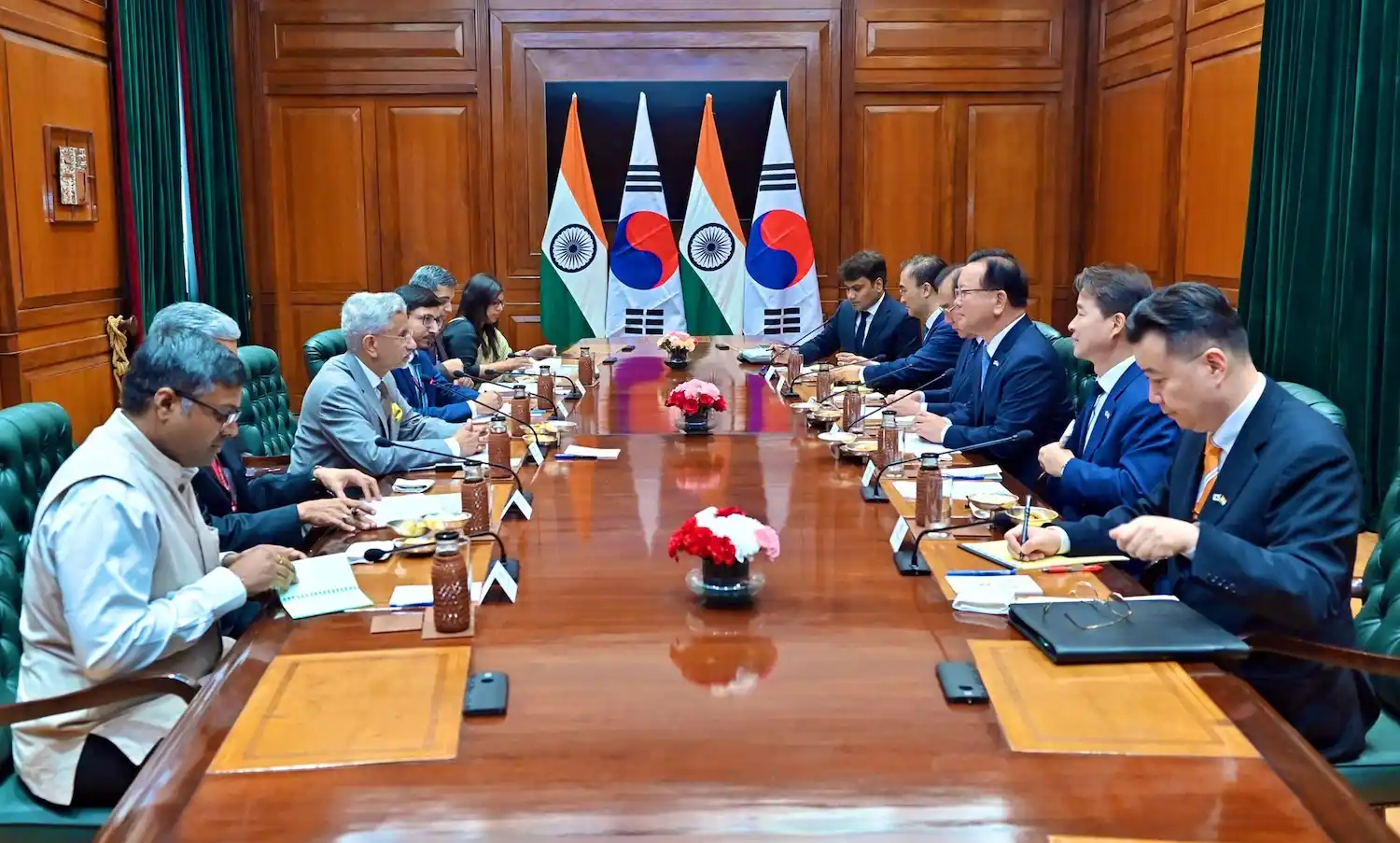
In recent years, India–South Korea relations have evolved into a strategically significant partnership. Today, this relationship is defined by technology-driven collaboration in semiconductors and sustainable energy, guided by strategic frameworks such as South Korea’s New Southern Policy. The aim is to transform this partnership into a cornerstone for regional economic growth, innovation leadership, and geopolitical stability. At the same time, it serves as a vital element in India’s pursuit of technological independence, sustainable development, and regional prominence in the Indo-Pacific.
This partnership goes beyond a conventional bilateral economic or diplomatic relationship—it has become a strategic imperative integral to national development and regional leadership. The focus on semiconductors and energy represents a leap from traditional trade ties to deep technological collaboration, essential for securing the future in a competitive global landscape shaped by geopolitical tensions and supply chain realignments. South Korea’s New Southern Policy provides the diplomatic scaffolding to translate economic and technological cooperation into a broad, resilient strategic partnership, amplifying both countries’ influence in the Indo-Pacific. However, tangible progress requires addressing bureaucratic bottlenecks, scaling up investments, protecting intellectual property rights, and fostering innovation ecosystems that connect academia, industry, and government.
Semiconductor Collaboration: Transforming Supply Chains and Industrial Base
The semiconductor partnership aligns closely with India’s national ambition to become a global semiconductor hub by 2030. Through the India Semiconductor Mission and a suite of policy incentives, India is building fabrication plants and developing a comprehensive supply chain encompassing chip design, manufacturing, assembly, testing, and packaging. South Korea, home to semiconductor giants Samsung and SK Hynix, offers invaluable expertise, investment, and technology, making it a natural partner in this critical sector.
The future of this partnership will depend on building integrated semiconductor clusters with world-class infrastructure, encouraging Korean and other global semiconductor companies to invest in fabrication and allied services through production-linked incentives and regulatory support. Collaborative research and development in emerging semiconductor technologies—such as AI chips and 3D packaging—supported by joint innovation hubs, will be essential to reducing India’s dependence on China-centric supply chains and strengthening its technological sovereignty.
India’s plan to develop a skilled semiconductor workforce through specialized education programs and public–private partnerships will ensure the ecosystem’s long-term sustainability. Supporting fabless semiconductor design startups will further complement manufacturing efforts by leveraging India’s large pool of chip design talent, thereby deepening the country’s integration into the global semiconductor value chain.
Renewable Energy Partnership: Building a Green Future
The energy dimension of the India–Korea relationship plays an equally transformative role, particularly in renewable energy and clean technology collaboration. India’s ambitious renewable energy targets and the National Green Hydrogen Mission align with South Korea’s advanced capabilities in solar, wind, energy storage, and green hydrogen. This complementary expertise opens opportunities for joint ventures, technology transfer, and project development that will accelerate India’s sustainable energy transition.
Future cooperation in energy will increasingly center on innovative battery storage solutions, which are critical for stabilizing power grids amid rising renewable energy penetration. India views Korean investment and expertise as vital for scaling up domestic manufacturing of clean energy technologies, reducing carbon footprints, and advancing toward climate goals through high-quality, green industrial growth.
The New Southern Policy: Strategic Framework for Regional Cooperation
South Korea’s New Southern Policy (NSP)—which prioritizes People, Prosperity, and Peace through deeper engagement with ASEAN and India—complements India’s Act East Policy and broader Indo-Pacific vision. India welcomes the NSP as a framework to expand economic, technological, and security ties based on shared democratic values and a commitment to a rules-based regional order.
The NSP expands opportunities for collaboration in high-tech manufacturing, energy, maritime security, and digital infrastructure, providing a diplomatic foundation to institutionalize cooperation in new domains such as semiconductor supply chains and green energy. India views this policy as a cornerstone for elevating the bilateral partnership into a “Special Strategic Partnership” with broader geopolitical implications for Asia.
Future Course: From Technology Partnership to Strategic Collaboration
The future of the partnership will depend on concrete actions to leverage this strategic moment:
- Accelerate semiconductor cluster development: India should work with Korean partners to establish semiconductor supply chain clusters by streamlining regulatory approvals, providing production-linked incentives, and ensuring sustained investment to scale manufacturing and allied services.
- Promote joint R&D: Collaborative research in next-generation chip technologies, AI, and defense applications should be prioritized to push the technological frontier and address security concerns through shared innovation ecosystems.
- Expand renewable energy collaboration: Broaden cooperation across clean energy value chains, leveraging Korean technological leadership and India’s market scale to promote green industrial growth and climate leadership.
- Deepen multilateral cooperation: Under the NSP framework, both countries should strengthen multilateral collaboration in the Indo-Pacific to promote regional stability, digital infrastructure development, and people-to-people exchanges.
- Reinvigorate trade discussions: Reviving bilateral trade negotiations and the Comprehensive Economic Partnership Agreement (CEPA) will be crucial to addressing trade imbalances and unlocking economic potential, facilitating greater Korean investment in India’s high-tech and green sectors.
With vision and determination, India–Korea ties can exemplify a 21st-century strategic partnership grounded in mutual benefit, technological advancement, and shared commitment to peace and prosperity in Asia—a partnership that empowers India’s Atmanirbhar Bharat (self-reliant India) journey while reinforcing Korea’s diversified engagement strategy in the region.