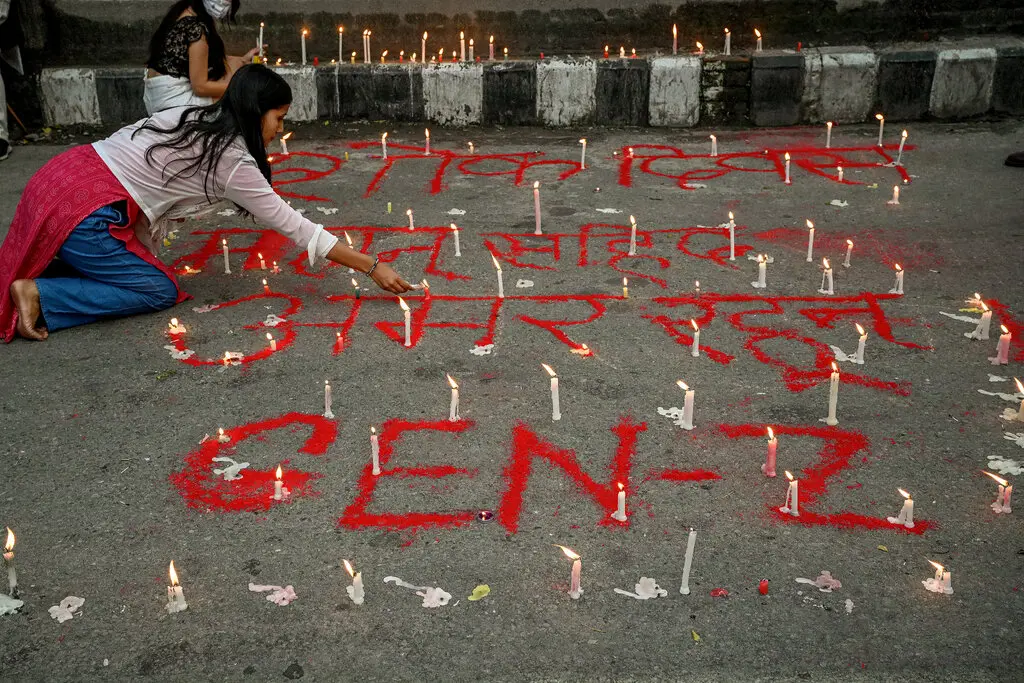
Youth have been agents of change in nation-building across the world, and Nepal is no exception. On 04 September 2025, Nepal witnessed political turmoil largely led by GenZs who called for the overthrow of Prime Minister KP Sharma Oli and his government. The widely circulated cause for the GenZ protests was the law that was passed banning twenty-six social media platforms including Facebook, Messenger, Instagram, YouTube, WhatsApp, X, LinkedIn, Snapchat, Reddit, Discord, Pinterest, Signal, Threads, WeChat, Quora, Tumblr, Clubhouse, Mastodon, Rumble, VK, Line, IMO, Zalo, Soul, and Hamro Patro. The ban imposed by the Oli government was that these platforms were not registered with the Nepal Telecommunication Authority after the expiry of the seven-day ultimatum announced on 28th August 2025.
The other trigger factors include the growing discontent among the people, especially the youth, as there was political alienation and denial of youth engagement in political parties, given that Nepal was largely led by generational leadership. In fact, the general understanding is that leadership change only happens when the head of the ruling party dies. This resulted in the manifestation of growing frustration among the active voters and young political leaders. The other underlying factors were the rampant corruption in the Oli-led government and the spotlight on the lavish lifestyles of political leaders’ kids. Furthermore, the use of technology as a tool for mass mobilisation and the exposure to a series of protests widely referred to as ‘youthquakes’ as seen in Indonesia, Philippines, Sri Lanka, and Bangladesh is said to have a domino effect in Nepal.
Additionally, the now exiled former PM Oli faced the brunt of the despondent youth population, as it was keen on containing online criticism spreading against the government. In its defence, the Oli government claimed that the intention for the blanket ban was not to curb freedom of speech and expression, but the refusal of social media platforms to register with the government and the setting up of local offices in Nepal. Nevertheless, the failure by the government in power to predict and analyse the repercussions of silencing the dissenting voices of the youth and underestimating the far-reaching impact of free speech and digital expression, and the existing socio-economic conditions, resulted in the political upheaval.
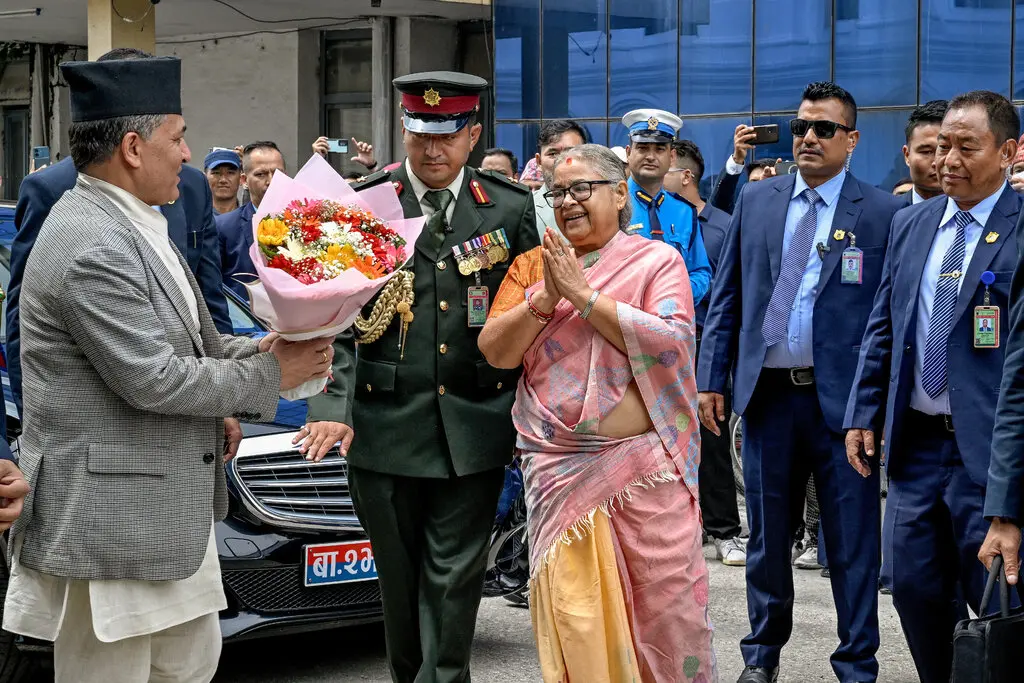
Nevertheless, post the widespread protests, on 09 September 2025, PM Oli resigned and Nepal’s first woman Chief Justice Sushila Karki was sworn in as the interim Prime Minister backed by the Army Chief Ashok Raj Sigdel, Nepali President Ram Chadra Poudel, and GenZ leader Sudan Gurung after consultation. The main agenda of the now six-month interim government led by PM Karki includes conducting elections in March 2026.
While it was a welcome development seeing the active participation of youth in Nepal’s mainstream politics, there was also condemnation as the GenZ protest turned violent resulting in an estimated hundreds of millions of dollars in damage, burning of the parliament, government offices, the headquarters of the Nepali Congress Party and the home of former PM Sher Bahadur Deuba and the newly inaugurated Hilton Hotel were set ablaze. At least 72 people died and nearly 300 were injured during the protest.
Comprehensibly, political mobilisation in Nepal has taken place intermittently; the GenZ protests, however, are viewed as a turning point for Nepal’s politics. It is therefore time sensitive to analyse and explore whether the change in Nepal’s political landscape brought by the youth will falter or will it succeed in establishing a government that redeems the country from political instability, economic weaknesses, corruption, and unemployment, and other social issues?
Understanding Political Activism among the Youth
Nepal is experiencing a ‘youth bulge’ as it comprises nearly 20.8 percent of total population of the country (age group 16-25 years) while 40.68 percent of the population lies in the age group 16-40. The youth voters account for more than half of the eligible voter population, and the dividend was evident in the Gen Z protest due to their political awareness, lack of accountability, and failure of the leadership to understand the voices of youth.
The political activism among the youth is evident in the voting pattern, alongside the expectations that Nepal’s young voters have from the country’s political parties to work on. These include infrastructural development, economic prosperity, education, health, and good governance. The youth also want opportunities to be given to new and young political leaders. For instance, the emergence of the youth-based party, the Rashtriya Swatantra Party (RSP), led by journalist Rabi Lamichhane, formed in the year 2022, campaigned through social media and door-to-door campaigning during the 2022 general election. Having tapped into the vast vacuum between the disenchanted youth and the regressive politics, the party subsequently won 20 seats, the fourth highest, in the elections and became a national party.
Evidently, there is scope for young political leaders to emerge as a leading voice in mainstream politics, given that the youth in Nepal are willing to use their power to vote to elect young political leaders over generational leadership. This has also laid the groundwork for power transition, reforming national issues, and reshaping national politics and political institutions. While there is a growing debate that the youth led movement has no back up plan and what is in store for the future of Nepal’s politics, however, one can say that the joust has begun between young and generational leadership.
Understandably, the political upheaval in Nepal has called for a change, and the proposed elections scheduled in March 2026 are crucial. The winning party and the leadership have a huge task ahead, especially in addressing the grievances and ensuring the implementation of the demands laid down by the youth protestors. The road ahead remains fraught with challenges as Nepal has experienced political instability and large-scale protests demanding regime change on a regular basis. Hence, the onus would be to have a stable governance, including a potential opposition that acts as a ‘watchdog’ to put a check on the activities of the ruling government. Notwithstanding, irrespective of whichever party wins post the scheduled election in March 2026, the responsibility of the government in power would be to ensure that the policies and actions would be ‘of the youth and for the youth’. ‘By the youth,’ however, may be a far-fetched development, but would add an interesting aspect to Nepal’s youth’s political aspirations.