
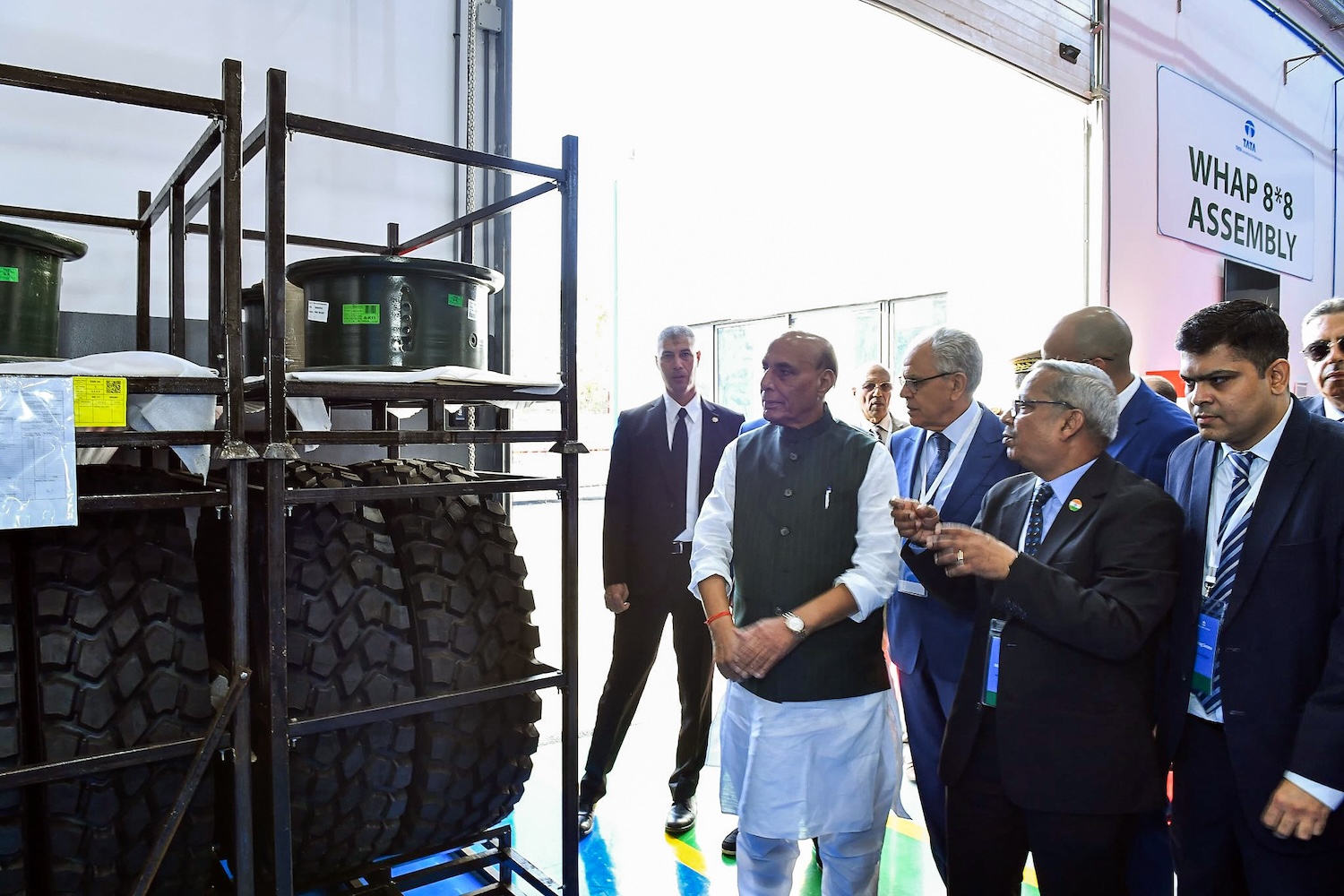
The recent inauguration of Tata Advanced Systems Limited’s (TASL) military manufacturing facility in Morocco is not just another line item in the annals of bilateral ties – it’s a tectonic assertion of intent. This is India staking its claim, loudly and unmistakably, to the global military marketplace, with African soil as its springboard. Anyone still picturing India as a cautious “training partner” for African armies has missed the strategic memo.
The era of India in Africa as a junior partner, content with offering modest training and humanitarian missions, is over. The TASL plant, rising in Morocco with the Defence Minister’s imprimatur, is a strategic play that signals India’s willingness to leave behind decades of reticence and enter the real contest: direct industrial competition with Turkey and China, whose own footprints on the continent have been steadily growing. Suddenly, the competition is no longer about who can host the largest military exercises or offer the most scholarships; it’s about who can deliver the next fleet of armoured vehicles, drones, or artillery systems to a continent that increasingly wants gear tailored to its own insurgencies, border skirmishes, and shifting alliances.
Much is made of India’s “first-mover advantage” in Morocco, and rightly so. For the first time, India isn’t playing catch-up. Instead, it’s putting boots and factories on the ground before its rivals. But such an advantage is as fragile as it is powerful. Manufacturing arms abroad, absorbing African logistics and procurement headaches, and shaping ammunition and armour for Saharan, Sahelian, or coastal theatres – these are bold promises. They will only be effective if New Delhi and TASL deliver not just products, but genuine local partnerships – a lesson India will need to learn fast, because the competition is relentless and nations like Turkey and China have a head start in localising supply chains.
It’s easy to romanticise Africa’s security landscape, but doing so misses the complexity that makes this Moroccan plant truly unique. The region is not a monolith; it’s beset by insurgency in the Sahel, asymmetric warfare in East Africa, and conventional threats across the Maghreb. India’s gambit is to offer not one-size-fits-all armoured vehicles, but platforms customisable for local threats and terrain. If successful, this move will upend old assumptions that African armed forces are satisfied with second-hand or generic imports; increasingly, they want agile suppliers who can adapt kit to fast-changing realities, and who invest in local job creation—not merely pop-up trade offices.
The numbers sound intoxicating: a projected 16–18% revenue surge this year for India’s private defence sector, and a realistic path to $5 billion in defence exports by 2025, with African and MENA orders in the vanguard. But these projections must be treated with sober analysis. Yes, policy tailwinds like the Defence Acquisition Procedure and Atmanirbhar Bharat lend stability and visibility, encouraging investment and risk-taking. But the real multiplier—exports—relies on factors that extend beyond the balance sheet: reliability of delivery, post-sale support, and willingness to endure Africa’s complicated procurement politics.
Where Does India Go From Here?
If TASL’s Moroccan venture prospers, it could unleash a wave of similar projects—Mahindra Defence, Bharat Forge, BEL, and others might soon be scouting Morocco, Egypt, Senegal, or South Africa for land or partners. India’s presence could grow from an outlier to a default choice in African tenders. It could also prompt India’s competitors to double down, with African countries—never short of diplomatic flexibility—making hay by playing Indian, Turkish, and Chinese interests off one another for better deals and technology transfer agreements.
The stakes are high and the margin for error is thin. India must avoid hubris, the kind that assumes a plant and a promise equal lasting influence. African militaries have been burned before—by unfulfilled pledges of technology transfer, poor kit performance, or unreliable support after the sale. The lesson is clear: India’s strategic opportunity hinges not just on delivering vehicles, but on embedding deep, responsive, long-term engagement—leveraging its soft power and engineering talent to build trust, not just market share.
Ultimately, if India’s defence industry can sustain this momentum, adapt under pressure, and genuinely listen to its new African stakeholders, it could rewrite the rules of international defence partnerships—in Africa and beyond. The TASL plant is less the end of a journey and more the first, risky embarkation on a much larger voyage. There is little room for nostalgia or incrementalism; the global arms export market waits for no one.
As the dust settles over Morocco’s inaugural Indian military facility, the real question remains: will India deliver on the promise, or will it look back in five years as just another missed opportunity in the great African scramble? Only decisive, sustained engagement—and old-fashioned grit—will provide the answer. For now, the world should take note: India has finally arrived in the African military marketplace, and the stakes have never been higher.

