
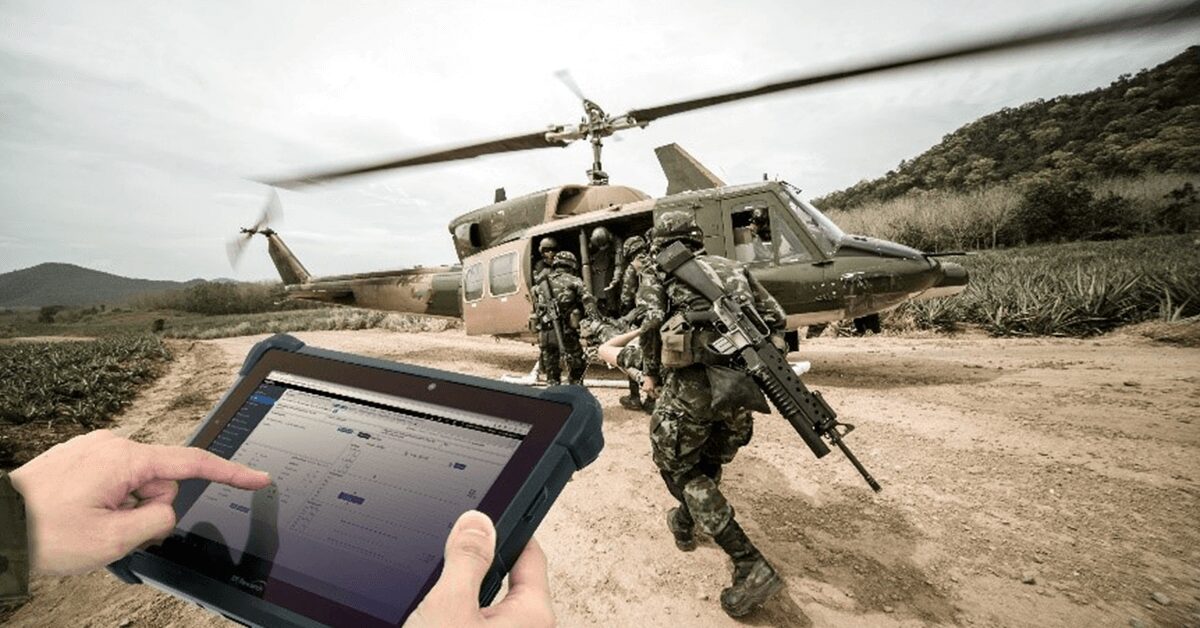
The wars of tomorrow will not just be fought with boots on the ground or missiles in the sky—they will be won through the speed, security, and resilience of data. Operation Sindoor offered a glimpse into this future for India, as the armed forces integrated advanced command and control systems to neutralise simultaneous threats across domains. The lesson was clear: communications superiority is battlefield superiority. In this race, tactical edge computing—processing and securing information at the point of conflict rather than at distant data centres—will be central to India’s military evolution.
Traditional reliance on cloud computing poses problems for India’s military realities. Border skirmishes often occur in regions with limited or unreliable connectivity, rendering cloud-based systems fragile under pressure. Latency, too, can be fatal. A drone detecting enemy armour should not wait seconds for distant servers to process intelligence before transmitting targeting coordinates. Moreover, India faces adversaries skilled in cyber-espionage, and every transmission to a centralised cloud is a potential vulnerability.
Edge computing solves these issues by moving intelligence closer to the frontlines. Data captured by a forward sensor can be processed locally, enabling real-time decisions, even in low-bandwidth or disrupted environments. This decentralisation also strengthens cybersecurity by reducing exposure to hostile interception.
China is already deploying edge-enabled military platforms, supported by its state-driven 5G ecosystem and even orbital computing networks. The United States has experimented with edge nodes in combat exercises and embedded them in platforms like the F-35. NATO and Australia are similarly pushing ahead.
India, though late to this race, is sprinting forward. The Ministry of Defence has recognised edge computing as one of the 33 niche technologies for adoption by 2030. Indigenous platforms like the BLADe-S ISR system and Chimera-22 Smart Camera already demonstrate how edge-AI can deliver real-time battlefield intelligence. Private innovators—ideaForge’s drones, InferQ’s onboard threat detection, and others—are building solutions that rival global counterparts.
What sets India apart is its uniquely challenging environment. From Himalayan heights to maritime expanses, Indian forces require solutions resilient to varied terrains and sparse infrastructure. Edge systems are not just desirable—they are essential.
For India to fully harness edge computing, it must double down on its ecosystem approach. The Innovations for Defence Excellence (iDEX) initiative provides a pathway to integrate startups, academia, and private firms into defence R&D. The question is not whether India can innovate—its booming deep-tech ecosystem proves it can—but whether the defence establishment can adopt and scale these innovations quickly enough.
The private sector, flush with expertise in AI, semiconductor design, and 5G deployment, can accelerate India’s military readiness. Partnerships between defence PSUs and private startups could produce export-worthy systems, bolstering both national security and India’s ambition to become a net defence exporter.
As India modernises its forces, tactical edge computing must be more than a technology upgrade—it must become doctrine. Training, procurement, and strategy should all reflect this shift towards decentralised, resilient, and AI-enabled warfighting.
In an era where the first strike may be digital rather than physical, India cannot afford latency—whether in data or in decision-making. By embracing edge computing, India has the opportunity to not just catch up with global powers, but to set benchmarks for the next generation of secure, real-time, and adaptive military technologies.
The battlefield of tomorrow will be defined by who controls the edge. For India, edging ahead is no longer optional—it is existential.

