Every year around this time, when the monsoon winds shift across the Indian Ocean, it is worth remembering that this ancient weather pattern once carried more than rain. For centuries, it carried dhows loaded with cloth, spices, ideas and people between our shores and the Indian subcontinent. Long before the language of “partnership” and “cooperation” entered diplomatic vocabulary, Africa and India were already bound together by the sea.
That history matters today, as Africa recalibrates its place in a changing world order. We are no longer content to be spoken about; we insist on being spoken with. And on that score, India’s approach to the continent offers a useful, if imperfect, case study in what a genuinely reciprocal partnership can look like.
Consider the numbers first, because numbers tend to cut through rhetoric. Bilateral trade between Africa and India has climbed to roughly $93 billion, placing India among the continent’s largest trading partners. Indian investment on African soil now exceeds $80 billion, spread across telecoms, energy, pharmaceuticals, agriculture and digital services — sectors that African governments themselves have identified as priorities for structural transformation, not merely extraction of raw commodities. This distinction matters. Too much of Africa’s external engagement over the decades has been organised around what can be dug out of the ground and shipped away. A relationship built instead around telecom towers, generic medicines and digital platforms speaks to a different kind of ambition — one closer to what Africa’s own Agenda 2063 envisions for the continent’s future.
There is also the question of how such partnerships are financed. Lines of credit — over 190 of them, worth more than $10 billion, spread across more than 40 African countries — have funded projects ranging from power plants to water systems. Not all of them have moved as fast as anyone would like; project delivery across such a vast and diverse continent rarely does. But the model of demand-driven credit, where African governments identify their own priorities rather than have them dictated from outside, stands in useful contrast to more paternalistic aid architectures that Africa has grown weary of.
Perhaps the most consequential thread, though, runs through education and skills. Over eighty thousand Africans have passed through Indian scholarship and training programmes in the past decade alone — engineers, diplomats, doctors, technicians. An IIT campus now operates in Zanzibar; a forensic sciences institute has opened in Uganda. These are not vanity projects. They are investments in the one resource no external partner can extract and ship home: African human capital. A young Tanzanian coder trained in Bengaluru, or a Ugandan forensic scientist trained under Indian faculty, returns home with skills that stay, multiply, and compound long after any single aid cheque has been spent.
None of this is to suggest the relationship is without its imbalances. India’s economy dwarfs that of any single African state, and the terms of engagement will always require African negotiators to stay sharp-eyed about whose interests are truly being served. Nor should Africa’s diplomats forget that India, like every major power courting the continent today — from China to the Gulf states to Washington and Brussels — has its own strategic interests in mind, from securing Indian Ocean sea lanes to winning African votes at the United Nations. Solidarity and self-interest are rarely mutually exclusive, and African policymakers do their publics a disservice if they mistake warm rhetoric for charity.
But self-interest, clearly stated and mutually understood, is not the same as exploitation. What distinguishes India’s overtures from the extractive patterns of the colonial past is a stated — and so far substantially demonstrated — preference for building African capacity rather than merely African dependency. Food grain shipments to countries facing shortages, medical equipment sent to Africa CDC during health emergencies, artificial limbs fitted for victims of conflict — these are not the actions of a partner indifferent to African wellbeing, even if they also serve India’s soft-power ambitions.
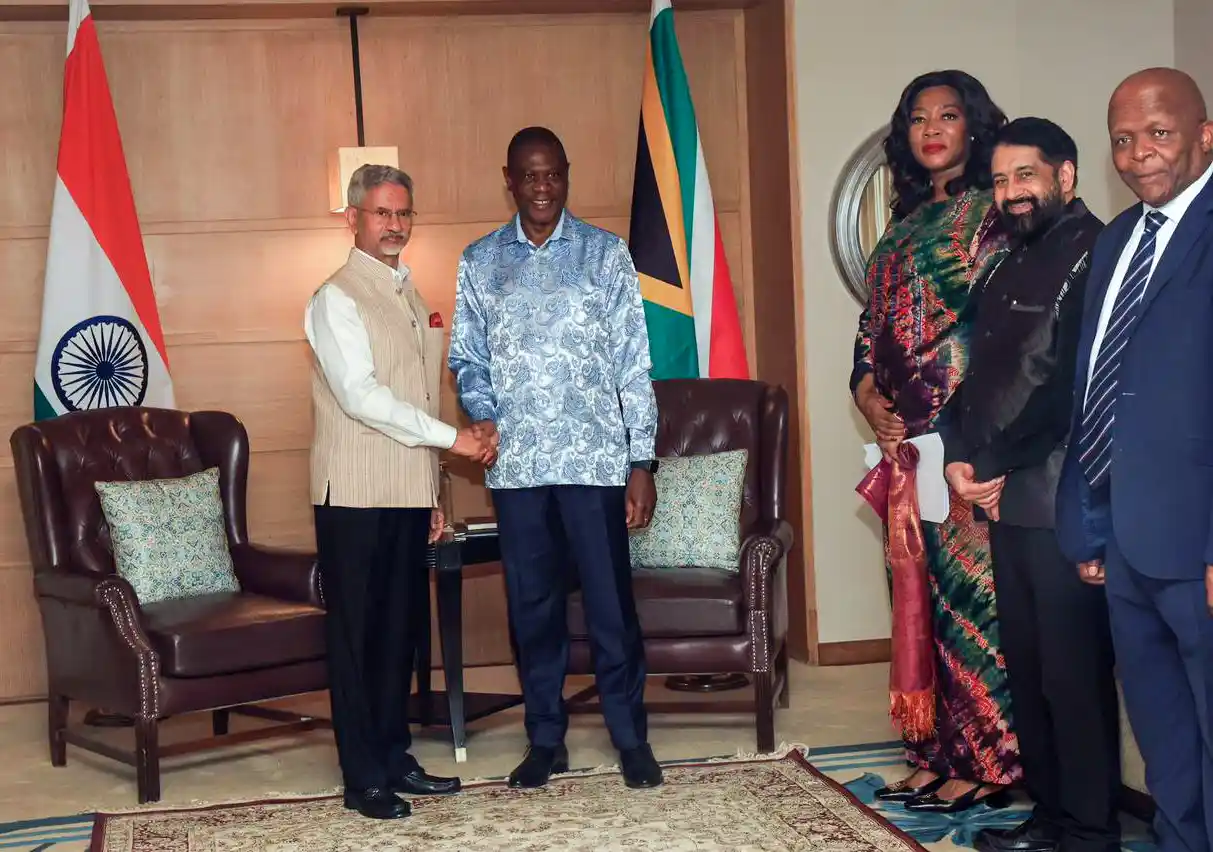
The postponement of this year’s India-Africa Forum Summit, following an Ebola outbreak, was a disappointment to those hoping for a fresh reset of the relationship at head-of-state level. But it need not delay the underlying work. What Africa needs now is not another summit photograph but sustained follow-through: faster project delivery, more local manufacturing tied to Indian investment, and African insistence — at every negotiating table — that skills transfer and job creation remain non-negotiable conditions of engagement.
Africa’s demographic weight and India’s technological momentum together represent one of the more compelling economic combinations of this century. Whether that potential is realised on terms that genuinely serve African development, or simply repeats familiar patterns in new packaging, will depend less on New Delhi’s intentions than on the clarity and confidence with which African governments negotiate. That, ultimately, is a task only Africa can do for itself.