Japan’s Defence of Japan 2026 marks an important stage in Tokyo’s continuing transformation from a predominantly reactive security actor into a more capable, networked and technologically integrated power. Its central message is clear: Japan believes that the post-war regional order is under exceptional pressure, and that deterrence can no longer depend solely on the Japan–United States alliance or on traditional platforms such as aircraft, ships and missiles.
The paper therefore combines threat assessment with institutional advocacy. It presents China as Japan’s “unprecedented and greatest strategic challenge,” identifies North Korea as an increasingly grave and imminent danger, and treats Russia’s military cooperation with China and North Korea as part of a wider deterioration in the Indo-Pacific security environment. At the same time, it seeks to justify higher defence expenditure, expanded defence-industrial cooperation, greater use of commercial technology and deeper partnerships with like-minded countries.
Its significance for India lies not merely in Japan’s military expansion, but in the emerging logic of defence networks, maritime resilience, supply-chain security and co-development. India–Japan defence cooperation is increasingly positioned to become one of the practical pillars of a more distributed Indo-Pacific security architecture.
A More Dangerous Strategic Environment
The white paper describes the international environment as facing its “greatest trial since World War II” and entering a “new era of crisis.” This language is stronger than routine bureaucratic threat reporting. It reflects Tokyo’s assessment that the rules-based order is being challenged simultaneously by military coercion, gray-zone tactics, cyber operations, disinformation, economic pressure and technological competition.
The document’s principal concern is China. It criticises China’s expanding military capabilities, its activities around the Senkaku Islands, its operations in the western Pacific and its increasingly frequent activity around Taiwan. The paper also highlights Chinese naval deployments beyond the first island chain and repeated encounters involving Chinese and Japanese military aircraft. According to the Japanese assessment, such incidents create the possibility of miscalculation and accidental escalation.
Taiwan occupies a central place in this analysis. Tokyo’s concern is not limited to a conventional invasion. The paper also considers gray-zone coercion, maritime law-enforcement operations, forward deployment and the possible use of a blockade to create a fait accompli. This reflects a broader change in Japanese strategic thinking: a Taiwan contingency is no longer viewed as an isolated cross-Strait crisis but as an event that could affect Japan’s southwestern islands, sea lanes, alliance commitments and national territory.
North Korea remains a separate but related threat. The white paper points to Pyongyang’s nuclear and ballistic-missile programmes, irregular-trajectory missiles, hypersonic systems and long-range cruise missiles. It also expresses concern about North Korea’s expanding military relationship with Russia. The paper suggests that Russian assistance could strengthen North Korea’s conventional and strategic capabilities over time.
Russia is therefore treated not simply as a European problem. Its military activity in the Far East, its presence around Japan’s northern territories and its strategic cooperation with China form part of Tokyo’s wider concern about simultaneous pressure from multiple directions. The paper’s message is that Japan must prepare for a security environment in which China, Russia and North Korea may coordinate politically, militarily or technologically even without forming a formal alliance.
The Meaning of “New Ways of Warfare”
The most valuable analytical contribution of the 2026 paper is its emphasis on “new ways of warfare.” Drawing on the experience of Ukraine and conflicts in the Middle East, it argues that modern warfare is becoming cheaper, faster, more distributed and more dependent on dual-use technologies.
Three developments are especially important.
First, unmanned systems are changing the relationship between cost and military effect. Low-cost drones can attack expensive ships, air-defence systems, logistical installations and critical infrastructure. Japan consequently plans to acquire large numbers of unmanned aerial, surface and underwater systems. The proposed SHIELD concept—Synchronized, Hybrid, Integrated and Enhanced Littoral Defense—is intended to integrate these systems into the defence of Japan’s island territories and coastal approaches.
Second, the battlespace is increasingly cross-domain. Space-based surveillance, cyber operations, electronic warfare, artificial intelligence and information operations are no longer supporting functions separated from conventional military activity. They are becoming integral to command, targeting, communications and deterrence. The paper’s discussion of deepfakes and generative-AI-created content also shows that Tokyo views public trust and cognitive resilience as national-security concerns.
Third, sustained warfare requires industrial depth. The experience of Ukraine has reinforced the importance of stockpiles, ammunition production, repair capacity and secure supply chains. A technologically advanced military that cannot replenish weapons or maintain platforms during a prolonged conflict may not possess credible deterrence. Japan’s white paper therefore elevates defence production and technological foundations from a secondary policy issue to a central component of defence capability.
This is a significant conceptual shift. Defence policy is no longer only about acquiring equipment from established suppliers. It is also about strengthening domestic industry, mobilising start-ups, using commercial components, supporting research and development, and ensuring that production and maintenance can continue during crisis.
From Restraint to Readiness
Japan’s defence transformation is backed by substantial financial commitments. The FY2026 defence allocation reached approximately ¥8.9 trillion, representing an increase of about 3.8 percent over the previous year and the twelfth consecutive annual increase. Tokyo is also advancing a five-year, ¥43 trillion defence build-up plan and has brought forward the objective of reaching defence spending equivalent to 2 percent of GDP.
The paper identifies seven priority capabilities:
- stand-off defence capabilities;
- integrated air and missile defence;
- unmanned systems;
- cross-domain operations;
- command, control and intelligence;
- mobile deployment and civil protection;
- sustainability and resilience.
This list reveals the new balance in Japan’s defence planning. Stand-off missiles and counterstrike capabilities remain important, but they are now placed alongside logistics, civil protection, cyber defence, space operations and unmanned platforms. In other words, Tokyo is attempting to build a national defence system rather than merely enlarge the Self-Defense Forces.
The creation of the Japan Aerospace Self-Defense Force, the strengthening of the Joint Operations Command, the development of Aegis System Equipped Vessels, the acquisition of F-35 aircraft and the expansion of missile and surveillance capabilities all point towards a more integrated force structure. The objective is to enable Japan to respond earlier and farther from its home territory while retaining the formal language of an exclusively defence-oriented policy.
This creates a persistent political and legal tension. Tokyo insists that its policy remains defensive, constitutionally constrained and consistent with the Three Non-Nuclear Principles. Yet the acquisition of longer-range missiles, counterstrike capabilities and expanded operational reach represents a meaningful departure from the narrower interpretation of post-war defence that prevailed for decades.
The debate is not simply semantic. The more Japan develops the capacity to strike an adversary’s missile launchers, command networks or military infrastructure, the more important questions of political authorisation, intelligence reliability, escalation control and civilian oversight become. The paper recognises the need for civilian control, but the practical boundaries of counterstrike remain a subject of domestic and regional debate.
Defence Industrial Policy as Strategy
One of the paper’s most consequential elements is its treatment of defence industry as part of national power. Tokyo has revised the Three Principles on Transfer of Defence Equipment and Technology, including the abolition of the former “Five Categories” framework. The stated rationale is that defence-equipment transfers can strengthen partners, support common production and maintenance infrastructure, and sustain Japan’s own industrial base.
This policy has direct implications for India. Japan is moving from a highly cautious arms-transfer posture towards selective defence-industrial engagement with trusted partners. India, with its large defence market, expanding naval ambitions and “Make in India” framework, is a natural candidate.
The first major example is the Unified Complex Radio Antenna, or UNICORN, a naval communications and sensor-mast project. In July 2026, India and Japan concluded their first defence co-development project, while also agreeing to explore additional equipment and technology cooperation. The project is important not because a naval antenna will transform the regional military balance by itself, but because it creates a precedent for joint design, production, integration and sustainment.
The UNICORN programme can be understood as a test case for the broader India–Japan relationship. If it progresses smoothly, it could demonstrate that the two countries can manage technology protection, production responsibilities, export controls, quality standards and long-term maintenance. These are more demanding challenges than signing a memorandum or conducting a military exercise.
India–Japan Defence Cooperation
India and Japan already possess a substantial institutional foundation for defence cooperation. Their relationship includes annual defence-ministerial engagement, the Defence Policy Dialogue, the Foreign and Defence Ministers’ “2+2” mechanism, maritime dialogue, military exchanges and regular exercises. The two countries also participate in the Quad alongside Australia and the United States.
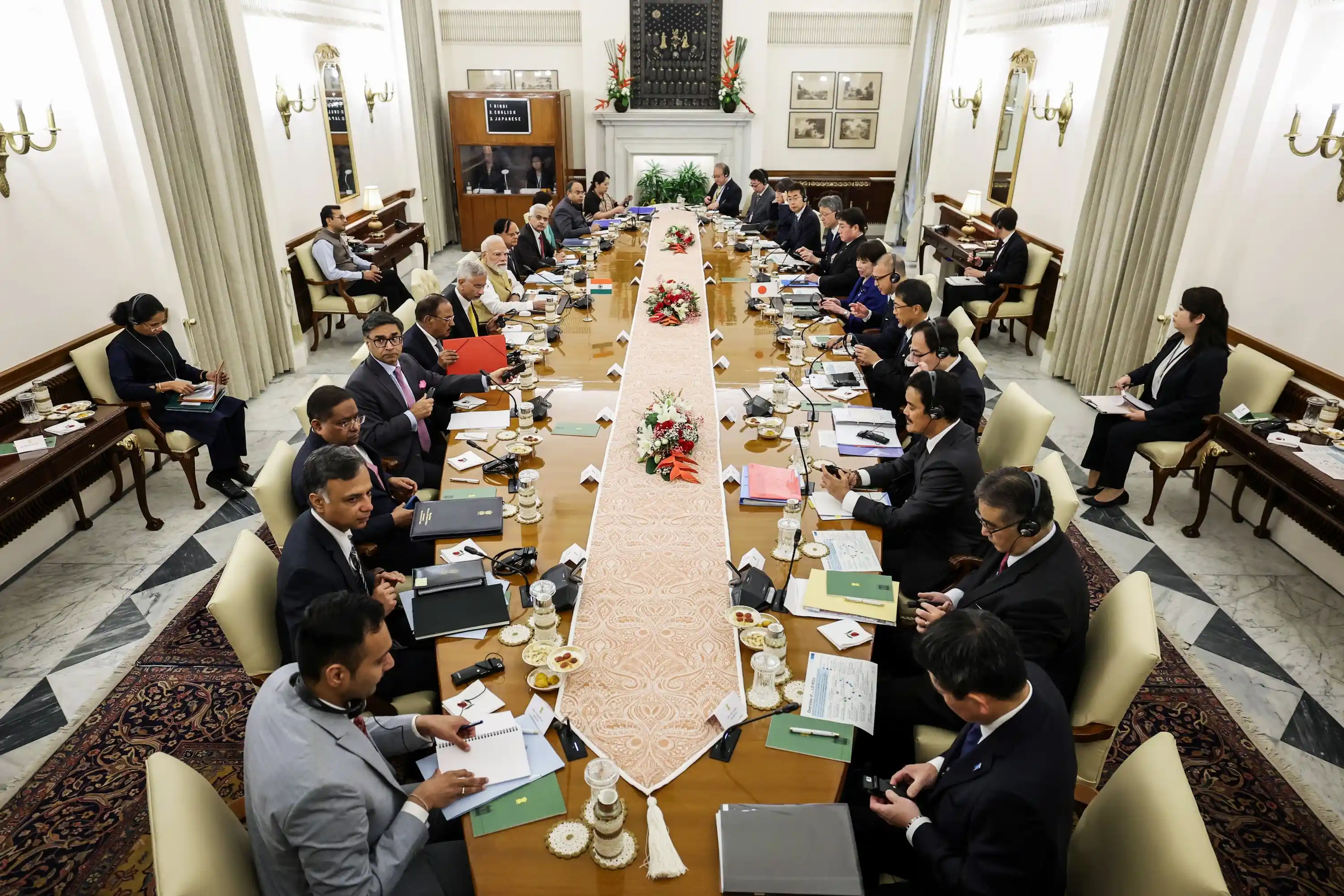
The eighth India–Japan Defence Policy Dialogue, held in Tokyo in July 2026, reviewed military-to-military exchanges, cooperation between joint headquarters, maritime security, exercises, capacity-building, defence equipment and technology cooperation. This agenda corresponds closely with the priorities of Japan’s 2026 white paper: interoperability, maritime awareness, technology, institutional connectivity and defence-industrial resilience.
The maritime dimension is the most strategically promising. India occupies a central position in the Indian Ocean, while Japan sits at the intersection of the East China Sea, the western Pacific and the sea lanes connecting Northeast Asia with Southeast Asia and the Middle East. Neither country can independently secure the entire Indo-Pacific, but their geographic positions allow them to contribute complementary capabilities.
Potential areas of cooperation include:
- maritime domain awareness and information-sharing;
- anti-submarine warfare and undersea surveillance;
- protection of sea lines of communication;
- unmanned maritime systems;
- ship repair, maintenance and logistics;
- cyber and electronic-warfare resilience;
- critical minerals and defence supply chains;
- joint research in artificial intelligence and dual-use technologies.
The Reciprocal Provision of Supplies and Services agreement provides a framework for logistical support, while exercises such as JIMEX and air exercises such as Veer Guardian help develop operational familiarity. However, the value of these arrangements will depend on whether they generate routine access, faster coordination and practical support during contingencies rather than remaining primarily symbolic.
India can also benefit from Japan’s experience in naval systems, sensors, robotics, shipbuilding, miniaturisation and high-reliability manufacturing. Japan, for its part, can gain from India’s expanding industrial capacity, software expertise, engineering talent and geographic reach. Co-production in India could help Japan diversify its defence partnerships while supporting Indian efforts to reduce import dependence.
Opportunities and Constraints
The strategic convergence between India and Japan is strong, but it should not be exaggerated. Both countries are concerned about coercive changes to the regional order and support a free and open Indo-Pacific. Yet their threat perceptions are not identical.
Japan faces direct military pressure in the East China Sea, the Taiwan Strait and the northern approaches. India’s principal security concerns include the Himalayan border, the Indian Ocean, Pakistan and the protection of its continental and maritime interests. Their defence cooperation must therefore be broad enough to accommodate different priorities.
India also values strategic autonomy. It is unlikely to enter an alliance structure or accept automatic military obligations in a Japan-centred or US-led contingency. Japan, meanwhile, remains closely tied to the United States and may expect a higher degree of operational alignment from partners. This difference could limit intelligence-sharing, contingency planning and interoperability.
There are also bureaucratic and industrial obstacles. Japanese technology-transfer procedures have historically been cautious. Indian procurement can be slow, fragmented and heavily regulated. Differences in military requirements, intellectual-property rules and production standards may delay projects. The UNICORN programme should therefore be assessed as a measure of institutional adaptability, not only as an equipment project.
Finally, deeper defence cooperation may intensify Chinese suspicion. Beijing has already condemned Japan’s 2026 white paper as an attempt to promote a “China threat” narrative and justify military expansion. India and Japan will need to strengthen deterrence without allowing their partnership to be framed exclusively as an anti-China coalition. Capacity-building, maritime law, humanitarian assistance, disaster response and the protection of commercial sea lanes can provide a stabilising public rationale.
Japan’s Defence of Japan 2026 is both a strategic assessment and a political document. It describes an increasingly dangerous Indo-Pacific, but it also seeks public acceptance for higher spending, expanded military capabilities and a new defence-industrial model. Its central proposition is that national defence now depends on the integration of military power, technology, industry, society and international partnerships.
For India, the paper’s most important lesson is that future security cooperation will be judged less by the number of exercises conducted than by the resilience of the systems created between partners. Japan and India should therefore move from episodic cooperation towards sustained co-development, shared maintenance, maritime information networks and secure supply chains.
The UNICORN project offers a modest but meaningful beginning. Its success could establish a template for wider cooperation in naval electronics, unmanned systems, cyber security and undersea capabilities. If India and Japan can overcome their regulatory and institutional limitations, their partnership can become a practical contribution to Indo-Pacific stability—one based not on military bloc politics, but on distributed deterrence, strategic resilience and the preservation of a rules-based maritime order.