As of mid-October 2026, Pakistan faces intertwined political, security, and economic pressures that could spill over. The military-backed government under Prime Minister Shehbaz Sharif and President Asif Ali Zardari has imposed emergency and governor’s rule in Khyber Pakhtunkhwa, suspending the Pakistan Tehreek-e-Insaf provincial administration. The move, justified by claims of failure to combat militancy, followed PTI protests demanding the release of jailed former prime minister Imran Khan and coincided with rising violence. PTI leaders, including the provincial chief minister, faced detention. This action consolidates central and military authority in a province long governed by Khan’s party and highlights the ongoing civilian-military imbalance.
Field Marshal Asim Munir, elevated after the May 2025 India-Pakistan conflict, now holds expanded formal power as Chief of Defence Forces while remaining army chief. Constitutional and statutory changes have given him operational command across the army, navy, and air force, greater influence over nuclear command structures, lifetime immunity, and an extended tenure potentially into 2030. This centralisation strengthens military dominance without a conventional coup and shapes both domestic politics and foreign policy.
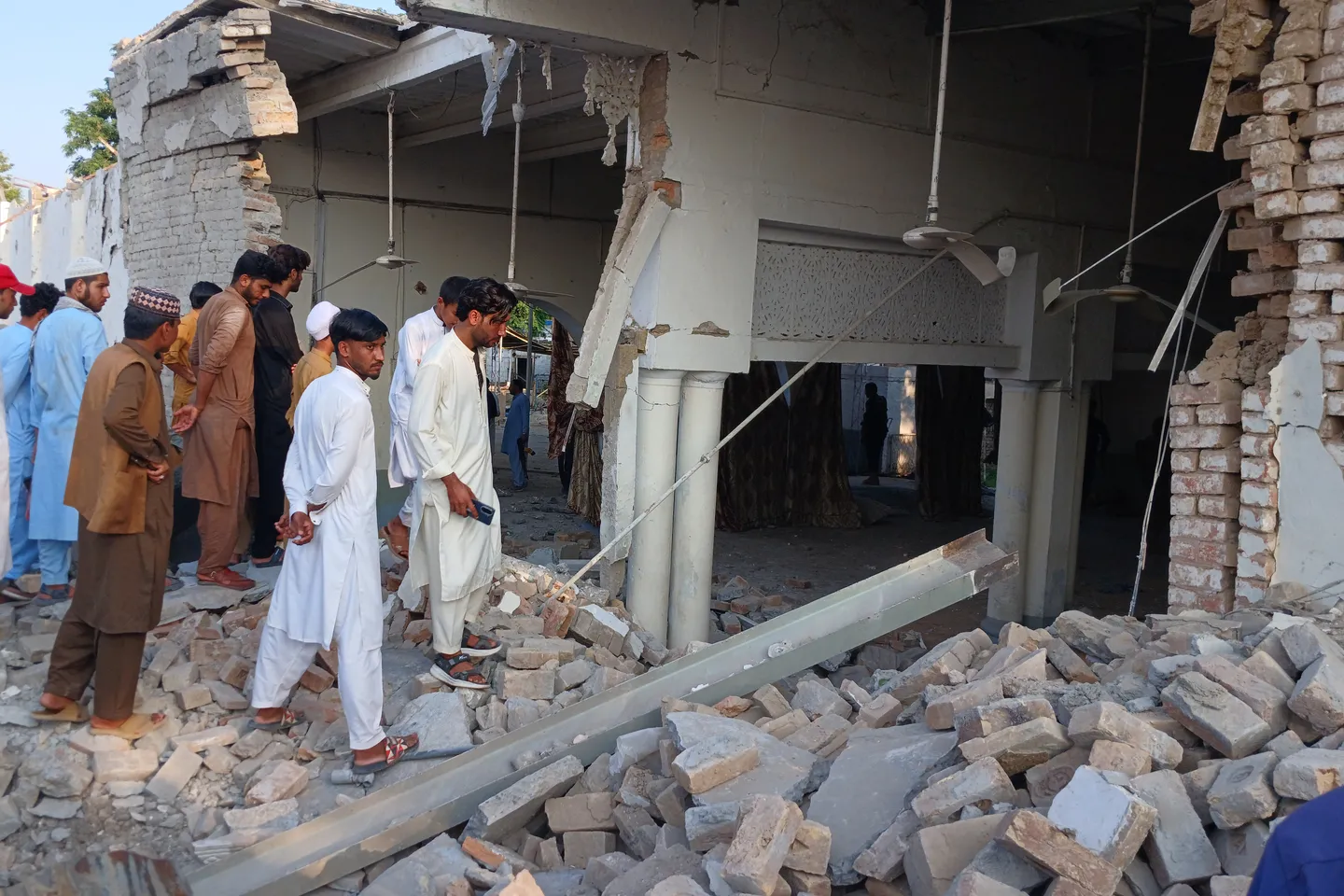
Security has deteriorated sharply. The Global Terrorism Index 2026 ranked Pakistan the world’s most terrorism-affected country based on 2025 data: over 1,000 incidents and more than 1,100 deaths, the highest toll since 2013 and a rise even as global terrorism declined. The Tehreek-e-Taliban Pakistan remains the primary driver and one of the world’s deadliest groups. Violence surged further in 2026, with one research centre recording an 83 per cent quarter-on-quarter jump in fatalities in the third quarter, concentrated in Khyber Pakhtunkhwa and Balochistan. Attacks target security forces, police, and civilians; TTP and Baloch separatist groups operate with relative freedom, drawing on Afghan sanctuaries. Pakistan has responded with airstrikes into Afghanistan and heightened border deployments, yet cross-border clashes persist. Islamabad blames the Afghan Taliban for harbouring TTP and occasionally accuses India of sponsorship, but independent data point mainly to domestic militant networks and the post-2021 Afghan environment.
Economically, Pakistan remains under an IMF Extended Fund Facility and Resilience and Sustainability Facility. A staff-level agreement in early October 2026 cleared the path for roughly $1.2 billion in further disbursements, contingent on board approval. Growth is projected around 3.5–3.6 percent, inflation near 9.9 percent, and foreign reserves have recovered from earlier lows. Privatisation and fiscal measures continue, yet energy-price shocks, debt pressures, and weak investment constrain recovery. Macroeconomic stability is fragile and depends on continued external support.
These conditions carry direct implications for India. The May 2025 crisis, triggered by the Pahalgam attack that killed 26 civilians (tourists targeted by religion), saw India launch Operation Sindoor strikes on terrorist infrastructure inside Pakistan and Pakistan-occupied Jammu and Kashmir. Pakistan retaliated with drones, missiles, and strikes on Indian military sites. The four-day exchange marked the most serious hostilities in decades, with both sides claiming success and establishing a higher threshold for retaliation. India has publicly framed future terror attacks linked to Pakistani soil as justifying proportionate military response—the so-called “new normal.” A fragile ceasefire holds, but diplomatic ties remain frozen, with no high-level dialogue and India insisting on verifiable dismantling of anti-India groups such as Lashkar-e-Taiba and Jaish-e-Mohammed.
Recent incidents reinforce continuity of risk. In early October 2026, Border Security Force personnel engaged infiltrators who crossed from the Pakistani side in Punjab despite warnings; India rejected Pakistani claims of unprovoked action and cited patterns of narcotics syndicates and illegal movement. Pakistan and China have advanced a boundary protocol in the Shaksgam Valley area of the Kashmir region, which India rejects as lacking legal basis on territory it claims. Pakistan continues to raise the Kashmir issue internationally and warns against Indian military doctrine.
Internal Pakistani turmoil does not automatically reduce the external threat. History shows that periods of domestic stress—political polarisation, military consolidation, or counter-insurgency strain—have sometimes coincided with or enabled proxy activity against India. Weakened civilian control over intelligence and militant networks, diversionary incentives, or simply loss of grip on groups once cultivated can increase attack risks. The TTP’s resurgence, Afghan linkages, and Baloch violence already stretch Pakistani security forces; simultaneous pressure on multiple fronts can produce unpredictable outcomes. Nuclear capabilities and the demonstrated willingness in 2025 to exchange deep strikes raise the stakes of any miscalculation. Border fencing, surveillance, and rapid-response capabilities on India’s side have improved, yet infiltration attempts, drone threats, and ideological networks persist.
India’s post-2025 posture—enhanced air and missile defences, intelligence focus, and readiness for calibrated response—reflects hard lessons rather than adventurism. Lowering that posture because Pakistan is preoccupied with KP, Afghanistan, or IMF reviews would misread the incentives and capacities at play. Political instability and military centralisation under Munir can produce either restraint or assertive signalling; both require clear deterrence. Economic fragility may constrain Pakistan’s conventional options but does not eliminate asymmetric ones. China’s strategic partnership, including infrastructure and potential military dimensions, further complicates the regional balance.
India therefore has every reason to sustain border vigilance, counter-terror cooperation with partners, and military modernisation while remaining open to dialogue once core concerns—particularly the permanent dismantling of terror infrastructure—are addressed verifiably. Pakistan’s current crises are primarily of its own making and primarily its own to resolve. For India, the prudent course is continued preparedness rather than any assumption that internal Pakistani weakness equates to external safety. The costs of underestimating residual capabilities and historical patterns have repeatedly proven higher than the costs of sustained readiness.