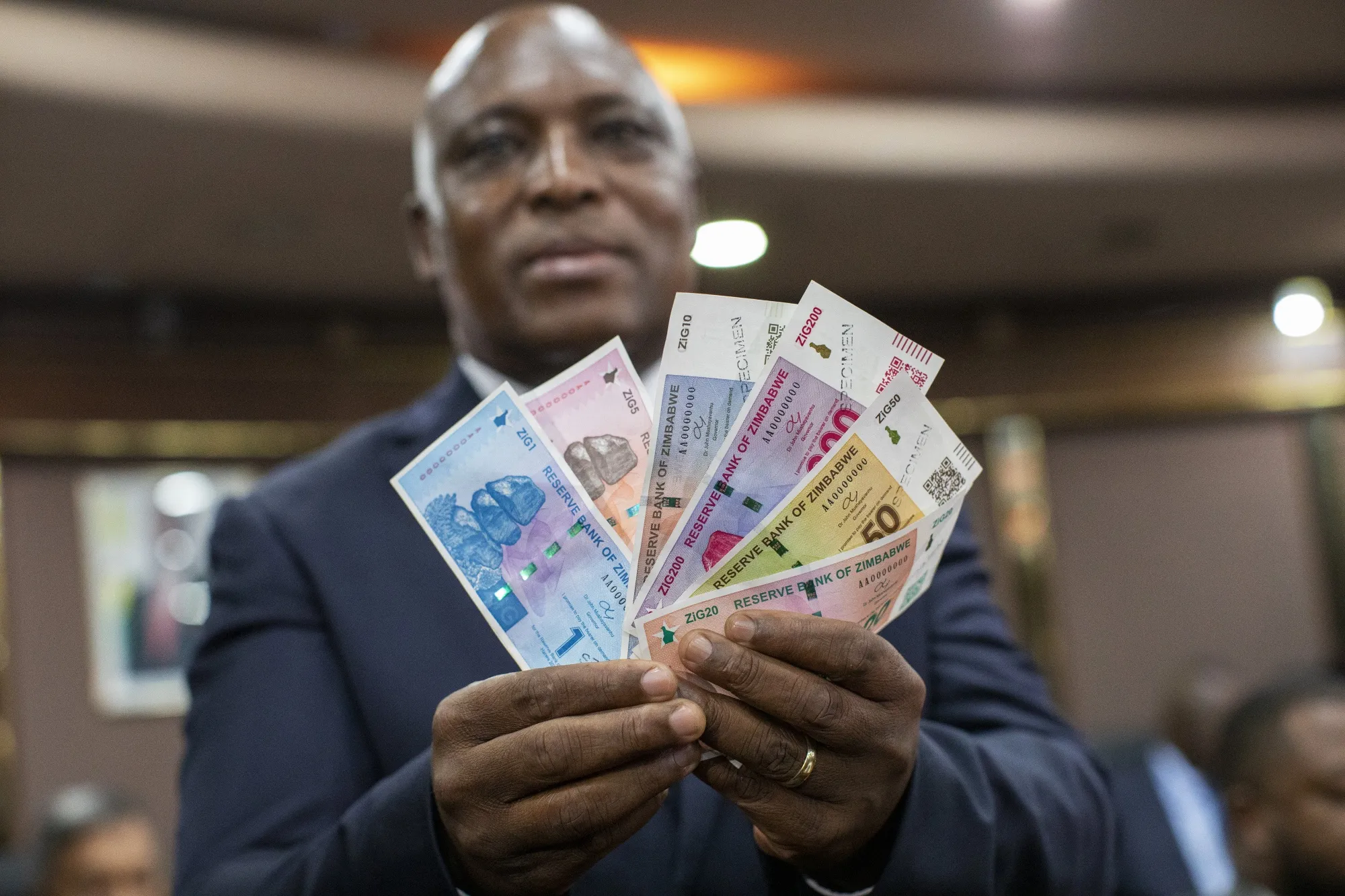
Harare already moves money by phone. What it still pays for is the privilege of moving it slowly, and through too many closed doors. That is why the Reserve Bank of Zimbabwe’s talks with India’s payments utility deserve more than a technical footnote.
On 5 October, governor John Mushayavanhu told Bloomberg that negotiations with NPCI International Payments Ltd could be concluded by 31 October. NIPL is the overseas arm of the National Payments Corporation of India, created in 2020 to take Indian payment systems abroad. The proposal on the table is not a courtesy for Indian visitors. It is an offer to license the technology behind the Unified Payments Interface as shared domestic infrastructure, so banks, mobile-money operators and fintechs can clear transfers in real time on one public layer. Mushayavanhu has said the aim is lower cost, faster payments, and an account-to-account alternative to cards for small domestic transactions, with cheaper acceptance for merchants. Cross-border use and remittances could follow. No fee card or launch date has been published. 31 October is a deadline for talks, not a switch-on. Even so, the direction is the right one.
Zimbabwe does not lack digital money. It lacks a cheap common rail. In the fourth quarter of 2025, the national system handled 238 million electronic transactions. Mobile money accounted for about 87 percent of the volume — roughly 207 million transactions — while the real-time gross settlement system still carried most of the value. Active mobile-financial-services users stood near 11 million. EcoCash has built a diaspora wallet so Zimbabweans in Britain and South Africa can pay school fees and power tokens from abroad. The wallets exist. They do not speak to one another cheaply. In March, the central bank issued QR-code guidelines requiring banks and payment providers to accept a common EMVCo standard and to route inter-provider payments through the national switch. A UPI-style layer would be the engine under that rule.
The cost case is plain once remittances are counted. Diaspora inflows reached $2.45 billion in 2025, up from $2.15 billion in 2024, about $6.7 million a day. Britain and South Africa each supplied a little over a quarter of the early-2025 flow. Those dollars are household income and foreign exchange second only to mining. They still arrive, too often, through some of the dearest corridors on earth. The World Bank put sub-Saharan Africa’s average cost of sending $200 near 8 percent in 2025, against a global average of about 6.5 percent and a Sustainable Development Goal target of 3 percent. SADC routes have run higher still. Every point off that spread is food and working capital that currently leaks to intermediaries.
India’s relevance is that it has already done the hard version of this problem. UPI launched in 2016 with 21 banks. By August 2026, 752 banks were live, and the system processed about 24.5 billion transactions that month, worth ₹29.82 trillion. Government figures put UPI at roughly 49 percent of global real-time payment volumes in 2025, and at 84 percent of India’s own digital payments in the last fiscal year. Acceptance for Indian users is live in 11 countries; the Reserve Bank of India wants 20 by 2028–29. The achievement is not an app. It is a public rail: open APIs, any licensed bank or fintech able to join, a QR code a market stall can print, and merchant pricing close to zero on small tickets. India built it for a country of limited formal banking, patchy connectivity and vast informal trade. That is an African problem description, solved at a scale no Western card network has matched on cost.
The export that should interest African treasuries is the rail, not the brand. In May 2024, NIPL signed with the Bank of Namibia to build a domestic instant-payment system on UPI technology, for person-to-person transfers and merchant payments. Peru and Trinidad and Tobago have similar infrastructure agreements. Namibia is the African precedent. Zimbabwe would be the first serious test of whether the same public-rail model can sit on top of a mobile-money market that Africa itself invented. M-Pesa proved a phone could be a bank. India industrialized the layer that stops each wallet from becoming a closed kingdom.
African governments should take that offer as a partnership in public infrastructure, not as a finished product to be consumed. License the technology. Keep settlement at the central bank. Publish interchange. Let a new fintech join without paying rent to the incumbent wallet. The March QR rule already points there. Then connect the domestic rail outward: to the Pan-African Payment and Settlement System, which now links 19 countries and more than 160 banks, and eventually to diaspora corridors where today’s 8 percent levy is a tax on labour. The identity half of the same Indian stack is already useful on the continent. MOSIP, the open-source platform inspired by Aadhaar, underpins Ethiopia’s Fayda ID and is being built elsewhere. Payments without a trusted identity stay thin. Identity without cheap payments stays a register.
Ghana, Uganda, Rwanda and Mozambique have already signaled interest in the same payments experience. The countries that move first will set the standards the rest inherit. A signed term sheet is not a live network, and trust in Zimbabwe will be earned in settlement, not in speeches. But the model India is offering — a public good built in the global South, priced for the small ticket, open to every licensed provider — is the most practical digital bargain Africa has been shown in years. Harare should close it, then make the rail its own.