In August 2026, Jiangxi Electric Power Construction, a subsidiary of the Chinese state-owned company PowerChina, withdrew from the bidding process for the privatisation of Pakistan’s Faisalabad Electric Supply Company (FESCO), one of the country’s largest electricity distribution companies. Although the company had initially expressed interest in acquiring between 51% and 100% of FESCO, it ultimately decided not to provide the required documentation and withdrew from the deal.
PowerChina’s FESCO case
The failure of the Chinese company to make progress came at a time when Pakistan was trying to attract private capital into its troubled electricity distribution system. FESCO is part of a wider privatisation effort intended to reduce losses, improve bill collection, and ease the financial burden on the state.
For a Chinese power company, therefore, this opportunity comes with a difficult calculation. Pakistan’s distribution companies suffer from electricity theft, weak debt recovery, technical losses, and huge unpaid bill accumulations. The buyer would not just be inheriting an electricity network, but also a troubled commercial system.
The FESCO case is just one more symptom of a broader change in the Chinese approach. Chinese companies are becoming increasingly reluctant to accept challenging commercial conditions based solely on strategic ties. This is a significant departure from the early years of CPEC.
The investment numbers tell the same story
The clearest evidence of this change can be seen in the data on foreign direct investment.
China remains Pakistan’s largest foreign investor. However, Chinese net foreign direct investment (FDI) fell to approximately $862 million in the 2025–26 fiscal year, down from around $1.22 billion in the 2024–25 fiscal year. This represents a decline of around 29% in one year.
The broader BRI picture is also instructive. A 2026 assessment by the Green Finance & Development Centre revealed that there were no new Chinese investment announcements or construction contracts in Pakistan during the first half of the year, despite substantial Chinese BRI engagement globally.
Therefore, the pattern looks less like abandonment and more like selectivity. China continues to invest where it sees a viable commercial or strategic opportunity. What has changed is the willingness to commit large amounts of capital simply because a project carries the CPEC label.
Pakistan’s governance problem raises the cost of business
One reason is Pakistan’s institutional environment. The 2025 Governance and Corruption Diagnostic by the International Monetary Fund, which was prepared at the request of the Pakistani government and with the participation of the World Bank, found persistent corruption risks across Pakistan’s economic institutions. The report identified complex regulations, weak institutional capacity, fragmented oversight, inconsistent enforcement and limited transparency as constraints on private-sector development. The report also highlighted weak procurement controls and delays in resolving commercial disputes.
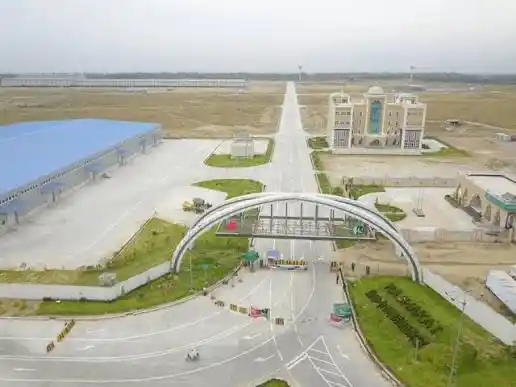
In November 2024, the China Century Steel Group threatened to dismantle its Rashakai Special Economic Zone plant and withdraw its investment. The company claimed that Pakistani government departments responsible for handling foreign investment had failed to resolve multiple issues. The first phase of the project involved an investment of $82 million, with a further $200 million planned for subsequent phases. Pakistan responded quickly. Planning Minister Ahsan Iqbal has instructed the Board of Investment, the Power Division, the Federal Board of Revenue and the Khyber Pakhtunkhwa Economic Zones Development and Management Company to resolve issues relating to land prices, electricity tariffs and regulatory matters.
This issue resurfaced in Gwadar in 2026. Han Geng Group announced that it would close its Gwadar factory due to administrative, policy and operational obstacles. Although the company claimed to have met Chinese customs and international food safety requirements, it struggled to obtain the necessary export approvals. The company also reported losses from salaries, electricity bills, penalties and container demurrage. Pakistani officials intervened, however, and the company subsequently agreed to continue operations.
China has also withdrawn its support for the Main Line-1 railway project, which was once considered the CPEC’s flagship transportation project. Pakistan has since approached the Asian Development Bank to finance the Karachi-Rohri section. This followed years of stalled negotiations over the project’s cost and financing. Such episodes create a different kind of risk for investors.
Pakistan could sign agreements with Chinese companies, offering them access to special economic zones and investment incentives. However, these commitments mean little if companies then spend months negotiating basic administrative issues. Such issues make it harder to predict the cost of doing business.
CPEC is becoming a harder proposition for China
The broader lesson is that commercial viability is now a more stringent requirement for CPEC projects. This does not mean the disappearance of Chinese engagement. Rather, it is a change in who carries the financial risk.
CPEC is becoming an increasingly challenging prospect for China. Nevertheless, Beijing still has powerful reasons to remain engaged with Islamabad. It occupies a strategically important location next to China’s western border and Gwadar provides access to the Arabian Sea. Therefore, Beijing has little incentive to simply walk away.
The first phase of CPEC benefited from an unusually strong alignment between Chinese state policy and Pakistan’s infrastructure requirements. Pakistan required electricity and transport infrastructure. Chinese companies had the necessary capital, technology, and construction capacity. Beijing also wanted to demonstrate the value of the BRI.
The second phase is different. It requires factories, exports, industrial supply chains and private-sector investment. These activities depend on Pakistan’s economy functioning day-to-day. They cannot indefinitely rely on strategic subsidies. This is why recent developments are important when considered collectively.
China is still willing to invest. However, Chinese companies are increasingly asking whether individual projects can survive Pakistan’s governance weaknesses, security threats, payment issues and uncertain commercial environment. This is a more important question for CPEC than whether China remains Pakistan’s ‘all-weather’ friend. Pakistan based its plans for CPEC on the assumption that Chinese capital would be available to transform its infrastructure and industrial base. However, Beijing is now asking Islamabad to ensure that this investment is commercially and operationally viable. If Pakistan is unable to do so, CPEC will face a difficult paradox: while the corridor may remain strategically important to China, it will become increasingly expensive to maintain.