Trade, transit and trust were the key components that made the agenda of External Affairs Minister Dr S Jaishankar’s recently concluded visit to Moscow for the 27th India-Russia Inter-Governmental Commission on Trade, Economic, Scientific, Technological and Cultural Cooperation (IRIGC-TEC) meet. The meeting highlighted the enduring strength of the partnership, despite global pressures and obstacles. The IRIGC-TEC interaction is an important mechanism in this direction, which acts as a precursor to the upcoming 24th India-Russia Annual Bilateral Summit for securing bilateral trade and technical cooperation alongside strategic continuity. The meeting also aimed to achieve the shared objective of $100 billion in bilateral trade by 2030.
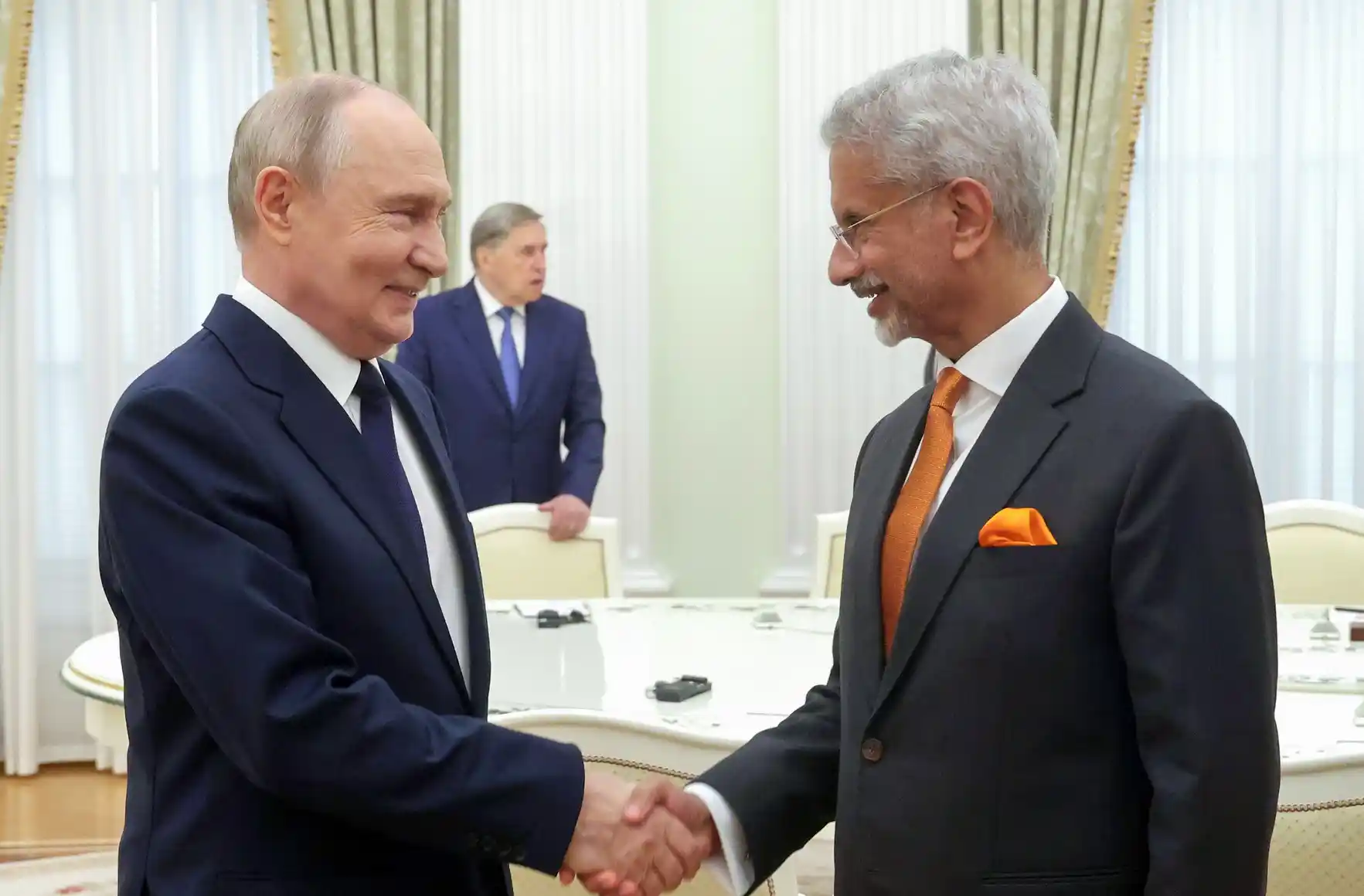
On 24 August 2026, Russian President Putin received Mr. Jaishankar at the Kremlin and the Russian side was also represented by Minister of Foreign Affairs Sergey Lavrov, First Deputy Chairman of the government of Russia and Co-chair of the IRIGC-TEC Denis Manturov, deputy chief of staff of the presidential executive office Maksim Oreshkin and Aide to the President of Russia Yury Ushakov. Indian Ambassador to Russia Vinay Kumar and Joint Secretary Mayank Singh.
During his opening remarks, Jaishankar began his speech by passing along Prime Minister Narendra Modi’s greetings and handed over the personal communication to President Putin. The Minister expressed satisfaction over the strengthening collaboration in trade, economy, energy, fertilizers, and nuclear power. He shared PM Modi’s eagerness to meet Mr. Putin during the scheduled SCO summit on 31 August and 01 September 2026, which also marks the 25th anniversary of the regional security and economic bloc, and the BRICS Leaders’ summit, which India will host on 12- 13 September 2026, and Russian President Putin confirmed he will attend.
Dr Jaishankar held comprehensive discussions during the summit. India-Russia bilateral trade has surged from around $13 billion in 2012-22 to nearly $60 billion in 2025-26 with both sides targeting $100 billion in trade by 2030. However, he highlighted that there is a widening trade imbalance – a key concern from the Indian side as it had increased from $6.6 billion to over $50 billion. FM Jaishankar urged steps to be undertaken to fix the trade imbalance, which requires opening markets, cutting trade rules, improving payments, and boosting business ties, which would be critical to addressing the issue.
At the summit, President Putin announced that Russia will boost its fertilizer shipments to India to satisfy the requirements of its farmers and agricultural sector, alongside a complete focus on expanding cooperation in energy, nuclear, and other strategic supplies. He also stated that the special and privileged partnership between the two continues to advance through various spheres of cooperation in trade, technology, science and innovation, and many more. Mr. Putin also reiterated India’s commitment to build a stable, balanced world order with deeper collaboration alongside addressing mutual interests and concerns on global and regional issues.
Russia also assured an uninterrupted supply of energy, including crude oil and coal. It is noteworthy that Russia has emerged as the largest crude supplier to India, as its dependence has increased exponentially from 23 percent in January to nearly 50 percent in June-July 2026. India stepped in to supply refined fuel to Russia after Ukrainian drone attacks damaged Russian oil facilities. The damage done has nevertheless forced the energy giant Russia to seek fuel imports despite being one of the world’s largest crude oil producers and refiners.
Even though the US and the European Union applied pressure on India for importing oil from Russia post the Ukraine conflict, the energy cooperation between India and Russia speaks otherwise. Indian refiners are not directly supplying petrol to Russia. In fact, the transactions are commercial in nature and not government-backed or directly conducted between companies; Union Petroleum and Natural Gas Minister Hardeep Singh Puri stated that the fuel is purchased by international traders who later sell it to Russia. Replacing the current volumes of Russian oil would be commercially and logistically challenging, particularly when Gulf supplies are facing geopolitical risks. Cognizant of the unreasonable sanctions, India continues to pursue ongoing energy cooperation strictly to satiate its growing national energy demands.
The meeting also focused on more trade engagement in the field of pharma, machinery, and agri-products to Russia, including expanding local currency settlements and financial cooperation. The two countries reiterated collaboration in high technology, metallurgy, shipping, forest products, and increasing and strengthening connectivity via the international INSTC. Exploring more potential transit routes for time savings, India has proposed its first cargo ship through a new trade route with Russia via the Northern Sea Route planned for next year to boost bilateral trade. Russia’s Arkhangelsk region and New Delhi are partnering to increase trade via shipbuilding and port shipping. By expanding transport corridors, the strategy aims to speed up shipping between Asia and Europe by building better travel routes and boosting trade bonds.
Supporting the large-scale connectivity vision, Russian Deputy PM Marat Khusnullin had proposed to explore a rail link toward India to reduce dependence on vulnerable yet critical maritime chokepoints- particularly the Bosphorus Strait and the Strait of Hormuz for trade. The proposed route could potentially pass through Central Asia and Iran, connecting Russia overland toward the Indian Ocean region. Although this project is expected to reshape trade routes, the proposed path still worries security experts, especially concerning Iran.
Interestingly, the talks about restarting trade were omitted from the usual business topics, especially key traditional items in the discussions for reviving them. For instance, India, the world’s largest producer of polished diamonds, relies heavily on rough stones from Russia, but it has now reduced its direct imports. Russia wants to fix its diamond trade after sanctions hurt a market that once supplied 30 percent of the world’s rough diamonds. India reduced direct imports of rough diamonds from Russia by 62 percent in HI 2026. New G7 trade bans and sanctions on Russian diamonds likely drove the decline.
The visit by EAM Jaishankar to Russia to co-chair the 27th IRIGC-TEC summit has nevertheless created a positive precedent to further enhance the multifaceted strategic collaboration between the two nations. The discussions established a solid base for an expanded partnership from a combination of material capabilities, strategic reach, and diplomatic influence. The two countries are stronger together given the trusted partnership and their active participation in multilateral fora such as SCO and BRICS that are fast emerging as a counterweight to the Western-led global order. Empowered by the flexibility of strategic autonomy, the two nations have nevertheless cultivated a mature and resilient partnership over the years.