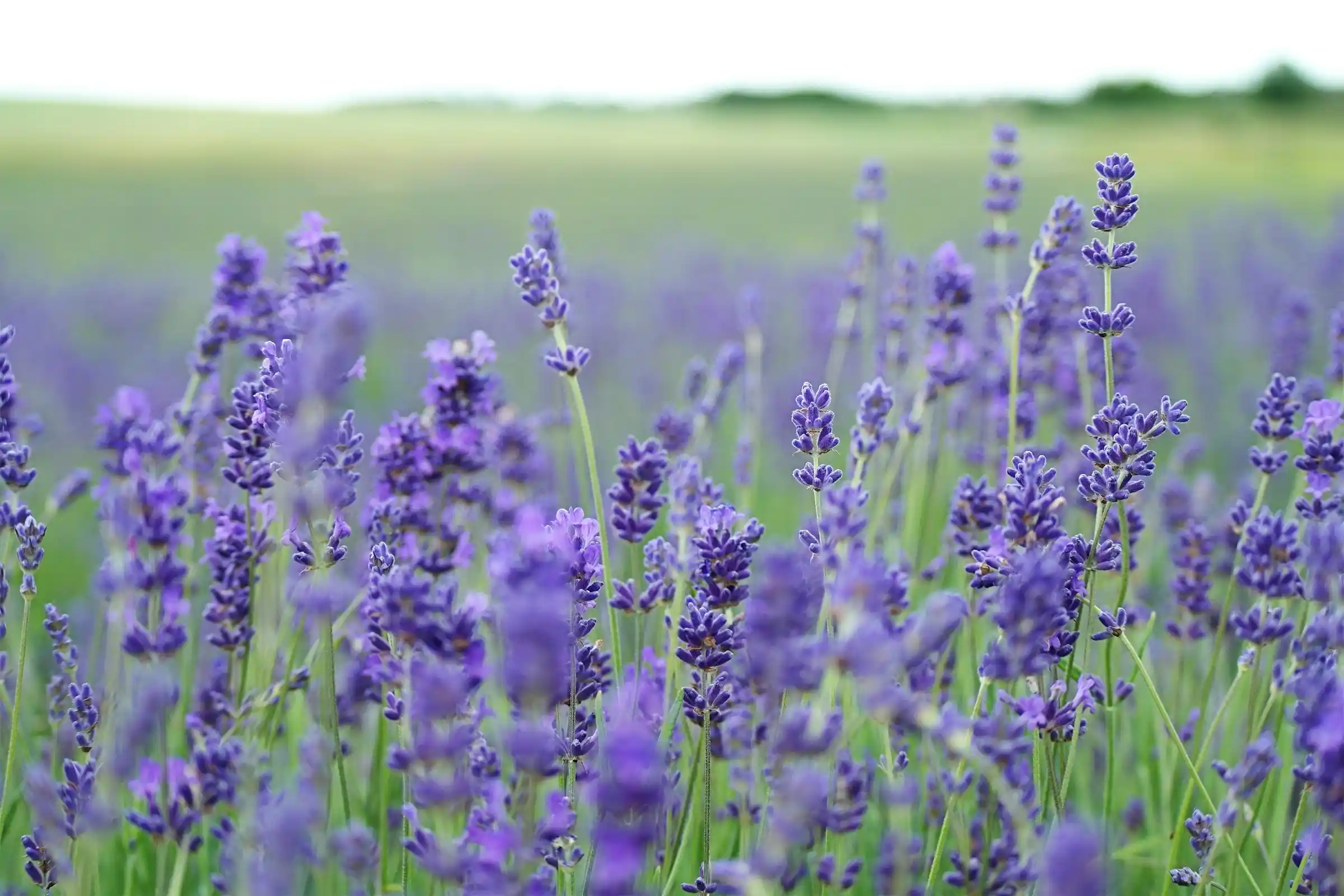
From militancy to peace, from barren slopes to fragrant lavender fields, the rugged Chenab Valley of Jammu and Kashmir is scripting one of India’s most remarkable stories of rural transformation—a quiet revolution that is reshaping lives, rural livelihoods, and the landscape itself.
Welcome to Kishtwar, a scenic mountainous district in the Jammu division, 230 km from Jammu, earlier known as the “Land of Saffron and Sapphire.” But now, winds pass through tall cedars and pine forests, carrying the soothing scent of lavender, rather than gunfires.
For decades, the district has suffered isolation—both economic and social. It’s unbelievable yet true that a new era of property and resilience has arrived with the fragrance of lavender, a high-value farming innovation, nicked as ‘purple revolution.’
Launched in 2028, under the ambitious CSIR-Aroma Mission, lavender farming has completely replaced traditional low-yield crops like maize and wheat. The climatic conditions and scientific interventions of the CSIR teams have significantly turned the tide, generating income between Rs 3.5 lakhs and Rs six lakhs for the farmers, more than double what they used to earn from traditional crops.
Locals admit that much of the credit for transforming the Valley, including areas of Bhaderwah and Doda, into India’s lavender heartland is attributed to local BJP MP and Union Minister Jitendra Singh, who has been consistently promoting lavender cultivation as a high-value alternative to traditional crops.
“The lavender revolution has started attracting global and national attention. You must have seen a Republic Day tableau highlighting how the farmers are breaking barriers and contributing to the area’s economy. We have got mega festivals hosted to bring farmers face-to-face with scientists, people from the industry, and also officials,” says Dr. Singh. Dr Singh, who also attended the festival, recalls the challenges faced during the early days of the initiative.
“Till a decade back, Bhaderwah’s landscape was defined by maize fields and barren land. Introducing lavender was an uphill task as farmers were not prepared to experiment with their holdings. We therefore began on unused plots, assuring villagers that their land would be returned if the crop failed to deliver,” he said.
The experiment soon paid off.
“When a few farmers started making fortunes, the entire village came forward,” Dr. Singh said. “This vindicated a vital concept: a startup doesn’t require an IT degree or a PhD. Many young entrepreneurs here aren’t even graduates. Some haven’t passed Class 12.”
Students and farmers were educated about the cultivation, processing, and commercial potential of aromatic and medicinal plants, herbs, and essential oil-bearing crops.
Presentations at the event highlighted the success of the Lavender Mission, value-addition opportunities, and the sector’s prospects. Scientists, industrial partners, and progressive farmers shared their experiences and insights regarding lavender cultivation, marketing, and entrepreneurship.Dr Zabeer Ahmed, Director, CSIR-IIIM Jammu, detailed the remarkable success of the CSIR Aroma Mission. He said, “Bhaderwah has gained national and international recognition for its quality lavender production.” He reiterated CSIR-IIIM’s resolve to sustain the cultivation by providing scientific support, advanced technologies, and market linkages to farmers.
The officials also stressed the need for diversifying into aromatic and medicinal crops to enhance farmers’ incomes and strengthen the rural economy. Market opportunities, quality standards, and future collaborations aimed at expanding the lavender value chain in the region were also discussed.
Taking the mission forward, Prime Minister Narendra Modi highlighted the region’s purple revolution in his Mann Ki Baat programme.
The sprawling lavender fields have also emerged as a tourist attraction, drawing visitors from across the country.
“Earlier, we cultivated maize and wheat mainly for household consumption. There was hardly any cash income left after meeting expenses,” says Ghulam Rasool, a farmer from Kishtwar. “Today, lavender has given us a market-linked crop and a sense of financial security.”He expressed happiness over the Prime Minister’s mention of the initiative in Mann Ki Baat to give further momentum to the movement.
Sunita Rani, another farmer, admits that the crop has also created employment opportunities for women. “The nursery work, harvesting, and processing have brought regular income to many households. Many youths who were planning to leave villages in search of jobs are now looking at farming differently,” she says.
Distillation units, lavender nurseries, essential oil processing, and rural tourism are also generating new economic activity across the valley. Lavender is a type of herb, and oil is extracted from lavender flowers, which are used in medicine as well as cosmetics. It is also used to treat fungal infections, hair loss, and wounds. Other uses include skin care and beauty products, perfumes, and shampoos. Scientists say lavender extraction is also used to relieve headaches, sprains, toothaches, and pain from wounds.
Keeping in view its success in Jammu and Kashmir, the Himachal Pradesh government has decided to collaborate with central agencies to expand the Aroma Mission into Himachal’s high-altitude and temperate districts. Areas like Chamba (bordering J&K), Kullu, and Kinnaur are being explored by the CSIR-Institute of Himalayan Bioresource Technology (CSIR-IHBT) for the cultivation of aromatic plants.