One of the prime conditions for the ascension on the global prestige ladder is to be a major arms exporter. Countries with advanced defence industries and global arms market exert greater power in international affairs using arms trade as tool for geopolitical leverage. It is considered as a strategic tool helping shape alliances, exert geopolitical influence and also boost economic footing. This also helps the supplier country strategically with logistical support as well as contributing to greater deterrence by augmenting partner countries’ defence capability and incorporating it within the supplier country’s strategic network strengthening its own geopolitical leverage. That is why defence export has become a key foreign policy tool of India aspiring to become a major global player strengthening her diplomatic influence and global partnerships. Defence Minister Rajnath Singh has expressed confidence that India’s defence export will reach 50,000 crore rupees by 2030. Indeed, with expansion of her defence market India wants to expand her influence in regions which align with her geopolitical and strategic interests and Global South is growingly feature itself in India’s strategic map. The export of BrahMos supersonic cruise missile seems as a prime booster in this direction.
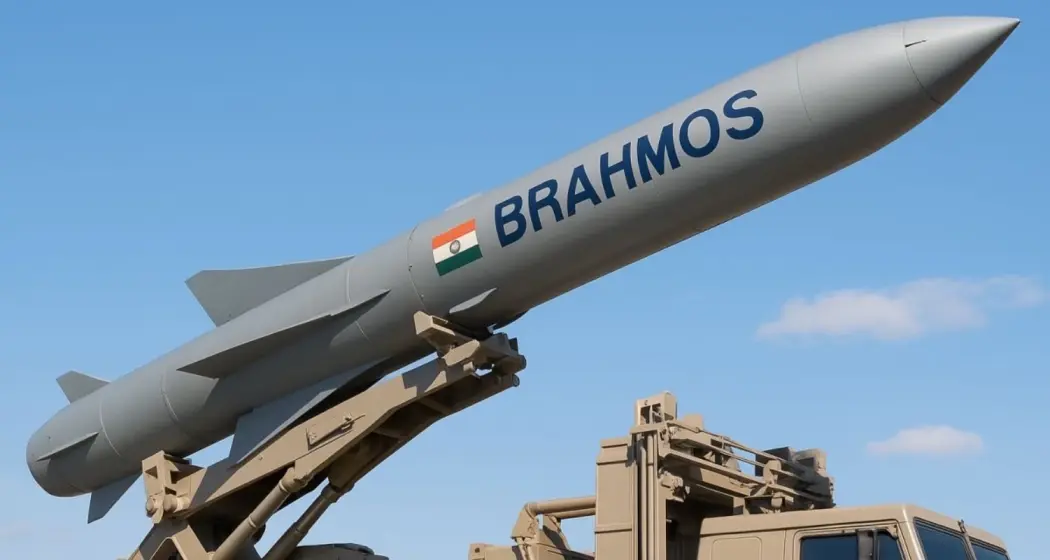
India’s defence export surged to Rs. 38,424 crore in FY 2025-26, highest level ever recorded with customers coming mainly from her neighbourhood in South and Southeast Asia. As Myanmar remains the largest destination of India’s defence export, countries like the Philippines, Vietnam and Indonesia are queuing up. India’s relations with Southeast Asia have evolved with time and this engagement today is in a new avatar with India eyeing on the region as its latest defence market. Prime focus of this defence trade is the BrahMos missile. This supersonic cruise missile, jointly produced with Russia, has triggered curiosity because of its speed, precision strike capability and versatility making it formidable weapon for land, sea and air as well as submarine-based attacks. With capacity of reaching speeds between Mach 2.8 and Mach 3, significantly faster than many conventional cruise missiles used by naval forces around the world, the missile can strike targets exceeding 400 kilometers away and can be launched from land, sea, and air platforms. The missile is gaining traction amidst the growing desperation of the South China Sea littoral states like the Philippines, Vietnam and Indonesia to augment their deterrence capacity. The mission is meant to counter any aggressive naval posture of China to establish its territorial claim over the South China Sea maritime zone overlapping similar claims of other littoral states. One way to strengthen the capacity is by augmenting the Anti Access-Area Denial (A2/AD) posture. Indonesia stands on the brink of its own A2/AD breakthrough and its decision to procure BrahMos missile from India could become one of Southeast Asia’s most consequential coastal-defense acquisitions. Vietnam is another potential customer of India’s BrahMos missile as littoral of South China Sea. India and Vietnam discussed the BrahMos deal during Vietnam’s President To Lam’s visit to India (May 5-7) this year. It comes as part of India-Vietnam Comprehensive Strategic Partnership. The Philippines received the first batch of the BrahMos missiles in 2024 becoming India’s first customer of the missile while India delivered the second batch of the missile in April 2025.
India’s BrahMos missiles have intrigued the counties of the Global South for more than two decades. Back in 2010, BrahMos shone at the Malaysian defence show which attracted several defence personnel from Malaysia, Vietnam, South Africa, Indonesia, Thailand, Egypt, Oman, Brunei and many African and West Asian countries. According to reports, Malaysia is considering feasibility of integrating the BrahMos-A supersonic cruise missile onto its fleet of Su-30MKM multirole fighter aircraft. India is fast emerging as potential supplier of the missile in global market, especially in the Global South. The missile system has reportedly drawn interest from at least 15 countries spanning from Asia to South America after its successful use in Operation Sindoor against Pakistan last year. The West Asian and Arab countries like Egypt, Saudi Arabia and UAE kindle hope for the expansion of the missile’s market in the region as the regional security order gets challenged day by day. Argentina is also keen to procure the missile and its defence minister toured BrahMos missile facilities during his 2023 India visit. Other South American countries like Brazil, Chile and Venezuela also want to procure BrahMos missile system for naval and coastal defence.
As the world order turns more volatile with major powers busy in armed conflicts, the defence supply chains are getting disrupted. Ukraine war has significantly disrupted global defense supply chains, creating shortages and delivery delays for numerous countries in the Global South who rely on Russian and Ukrainian military technology forcing them to recalibrate their defense procurement procedure and forcing some to diversify suppliers. This caters a golden opportunity to India. India is in a mission to convert from arms importer to arms producer and exporter. India aims to convert her defence industrial ecosystem into international export powerhouse. For this purpose the government rolled out Defence Production and Export Promotion Policy in 2020 to promote defence exports. Under this Defence Atmanirbharta initiative, India recorded highest ever defence production in FY 2024-25 worth Rs. 1.54 lakh crore while her defence export reached Rs. 23, 622 crore, up from Rs. 1000 crore in 2014. BrahMos today has achieved historic milestone in Defence Atmanirbharta initiative of Indian government possessing full-fledged design centre, a Missile Industrial Consortium for producing different sub-systems and world class integration involving 200 small and medium Indian public and private defence sector enterprises and institutions. In October 2025, the first batch of BrahMos missiles manufactured at the BrahMos Integration and Testing Facility Centre in Lucknow was unveiled by Defence Minister Rajnath Singh and Uttar Pradesh Chief Minister Yogi Adityanath. The BrahMos facility under the Uttar Pradesh Defence Industrial Corridor carries out the complete process of assembly, integration, and testing to the highest technical standards.
As India marches on the path of major arms exporter, BrahMos missile glows as torch. India’s growing expertise in the missile manufacture and its expanding market especially in Global South boosts India’s Defence Atmanirbharta helping her to climb up the global prestige ladder to exert greater power in international affairs.