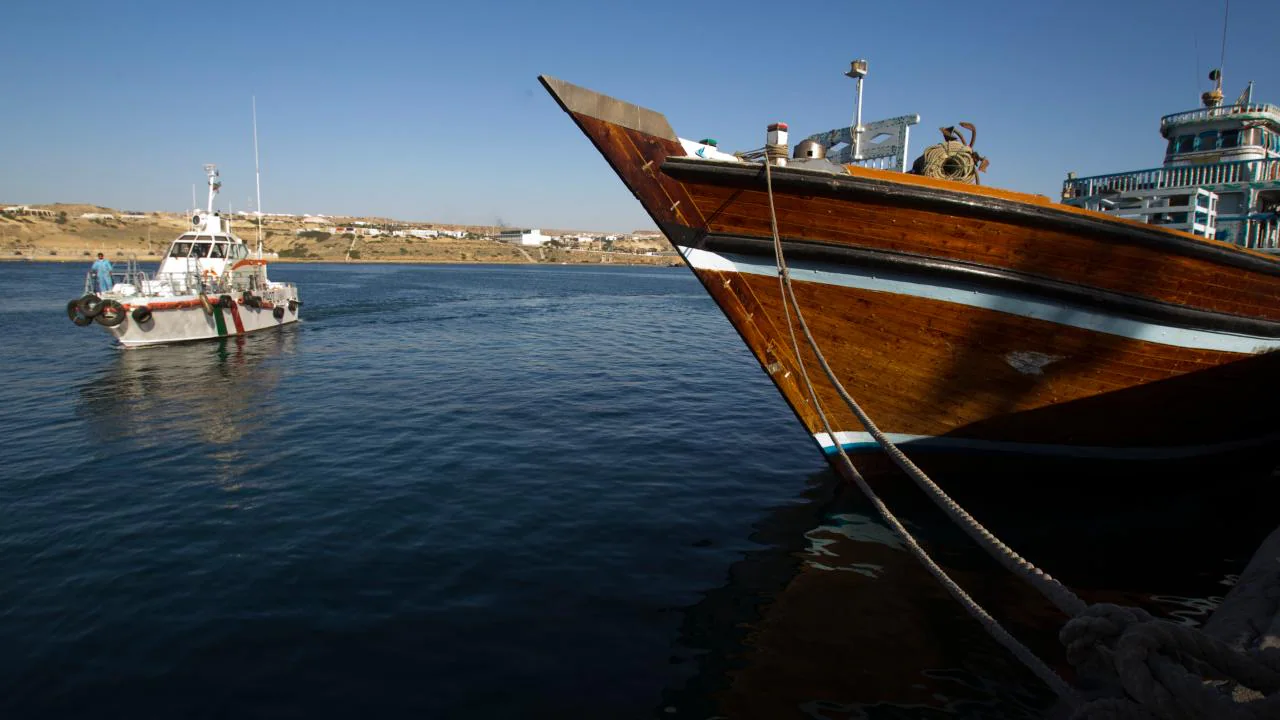
The uncertainty surrounding India’s involvement in Iran’s Chabahar Port has once again made visible the vulnerability of India’s contemporary foreign policy and the desire for strategic autonomy in a scenario where infrastructure, sanctions, energy security, and great power rivalries increasingly intersect. For India, the Chabahar port project represented a viable connectivity corridor, a commercial alternative, a diplomatic instrument, and a strategic answer to its geopolitical constraints. The expiration of the waiver of American sanctions for Chabahar on 26 April 2026, combined with the ongoing conflict in West Asia, has created challenges that go beyond mere procedural hurdles. It has pushed one of India’s key connectivity projects into a position of heightened strategic uncertainty and vulnerability.
There is a clear imperative for New Delhi to safeguard this project in a manner that avoids provoking punitive measures from the United States while simultaneously preserving its enduring strategic relationship with Iran. India signed a 10-year agreement in the year 2024 to develop the port, with an investment commitment of around $120 million. The aim was to secure a reliable route to Afghanistan, Central Asia and the larger Eurasia while bypassing Pakistan. This was supposed to enhance India’s limited ability to project economic influence into its extended neighbourhood. It gave India a maritime and land bridge to Afghanistan, Central Asia, and eventually the multimodal transport network part of the International North-South Transport Corridor (INSTC). Its value lies not only in trade volumes but also in strategic access.
The current conflict in the Middle East highlights the fragility of connectivity projects and due to unstable geopolitical scenarios. The United States had granted India relief from sanctions in 2018, recognizing Chabahar’s role in Afghanistan’s reconstruction and regional connectivity. These sanctions were further waived for another six months in October 2025 to run Chabahar port, and India’s diplomatic engagement secured a conditional extension till April 2026. Now with the ending of this extension, India faces a difficult choice, i.e., to scale down its role in the Chahbahar project or to find a way to work around American sanctions. None of these options is ideal. A full withdrawal from the Chabahar project would damage India’s long-term credibility with Iran, West Asia, and Central Asia. At the same time, if New Delhi continues to work through the Chabahar project, then it risks complications with Washington. A transient and myopic policy for short term gain would only enmesh India in further complications. What is needed is a long-term policy that does not weaken India’s operational control vis-à-vis both the United States and Iran, and at the same time strengthens India’s geostrategic presence through the Chabahar port.
The ongoing conflict in West Asia actually sharpens the sanctions politics. In a scenario where Washington’s confrontation with Tehran intensifies, even limited Indian cooperation with Iran can become a stifling choice for India’s policy-making. New Delhi is therefore trying not to deal with a technicality of the sanctions issue, but it is also trying to navigate a conflict environment in which economic exemptions, diplomatic support and strategic patience are all shrinking.
India’s position is further complicated by its energy security concerns. Any escalation in the region and the Strait of Hormuz will have direct implications for Indian energy imports, shipping, insurance and energy prices. So, India’s diplomacy towards Iran cannot be considered with respect to Chabahar port alone because it (Iran) remains central to the security of energy supply chains. Concurrently, India is constrained from risking a significant deterioration in its relations with the United States, particularly in light of the substantial deepening of bilateral cooperation in defense, technology, and the Indo-Pacific domain. Chabahar, thus, sits at the intersection of India’s western and eastern strategic theatres as it links India’s outreach to Central Asia and further Eurasia with its maritime dependence on West Asian stability and its global partnership with the United States.
The prospective consideration by India of a temporary divestment or transfer of operational stakes to an Iranian entity represents a pragmatic strategy aimed at mitigating sanctions exposure while preserving its commitment to the project. It would allow India to preserve diplomatic space while avoiding direct confrontation with the United States. However, this approach also comes with a set of challenges. Given that connectivity initiatives fundamentally entail sustained presence, active management, and long-term institutional embeddedness, any excessive retrenchment by India risks undermining its ability to reclaim its previously established position. Chabahar’s strategic significance also needs to be viewed against the backdrop of China’s presence in the West Asian region. Chabahar offered India a geographically proximate but politically distinct alternative. It enabled New Delhi to project its capabilities to develop infrastructure partnerships across the western Indian Ocean and continental Eurasia. Consequently, any weakening of India’s role in Chabahar could generate both figurative and material opportunities for other external actors, including China and Russia, to exert greater influence over the Chabahar port’s future trajectory. In the case of Afghanistan and Central Asia, Chabahar was designed to provide these landlocked states with an alternative to Pakistan-dependent connectivity routes. If Chabahar stagnates, India’s broader connectivity strategy through Central Asia to Eurasia would lose a critical logistical support. Diplomatic outreach without physical connectivity has a limited strategic effect.
For sure, India’s connectivity ambitions require insulation from geopolitical shocks. Chabahar’s vulnerability also indicates that India needs to diversify its trade routes—both maritime and land. Ultimately, Chabahar has become a test case for India’s diplomatic balancing and rebalancing. New Delhi cannot afford to abandon the project because it would weaken its regional connectivity ambitions and would signal excessive dependence on American preferences. The most likely path is therefore one of calibrated continuity with diplomatic engagement with Washington, reassurance to Tehran and avoidance of irreversible withdrawal. Chabahar port’s future will depend less on infrastructure engineering than on geopolitical management. In that sense, Chabahar has become a case study for India’s strategic policymaking efforts in an era where every connectivity route and corridor is also a diplomatic arena.
The views expressed are those of the author and do not belong to the institution.