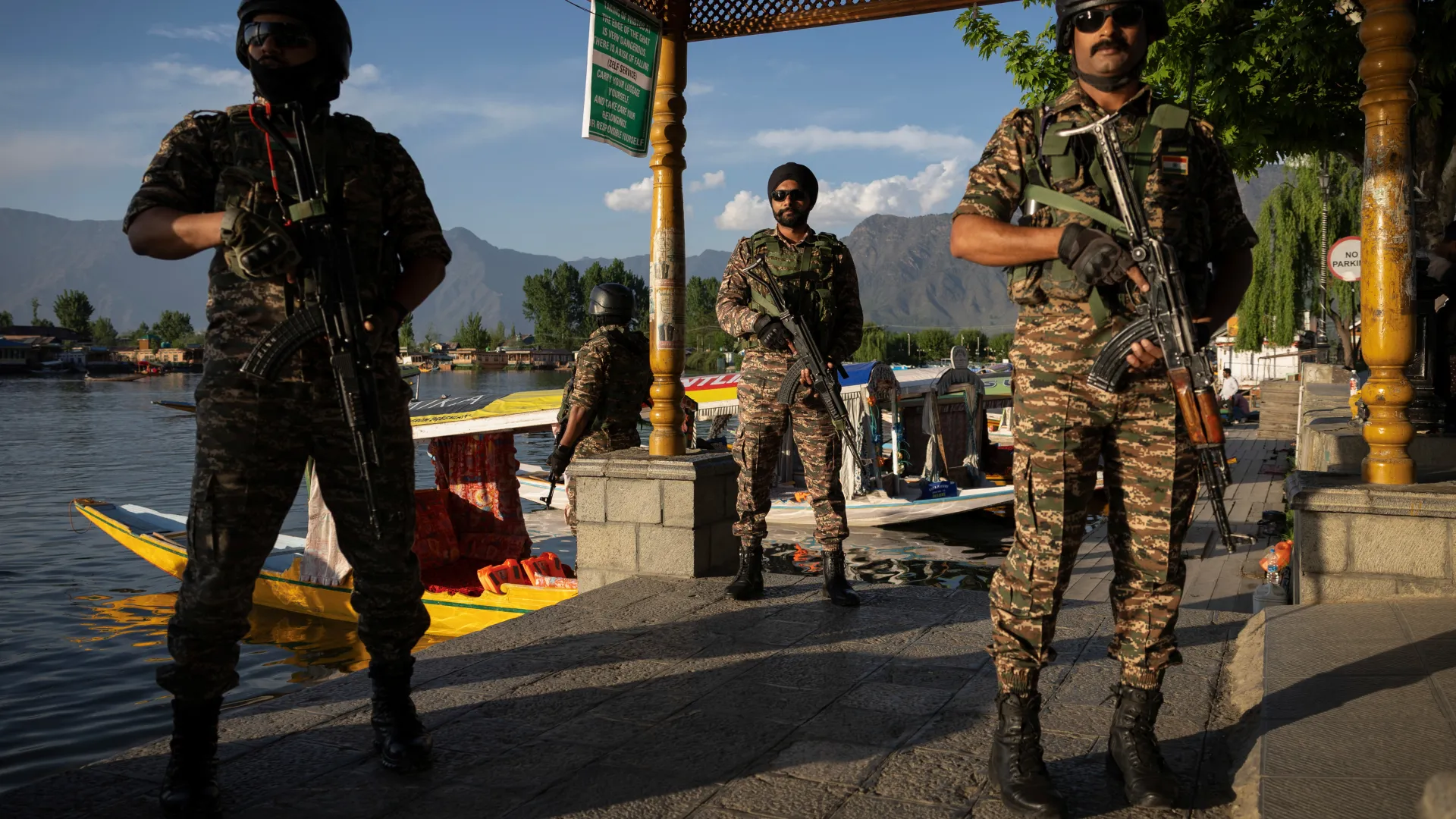
The first anniversary of the Pahalgam massacre, the date April 22, 2025, burns like an open wound. Twenty-six innocents—mostly Hindu tourists, 25 Indians and one Nepali—gunned down in cold blood in the Baisaran meadow by Lashkar-e-Taiba killers who singled out men by their religion, their identity, their very presence in what should have been a place of peace. The meadows that once echoed with the laughter of families now echo with the ghosts of those who came trusting India’s promise of normalcy. And as a Kashmiri Muslim who has spent decades on X calling out the poison that festers in my own community, I refuse to offer platitudes or false equivalences. This was not “resistance.” This was jihadist barbarism, enabled by the very ecosystem we have let rot for decades.
I have watched this horror unfold before. In the 1990s, I saw the ethnic cleansing of my Kashmiri Pandit brothers and sisters—their homes burned, their temples desecrated, their women threatened with rape, their men slaughtered under the slogan “Raliv, Galiv ya Chaliv” (convert, leave or die). I spoke against it then, as I do now, against the communal hatred that turned the Valley into a laboratory for Pakistan’s proxy war. I have never shied away from naming the Islamist radicalisation that drove moderate Sufi Kashmir into the arms of the Jamaat-e-Islami and its terror tanzeems. The forced exodus of Pandits was not “migration” or “political fallout.” It was jihad. And the same ideology that justified it in the ’90s is what justified Pahalgam in 2025—targeted killings dressed up as “freedom struggle” by overground workers who provide safe houses, logistics, and moral cover.
The only way to combat this external terrorism—Pakistan’s state-sponsored machinery of death—is with an unrelenting war on the internal one. That means deradicalising the local population that sustains it: the overground workers who ferry arms and information, the women who carry water and food to hideouts while their husbands and sons preach from mosques that terror is “jihad fi sabilillah.” It means confronting the intellectuals, the academics, the social media warriors in our community who intellectualise and justify every attack as “blowback” or “occupation resistance.” I have seen this whitewashing of terror evolve over the years—the false equivalences, the whataboutery, the Red-Green alliance that excuses Islamist violence while screaming “Islamophobia” at any pushback. Enough. Deradicalisation is not a seminar topic. It is the non-negotiable prerequisite for peace. Without it, every Operation Sindoor, every surgical strike, every diplomatic exhibition in Washington is just theatre. The terrorists will regroup because the soil here remains fertile.
And this is where the Government of India has failed us—repeatedly, cynically, and dangerously. Delhi’s approach to separatist elements within the Indian Muslim community, particularly in Kashmir, has been a shameful on-again, off-again waltz. One day, abrogation of Article 370 and house arrests for dynasts; the next, premature elections that hand power back to the very ecosystem that spawned Pahalgam. One day, crackdowns on OGWs and terror funding; the next, photo-ops with “moderate” faces who quietly wink at the stone-pelters and the mosque loudspeakers. I have called this out often on social media after Pahalgam: the folly of rushing into polls when lives were at stake, the “selection” of the CM, the whispers of Kashmir- “advisers” who still believe in managing separatism rather than eradicating it.
This flip-flop is not governance; it is complicity by hesitation. It signals to the radical fringe that the Centre lacks the spine to finish the job. It tells the silent majority of Kashmiri Muslims—who want tourism, jobs, and normalcy—that their voices will always be drowned out by the gun and the fatwa. I have written and spoken for years that Kashmir’s salvation lies not in more autonomy or more appeasement, but in ruthless accountability for the ecosystem that turned my homeland into a killing field. The Pahalgam killers did not descend from the skies. They were radicalised across the border and sheltered here, justified here—by the very networks Delhi sometimes pretends do not exist when electoral arithmetic demands it.
As a Kashmiri Muslim whose family has paid the price of standing against this madness—exile in my own country, threats, ostracism—I demand better. No more half-measures. No more “dialogue” with those who glorify terrorists as martyrs. Deradicalise the classrooms, the mosques, the drawing rooms where “azaadi” is code for Nizam-e-Mustafa. Rehabilitate the Pandits not as tokens but as rightful sons of the soil. And hold the separatist ecosystem accountable without the seasonal toggling of the switch.
The blood of Pahalgam cries out from Baisaran. One year on, if Delhi continues its sometimes-on-sometimes-off charade with the very forces that murdered those tourists, then the next anniversary will be bloodier still. The choice is not between “Kashmiriyat” and “national security.” It is between civilisation and barbarism. I have chosen the former, as have countless silent Kashmiri Muslims. It is time the Government of India chose it too—with steel, consistency, and without apology.