Fifteen years is a long time in diplomacy. Long enough for enthusiasm to fade, for negotiating positions to harden, and for the world itself to change shape. When India and Canada first began discussing a Comprehensive Economic Partnership Agreement (CEPA) in 2010, global trade still carried a sense of forward momentum. Multilateralism had not yet lost credibility. Supply chains were not seen as strategic vulnerabilities. And bilateral agreements were pursued with a certain optimism that now feels almost dated.
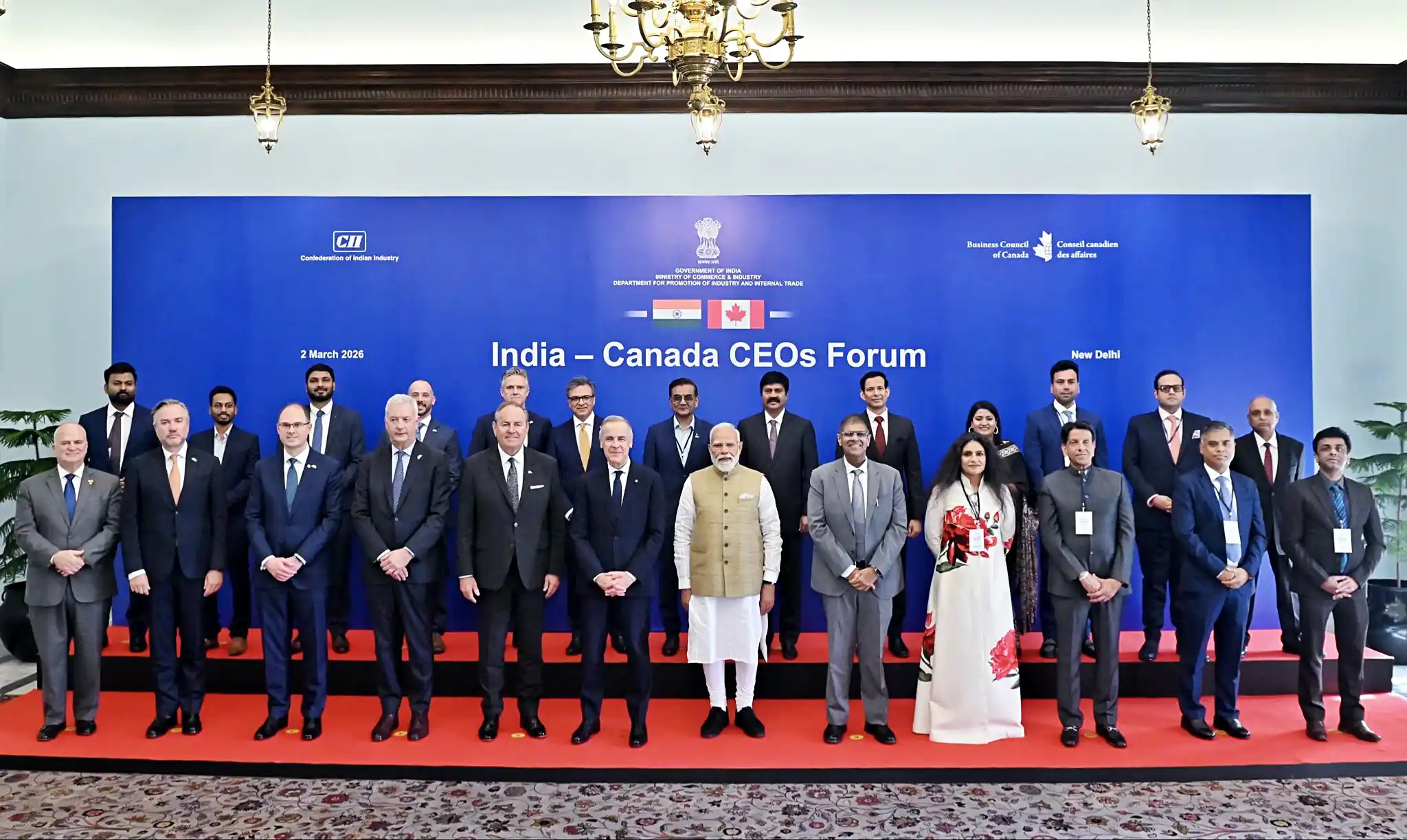
That world is gone. What remains, however, is the underlying logic of India–Canada economic engagement, arguably stronger today than when CEPA was first conceived. The relaunch of negotiations in 2026 at Hyderabad House during the visit of the Canadian PM to India in March this year is therefore not merely a resumption of unfinished business. It is a second chance, informed by experience, to build something more durable than before.
The earlier effort faltered in familiar ways. Negotiations moved slowly, disagreements over market access persisted, and by 2017 the process had effectively stalled. The shift in 2022 towards an Early Progress Trade Agreement (EPTA) reflected a degree of realism that had been missing earlier—a recognition that a comprehensive deal, attempted in one sweep, was unlikely to succeed. Yet even that pragmatic pivot was overtaken by political tensions in 2023, when negotiations were paused altogether.
Trade negotiations that are not structurally insulated from political shocks will always remain vulnerable to them. Goodwill is not a substitute for design. If CEPA is to succeed this time, it must be built not just as an agreement, but as a system capable of surviving the inevitable ups and downs of bilateral relations.
Both countries now come to the table with a more sober understanding of what works and what does not. India’s experience with free trade agreements has been uneven. Agreements with ASEAN, Japan and South Korea expanded trade, but not always to India’s advantage. Utilisation remained low, rules of origin proved cumbersome, and non-tariff barriers often diluted the benefits of tariff concessions. These outcomes have left a lasting imprint on India’s negotiating approach. There is now greater caution, a preference for phased commitments, and a sharper focus on implementation rather than headline announcements.
At the same time, India’s more recent agreements with the UAE and Australia suggest that the learning curve has been internalised. These deals were narrower, more targeted, and quicker to deliver results. They reflected a shift towards pragmatism: secure early gains, build confidence, and expand gradually.
Canada’s trajectory has been different. Trade agreements are central to its economic model, and its experience with frameworks such as USMCA, CETA and CPTPP has given it a certain institutional comfort with complex negotiations. Yet Canada faces its own structural dilemma. Its overwhelming economic dependence on the United States has become a strategic constraint, particularly in an era of geopolitical uncertainty. Diversification is no longer optional. In that context, India represents not just another market, but a long-term strategic partner.
The convergence is real, but it is also fragile. India seeks trade liberalisation calibrated to its political appetite; Canada seeks deeper market access. Reconciling these instincts will require flexibility on both sides, and above all, a willingness to sequence rather than compress the negotiation.
This is where the EPTA assumes significance beyond its modest scope. It is not merely an interim arrangement; it is the foundation upon which a more ambitious CEPA can be built. By focusing on areas of immediate convergence—selected tariff reductions, limited services commitments, addressing non-tariff barriers, and improvements in customs procedures, EPTA can generate tangible benefits without becoming entangled in the most contentious issues. More importantly, it can restore a degree of trust that has been in short supply.
The logic that follows is straightforward. CEPA should not be conceived as a single, all-encompassing outcome, but as a process that unfolds in stages. The first stage can consolidate what has already been negotiated under the EPTA framework. Subsequent stages can progressively incorporate more complex elements, including investment protection, digital trade, and regulatory cooperation. The most sensitive areas—those involving agriculture, intellectual property, or public procurement, can be addressed later, when the political and economic environment is more conducive.
Such an approach may appear incremental, even cautious. In reality, it is the only way to ensure durability. Trade agreements rarely fail because they lack ambition; they fail because they attempt too much, too quickly, without sufficient domestic preparedness.
Let’s be honest: no Indian government is going to touch the dairy sector while small farmers’ livelihoods are on the line, and we shouldn’t expect them to. This brings us to the question of “no-go” sectors, an issue that is often treated as an obstacle rather than a reality. These are not areas where compromise can be easily engineered, nor should negotiators pretend otherwise. A credible agreement must acknowledge these constraints upfront and work around them, rather than allowing them to derail the entire process.
If the structural design is handled with care, the potential gains are substantial. Trade in goods, though currently modest, can expand with better market access and simpler rules of origin. Services trade, already a strong pillar of the relationship, can deepen significantly, particularly in areas such as information technology, education and professional services. Customs facilitation, often overlooked in public discourse, can play a critical role in reducing transaction costs and improving predictability.
Investment, however, is where the relationship already demonstrates its strength. Canadian pension funds and institutional investors have committed significant capital to India’s infrastructure and renewable energy sectors, while Indian companies have established a growing presence in Canada’s services economy. This investment corridor provides a foundation that most trade negotiations lack. It also creates a constituency with a vested interest in stability. However, a more predictable taxation and repatriation framework will be essential to sustain and expand Canadian investment, balancing sovereign regulatory space with investor confidence.
No discussion of India’s trade agreements can avoid the issue of mobility. Mode 4—the temporary movement of professionals is not a peripheral concern for India; it is central. Canada’s demographic realities and skill shortages make it a natural partner in this regard, but domestic sensitivities cannot be ignored. The challenge is to design a framework that facilitates movement without blurring the distinction between temporary mobility and migration. This requires clarity, transparency and enforceability—qualities that have not always been present in previous arrangements.
Beyond the immediate horizon, CEPA must also be conceived as a living agreement. The global economy is evolving rapidly, and areas such as digital trade, clean energy, and critical minerals will increasingly define the contours of economic partnerships. India and Canada already have complementarities in these sectors, and the agreement should provide a mechanism to incorporate them over time.
Yet all these possibilities will remain theoretical unless the agreement is insulated from the political disruptions that have plagued the relationship in the past. In late August 2023, while serving as India’s High Commissioner to Canada, I was informed at the highest levels by Canadian interlocutors of their decision to pause the EPTA negotiations—an early indication of how rapidly the events of that year hardened political and diplomatic positions. The answer does not lie in assuming that such episodes will not recur. It lies in designing institutions that ensure they do not derail economic engagement. Further, a well-designed CEPA does not merely survive political shocks; it raises the cost of creating them.
This means robust dispute resolution mechanisms, regular review processes, and institutional frameworks that continue to function irrespective of political temperature. It also means giving the private sector a more structured role, so that economic stakeholders can act as a stabilising force when governments find themselves at odds.
In the end, the India–Canada CEPA is not simply about tariffs or trade volumes. It is a test of whether two democracies, with their own domestic pressures and periodic disagreements, can build an economic framework that endures beyond the immediate moment.
The negotiations have been long, and at times frustrating. But they have also been instructive. Both sides now understand that ambition, by itself, is not enough. What matters is architecture and the careful design of an agreement that balances opportunity with restraint, and flexibility with stability.
If that balance can be achieved, CEPA has the potential to transform an underperforming relationship into a genuinely strategic partnership. More importantly, it can demonstrate that even in a fragmented global order, economic cooperation can still be built to last.