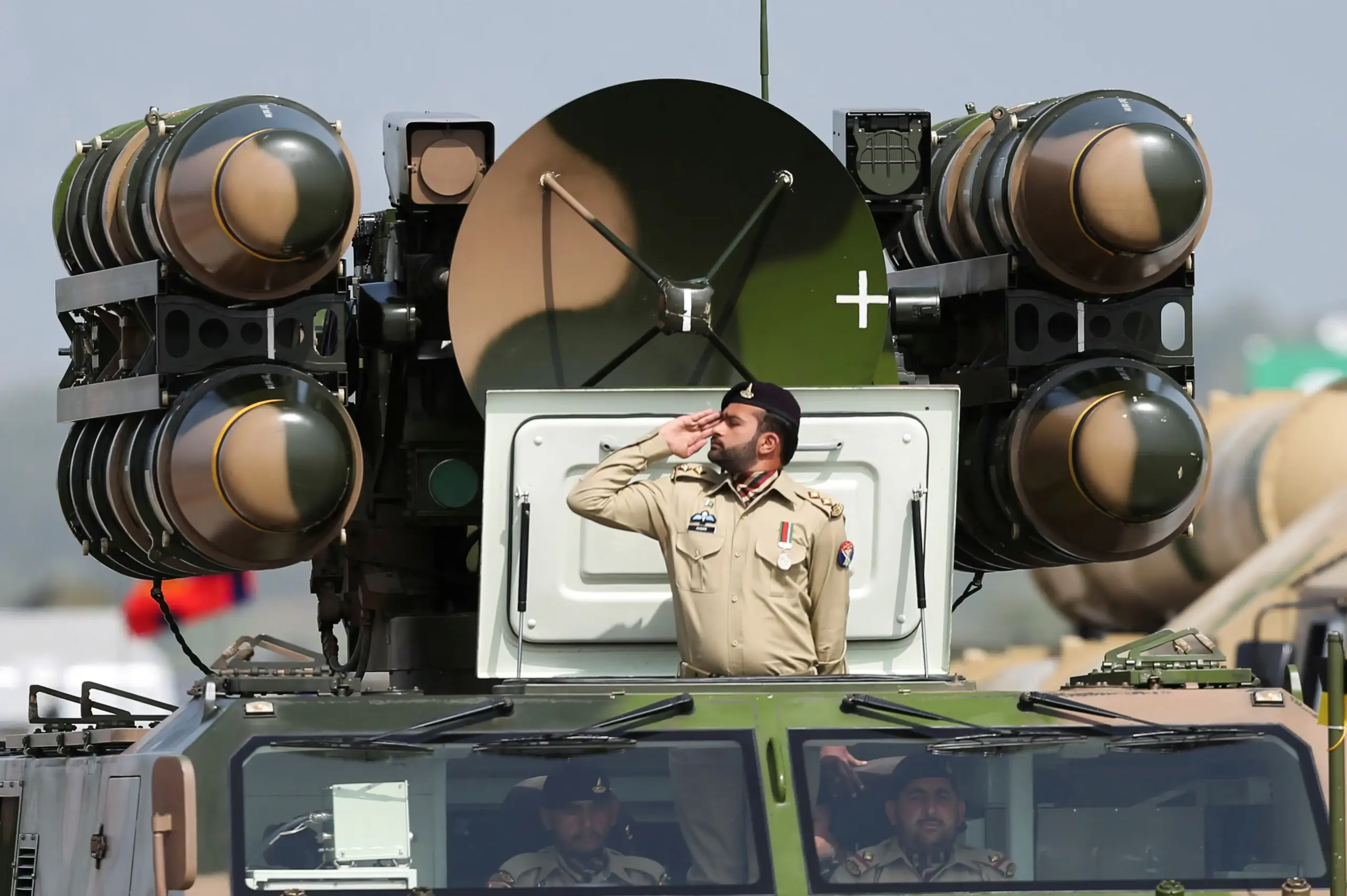
US Director of National Intelligence Tulsi Gabbard’s Senate testimony has ripped open the truth about Pakistan’s nuclear missile program, pinpointing it as a gathering storm capable of striking America’s homeland. As the Israel-US-Iran war explodes into its third week, creating global distraction, Pakistan races toward intercontinental ballistic missile (ICBM) capabilities, sold as “full-spectrum deterrence” but with ranges that could soon encompass distant targets like the United States. This is a warning: Ignore Pakistan’s fusion of proliferating nukes and terror group havens at our peril, for the world desperately needs a unified strategy to avert catastrophe.
On March 17, 2026, Gabbard delivered the Annual Threat Assessment to the Senate Select Committee on Intelligence, ranking Pakistan alongside Russia, China, North Korea, and Iran as the foremost nuclear threats to the United States. She dissected Islamabad’s “clandestine long-range ballistic missile program,” citing intelligence on massive solid-fuel rocket motors that could evolve into ICBMs delivering nuclear or conventional warheads across oceans to North America. Satellite imagery tracks these developments at the National Development Complex (NDC) test stands since 2021, leaving no room for doubt.
US sanctions tell the story: December 2024 blacklists hit the NDC, Pakistan’s missile command center, and suppliers Akhtar & Co., Ericsson Technologies, and Rockside Enterprises for breaching Missile Technology Control Regime (MTCR) limits, with follow-ups through 2025. Yet tests roll on. This is a warning; decades of soft-pedaling Pakistan as a strategic player have blinded us to its global menace.
Arsenal and Strategic Motives
Pakistan stockpiles ~170 nuclear warheads in 2026 (FAS/SIPRI data), powered by highly enriched uranium from Kahuta and Gadwal plants plus 40-45 kg of yearly plutonium from four Khushab reactors, yielding 8-12 new bombs annually. Stored disassembled in bunkers, they are armed in hours via Strategic Plans Division drills.
The triad is lethal: Shaheen-III MRBM (2,750 km, operational since 2015); MIRV Ababeel (2,200 km, post-2021); Ghauri-II (2,300 km); Shaheen-II (2,000 km); Ghaznavi (300 km); tactical Nasr (70 km). Ra’ad-II cruise missiles (600 km) fly from JF-17s; Babur-3 SLCMs (450 km) from Agosta subs, plus incoming Chinese Hangors. ICBM hints, 2-3m motors, project 5,500+ km reach by 2030, swelling to 200-250 warheads.
Officially, this is “credible minimum deterrence” morphing into full-spectrum deterrence (FSD) since 2013, a posture to maintain strategic stability amid regional arms races. FSD spans tactical to strategic levels, seeking parity in a tense security environment. But US intel warns of overreach, Pakistan eyes prestige, external backing, and leverage against distant powers. Islamabad calls it defensive, but the opacity fuels fears of unchecked ambition. This is a warning: Rhetoric masks proliferation risks.
Iran War as the Perfect Cover
Gabbard’s alert lands on day 20 of the February 28, 2026, Israel-US-Iran war. Israeli hits on South Pars gas field (40% global reserves) sparked IRGC strikes on Aramco, QatarEnergy, UAE sites, rocketing oil to $120/barrel and LNG 50%. US B-2s batter Tehran; proxies swarm Gulf carriers. Indo-Pacific tensions simmer with border issues and sea patrols.
Pakistan thrives in this fog, masking missile advances. This is a warning: Siloed threat perceptions let Middle East chaos shield proliferation. Demand integrated intelligence hubs tracking Pakistani tests amid Iranian turmoil.
Terror Groups’ Dangerous Proximity
Nuclear peril spikes with security holes. Terror groups like Lashkar-e-Taiba (LeT) and Jaish-e-Mohammed (JeM), UN/US-listed, run camps in Punjab and Khyber Pakhtunkhwa, drawing thousands yearly as the army/ISI play favorites. Over 20 insider breaches since 2010 include fissile smuggling plots.
Osama bin Laden embodies the rot: For six years pre-2011 SEAL raid, 9/11’s architect hid in a $1M Abbottabad compound, 800 yards from Pakistan Military Academy Kakul, the officer elite’s forge. No warnings, no action; he schemed amid top brass. New terror camps there scream repeat risks, radiological attacks on distant targets loom. This is a warning: Proximity to power centers breeds catastrophic vulnerabilities.
Pakistan chases ICBMs via FSD for stability, but terror groups nesting near military hearts, like Abbottabad, weaponize their arsenal globally. Chinese parts (80%) dodge sanctions; aid props up the regime without safeguards.
Urgent actions needed:
- Sanctions strangling external missile pipelines; cyber ops crippling NDC/Khushab.
- Tie the IMF bailouts ($7B 2026) to IAEA inspections.
- Arsenal seizure drills, border rad-detectors for crises.
| Threat Vector | Pakistan’s Edge | Immediate Counter |
| Warheads | 170→250 by 2030 | Sever supply chains |
| Missiles | ICBM motors live | Cyber-test sabotage |
| Terror Ties | Bin Laden academy-adjacent | IAEA staff vetting |
| Cover | Iran war shield | Global intel hub |
Gabbard’s testimony blares the alarm: Pakistan’s nukes threaten beyond borders. Heed it: Forge the strategy, enforce red lines, or watch shadows lengthen over secure horizons.