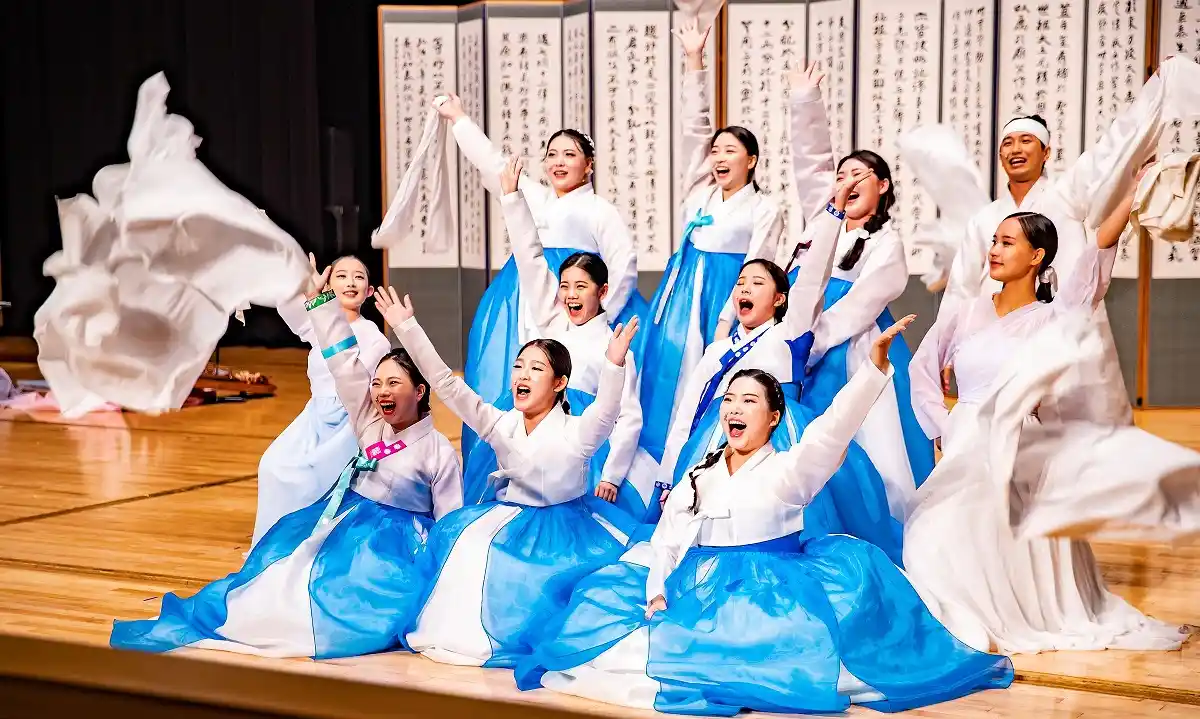
The India-South Korea partnership stands out as a beacon of optimism amid geopolitical tensions. This relationship goes beyond trade and defence agreements. The vibrant exchange between our peoples, especially among the youth and their cultures, is strengthening bilateral ties. India is the world’s largest democracy. The Republic of Korea (ROK) is a technological leader. Together, their people-to-people link forms the bedrock for lasting friendship, shared prosperity, and greater global influence. Civilizational roots date back over 1,800 years to ancient Buddhist exchanges. Today, this connection is a powerful strategic force in a multipolar world free of historical conflicts.
A key driver of this optimism is the surge in cultural soft power. The Hallyu (Korean Wave) has resonated with Indian youth. K-pop groups like BTS and Blackpink are now household names. The digital revolution, aided by AI-enabled dubbing into regional languages, brings hits like “Squid Game” and “Crash Landing on You” to millions of Indian homes through platforms like Netflix and YouTube. This is a two-way street. Bollywood also fascinates Korean audiences. Stars like Aamir Khan and Shah Rukh Khan have strong followings in Seoul, thanks to movies such as “Dangal.” The influence extends beyond entertainment. According to Asia Economy, the 2025 Korea National Image Survey found that 82.3% of foreigners held a favourable view of Korea, the highest since 2018. At the same time, Indian cinema has sparked Korean interest in yoga, cuisine, and festivals. Thousands attend events like the India-Korea Cultural Festival in Seoul.
Hallyu has shifted India’s view of Korea from a distant tech hub to a major cultural influencer. Brands like Samsung and LG now feel “almost Indian.” Post-COVID digital trends and high-profile events have fuelled this connection. Yet, growth remains largely urban, leaving much untapped potential in Tier-2 and Tier-3 cities. Asymmetries persist. India’s cultural and educational presence in Korea is less developed and lacks strong institutional support. This risks a superficial relationship instead of deep, lasting bonds.
Youth exchanges are crucial in amplifying this momentum. The India-Korea Youth Forum alternates between New Delhi and Seoul. It brings together 100 emerging leaders each year to discuss vital topics like innovation, climate action, and digital governance. The ROK’s Global Korea Scholarship has supported over 1,000 Indian students since 2015. Many return to become key “bridge-builders” in the tech and startup sectors. Conversely, India’s ITEC programme trains Korean youth in areas such as AI, renewable energy, and space technology. This fosters collaborations between Bengaluru’s ecosystem and Seoul’s Pangyo Techno Valley, especially in fields such as semiconductors and electric vehicles. These align with India’s “Make in India” initiative and Korea’s “K-Semiconductor Strategy.”
Structural challenges remain. Few English-taught programs exist in Korea. Scholarships outside the top STEM fields are limited. Credit transfers are difficult, and some degrees are not recognised. These issues slow India’s outbound student growth. Still, opportunities exist. Fast-growing tourism offers new possibilities, such as cinema tours, K-pop pilgrimages, and yoga retreats.
Benefits of Bilateral Friendship
The India-Korea relationship, driven by deepening dynamics, yields three core benefits: resilience, economic growth, and enhanced global influence.
The relationship’s resilience comes from both strategic and cultural ties. High-level defence agreements, such as the 2022 Special Strategic Partnership, focus on cooperation, including BrahMos missiles and joint naval drills. A strong cultural foundation insulates against regional geopolitical turbulence, including issues with North Korea or the South China Sea. Shared democratic values add stability. Indian citizens respect Korea’s post-1987 democratic evolution.
Koreans admire India’s non-aligned stance amidst U.S.-China competition. According to India’s Ministry of External Affairs, bilateral trade between India and South Korea reached 21.5 billion US dollars from January to October 2025. This growth is partly driven by Gen Z demand for Korean culture, especially K-beauty products and language courses in major Indian cities. Korean conglomerate HYBE plans to expand its presence in India by establishing a local corporation later this year, according to OSEN. This move reflects increasing collaboration in the entertainment sector.
India’s $20 billion creative economy is finding synergy with Korea’s industries through co-productions. These efforts blend formats from gaming and fashion to OTT, with examples like mixing masala dramas with K-thrillers. Korea taps into India’s youthful demographic to offset its ageing population. India is using Korean technology to diversify its supply chains away from China.
The partnership significantly bolsters the global standing of both nations. India benefits from Korean expertise in 6G technology and vaccine diplomacy. Korea gains access to India’s vast scale and influence. On global platforms such as the Quad and the G20, the nations collaborate to promote a rules-based international order. Cultural diplomacy shines through events like the 2025 Diwali-Korea Expo in Busan, which features fusion elements like kimchi-dosa and K-pop Bollywood remixes. Young alumni from the two countries serve as natural diplomats. They actively work to counter stereotypes and promote diversity across the Global South.
Charting the Path Forward
As Indian and South Korean artists come together, The Times of India highlights how cultural exchanges deepen ties, especially among youth. Language differences, complex visa rules, content piracy, urban-focused content, and online discrimination still pose challenges. According to The Times of India, joint projects like art exhibitions show that a truly sustainable partnership requires moving from simply consuming each other’s culture to actively co-creating.
A joint statement from the APEC High-Level Dialogue on Cultural and Creative Industries discussed collaboration opportunities, including joint studios that blend India’s diverse languages and narratives with Korean content. Fusion projects could result. The statement stresses the value of such exchanges and suggests that ongoing dialogues, like those in broader economic agreements, can help formalise partnerships. Practical steps include expanding English-taught degree programs, increasing scholarships, and ensuring mutual recognition of academic qualifications. These moves would boost educational mobility. Visa processes should be simplified, especially for collaborative programs in fields like AI and renewables. Efforts should include more diverse regions. Mutual understanding requires actively promoting Korean studies in India and India-centric academic programs in Korea. Tourism could also be leveraged through targeted private-sector campaigns, big events like K-pop concerts in Indian cities and Bollywood screenings in Busan, and hybrid events to reach rural audiences.
At its core, the India-ROK partnership is propelled by cultural synergy and youth engagement, making it a model for strategic international alliances. This deep-rooted connection shields both countries from external shocks while amplifying their global presence.
By uniting ancient affinities with the creativity and enthusiasm of their young populations, India and the ROK are forging an alliance that is not only resilient and prosperous but also defined by human connection and collaboration, signalling a new strategic model for international partnerships. Now is the time for policymakers, educators, industry leaders, and cultural ambassadors in both nations to take bold, coordinated steps to deepen people-to-people engagement, expand educational and cultural programs, and build enduring bridges between the next generation of Indians and Koreans. By acting together, stakeholders can ensure that this alliance becomes a global exemplar of mutually beneficial cooperation and innovation.