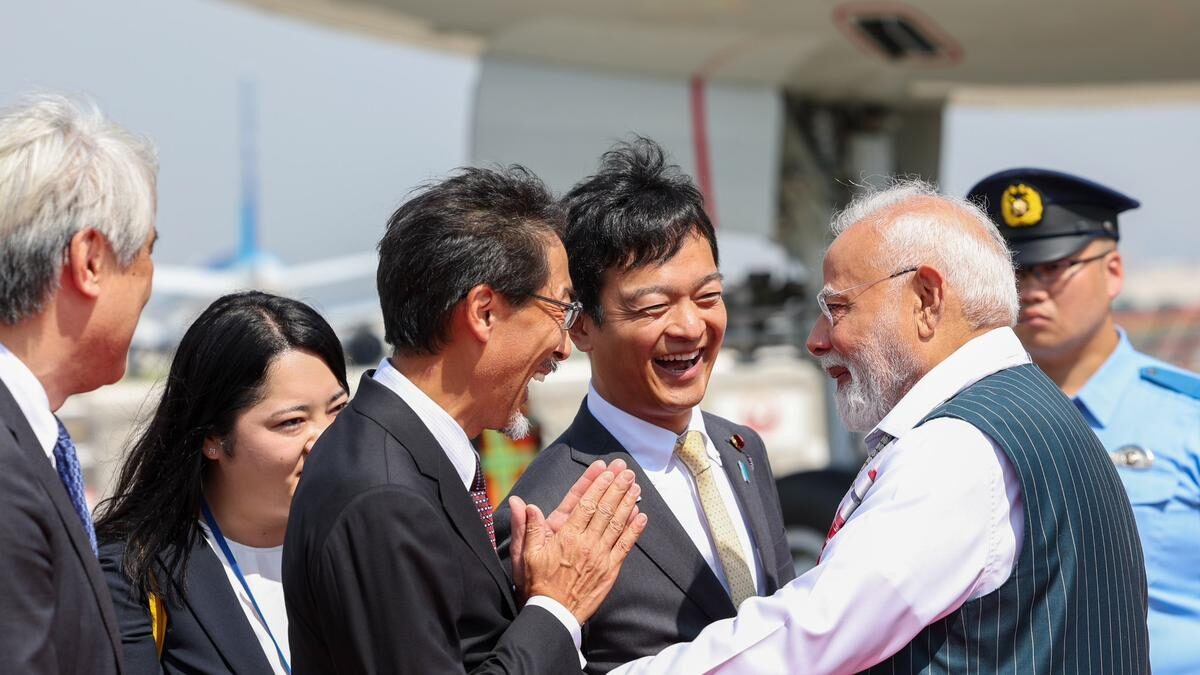
In recent months, the India-Japan partnership has gained notable acceleration in semiconductor manufacturing and green energy through a series of new projects, investments, and bilateral agreements. Post Prime Minister Narendra Modi’s visit to Japan in August 2025, these two sectors hold a crucial strategic ambition for technological independence and sustainable development. However, the partnership is a multifaceted industrial and environmental initiative aimed at transforming economic pathways. Japan’s broader geopolitical goals, striving for supply chain diversification amid ongoing global tensions and a commitment to a net-zero carbon future, hold another vital strength of the relationship. Japan considers India as an essential partner in establishing resilient semiconductor supply chains and advancing clean energy infrastructures in Asia, and this vision enjoys bipartisan domestic support beyond any single leadership figure. This analysis reviews the recent development of projects and future pathways, and reflects on the recent Japanese political crisis that is impacting the future of these critical projects.
India’s semiconductor ecosystem is undergoing significant breakthrough changes. In August 2025, the government approved four additional semiconductor manufacturing projects, bringing the total to 10 projects with a combined investment of approximately $18.23 billion. The projects are under the India Semiconductor Mission and are to be spread across Odisha, Punjab, Andhra Pradesh, Gujarat, and Assam, focusing on high-volume fabrication units, 3D packaging, compound semiconductors (such as silicon carbide), and outsourced semiconductor assembly and testing (OSAT) facilities. Such an expansion is to increase the domestic supply chain and job opportunities.
This investment underscores the crucial role Japan plays in these advancements. Modi’s visit to Tokyo has resulted in a doubling of investment commitment to nearly 10 trillion yen (approximately $68 billion) over the coming decade. Japanese companies have signed partnerships with Indian counterparts to develop semiconductor OSAT plants, supply critical materials, and facilitate knowledge transfer. In Gujarat, Renesas Electronics is progressing toward completing a pilot OSAT facility, with commercial operations planned for 2026-2027. In broader collaboration to build supply chain resilience, Panasonic supplied photoresists to joint ventures in semiconductor packaging.
During the SEMICON conference on September 2, 2025, India officially launched the first indigenously manufactured semiconductor chip. This milestone development is expected to propel India’s chip manufacturing to commercial readiness by the end of 2025, alongside the government’s objective of achieving electronics self-reliance. Japan’s commitment to supporting India’s growing semiconductor ambitions through technological and human resource development is evident, with recent developments taking place. In early September 2025, Japanese technology giant Tokyo Electron launched a new development hub in Bengaluru, focusing on semiconductor equipment design, software development, and joint research with Indian universities.
The energy alliance encompasses both technical and institutional frameworks, involving ministries and industrial bodies from both sides. The green energy agenda represents a practical balance of environmental responsibility and economic potential, showcasing shared priorities in cutting carbon emissions while expanding opportunities in emerging technologies. Sectoral working groups emphasize aligning regulatory standards, investment incentives, and supply chain logistics to expedite the adoption of hydrogen and the integration of renewable energy in India.
However, with recent developments in the Japanese political crisis, the possibility of Japan’s Prime Minister Ishiba resigning warrants attention. Naturally, political shifts generate a mind of uncertainties about the future of the commitments. But the India-Japan partnership has always underpin solid institutional and strategic pillars in which governments have formalized frameworks in a way that ensure continuity despite leadership change such as the India-Japan Dialogue on Economic Security and the India Semiconductor Mission. So the numerous MoUs, multiyear investment commitments, and bureaucratic support make a wholesale rollback unlikely. The only possibilities that can be seen in Ishiba’s successor are recalibrating specific priorities, timelines, or funding aspects—the overall strategic commitment to green energy and semiconductor collaboration is significant for both countries’ long-term visions.
Through recent developments, India and Japan aim to position themselves as pioneers shaping Asia’s technology and renewable energy landscape well into the future. Despite uncertainties, the partnership’s continuance is highly likely due to its institutional resilience and strategic importance. In semiconductor manufacturing and green energy cooperation, the partners showcase their shared long-term commitment to shaping the future of technology and sustainability for the greater Indo-Pacific region, as well as their own economies. The joint development taking place on both sides has a solid foundation for industrial transformation. The green energy initiatives also hold promise for Japan to accelerate India’s transition to a low-carbon economy by the end of this decade.