
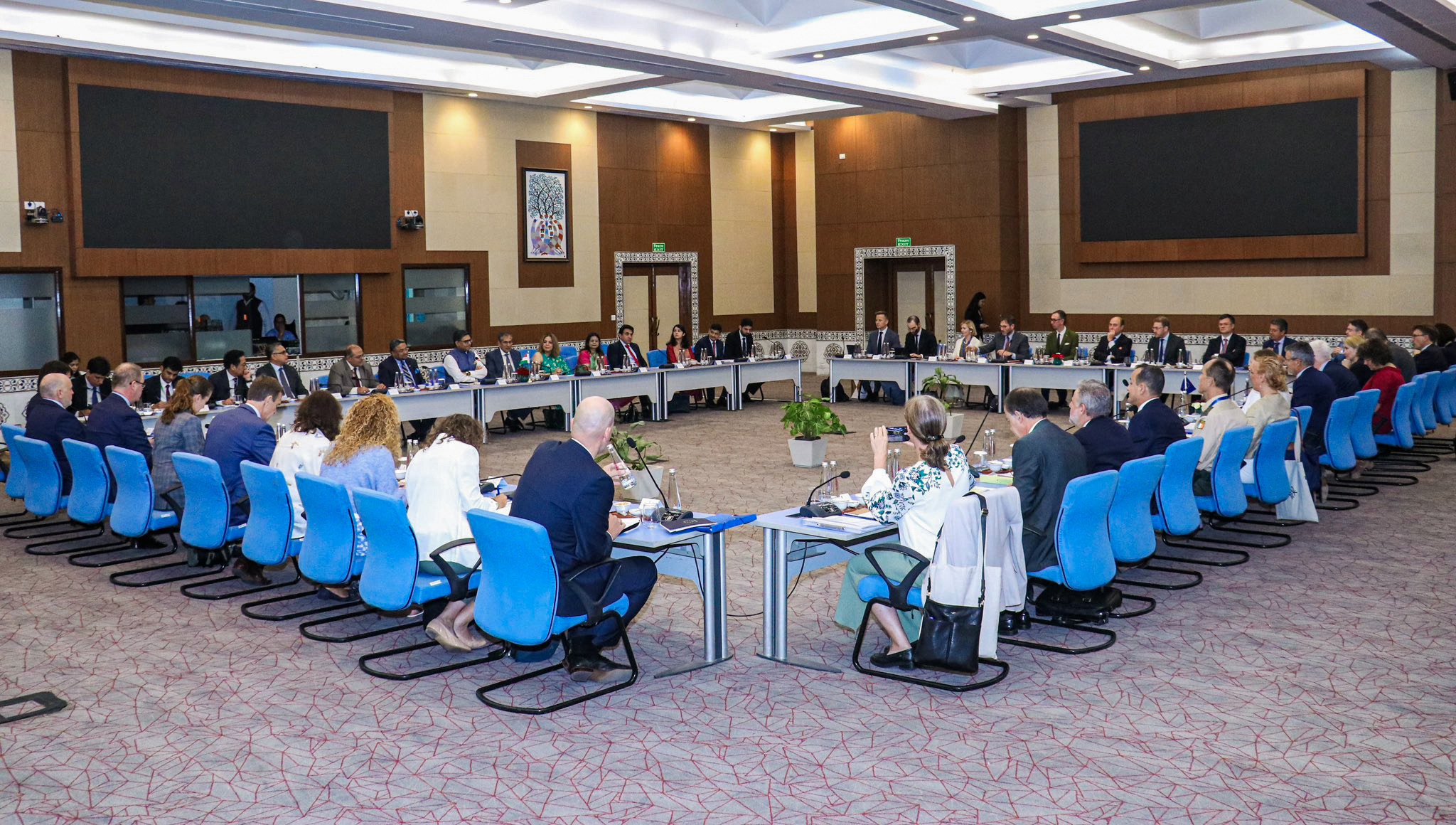
The new EU-India Strategic Agenda, unveiled in September 2025, marks a profound step-change in relations between the European Union and India, setting the course for intensified and diversified cooperation across trade, technology, security, connectivity, and sustainability. This agenda targets mutual prosperity, security, and global stability as the world navigates shifting geopolitical realities, with a focus on shared interests and values.
India and the EU have a long-standing partnership, evolving over decades from development cooperation to a comprehensive economic and strategic collaboration. With the current realignment of global power, a rising India is seen by Europe as a vital partner for diversifying supply chains, mitigating security threats, and fostering an open, rules-based international order. In turn, the EU, as India’s largest trading partner, provides access to advanced technologies, investments, and stable markets.
Pillars of the New Strategic Agenda
The 2025 Strategic Agenda identifies five interconnected pillars guiding the partnership:
1. Security and Defence
Expansion of security ties is a top priority. The agenda outlines cooperation in crisis management, maritime security (particularly in the Indian Ocean), cyber defence, intelligence sharing, and counterterrorism.
- Launch of negotiations for a Security of Information Agreement will facilitate classified information exchange.
- Enhanced engagement in the Indo-Pacific, with joint responses to hybrid threats and a focus on countering malign activities.
- India is invited to participate in EU defence initiatives, including the Permanent Structured Cooperation (PESCO) mechanism and a new EU-India Security and Defence Partnership modeled on those with Japan and South Korea.
2. Trade, Investment, and Prosperity
A centerpiece is finalizing a comprehensive Free Trade Agreement (FTA)—aiming to become the world’s largest such deal.
- The FTA negotiations, which have intensified in 2025, seek to lower tariffs, improve market access for services and products, harmonize standards, and secure sustainable development commitments.
- Addressing non-tariff barriers and regulatory cooperation are core objectives.
- The EU also encourages investment in strategic sectors, infrastructure, and innovation, with joint business forums and start-up initiatives.
3. Technology and Innovation
The Trade and Technology Council (TTC), launched in 2023, continues to coordinate on critical and emerging technologies such as AI, quantum computing, 5G/6G, semiconductors, and cybersecurity.
- Plans include joint R&D, tech start-up exchanges, and India’s potential association with the Horizon Europe research program.
- Both sides are committed to digital regulatory cooperation, upskilling, and joint efforts against online disinformation.
- A new focus is developing secure digital supply chains and standards.
4. Sustainability, Connectivity, and Climate
Climate action and sustainability are central. The agenda deepens cooperation on energy transition, carbon markets, pollution reduction, sustainable mobility, and circular economy models.
- Europe and India endorse the India-Middle East-Europe Economic Corridor (IMEC) announced during the G20 Summit.
- On connectivity, new initiatives will promote digital and physical infrastructure linking Europe, India, and third partners in Asia and Africa, leveraging the EU’s Global Gateway and India’s connectivity plans.
- Joint platforms will tackle water management, clean energy, biodiversity, and disaster preparedness.
5. People-to-People Ties and Mobility
Expanding legal, safe, and orderly migration of skilled professionals and students is highlighted.
- The agenda introduces a mobility framework for study, research, and work, including pilot initiatives such as the European Legal Gateway Office for labor mobility.
- Greater engagement with youth, think tanks, civil society, and academia is planned to deepen societal ties and understanding.
Key Areas of Convergence and Persisting Divergences
Convergence:
- Both sides align on defending multilateralism, global rule of law, and democratic norms.
- Economic imperatives—prosperity, diversification, and resilient supply chains—unite their interests.
- Addressing global risks (pandemics, critical technologies, climate change) is a shared priority.
Divergences:
- The EU has reservations about India’s energy imports from Russia and participation in Russian military exercises, viewed as an obstacle to deeper cooperation.
- Tough FTA negotiations remain, with differences over agriculture, automobiles, spirits, and sustainability provisions; yet both sides have signaled enough political will to attempt agreement by the year-end.
- Human rights and regulatory approaches sometimes diverge, but the agenda seeks regular dialogue rather than confrontation.
Partnership at a Global Scale
Beyond bilateral ties, the agenda positions EU-India collaboration as a response to global challenges. This includes cooperation in multilateral forums (UN, WTO, G20), joint projects in third countries, and involvement in global governance reforms.
- Both parties are committed to peace, stability, and maritime security in the Indo-Pacific, countering terrorism, and upholding freedom of navigation.
- Engagement extends to trilateral partnerships, notably the IMEC and digital corridors.
Process, Timeline, and Next Steps
The new agenda was jointly announced by the European Commission President Ursula von der Leyen and EU High Representative Kaja Kallas, following intensive dialogue between the Commission and the Indian government. Ratification by all 27 EU member states is required, with formal adoption scheduled at the EU-India Summit in early 2026.
- The FTA negotiations are targeted to conclude by the end of 2025, though complex issues remain.
- Ongoing work includes setting up new dialogues on space cooperation, mobility, and cyber issues.
Implications for Geopolitics and Business
Geopolitics: The agenda strengthens India’s global standing as a key interlocutor for Europe, balancing India’s relations with Russia and China. For the EU, it signifies deeper Asian engagement beyond traditional partners.
Business: Tariff removal, regulatory harmonization, and investment facilitation are set to expand bilateral commerce, innovation, and industrial collaboration, especially in high-tech and green sectors.
Challenges and Opportunities
Challenges:
- Overcoming persistent political and regulatory differences in FTA talks.
- Balancing security interests given India’s ties with Russia.
- Ensuring delivery on ambitious connectivity and tech cooperation promises.
Opportunities:
- Both sides can leverage combined capacities for resilient, green technology supply chains.
- Joint leadership in global governance, standards setting, and digital rules.
The 2025 New Strategic Agenda charts a forward-looking, pragmatic vision to anchor EU-India relations in a post-pandemic and post-Ukraine-war era. Success depends on reconciling differences, ensuring delivery on key commitments, and sustaining high-level political engagement to drive this unique Eurasian partnership.

