
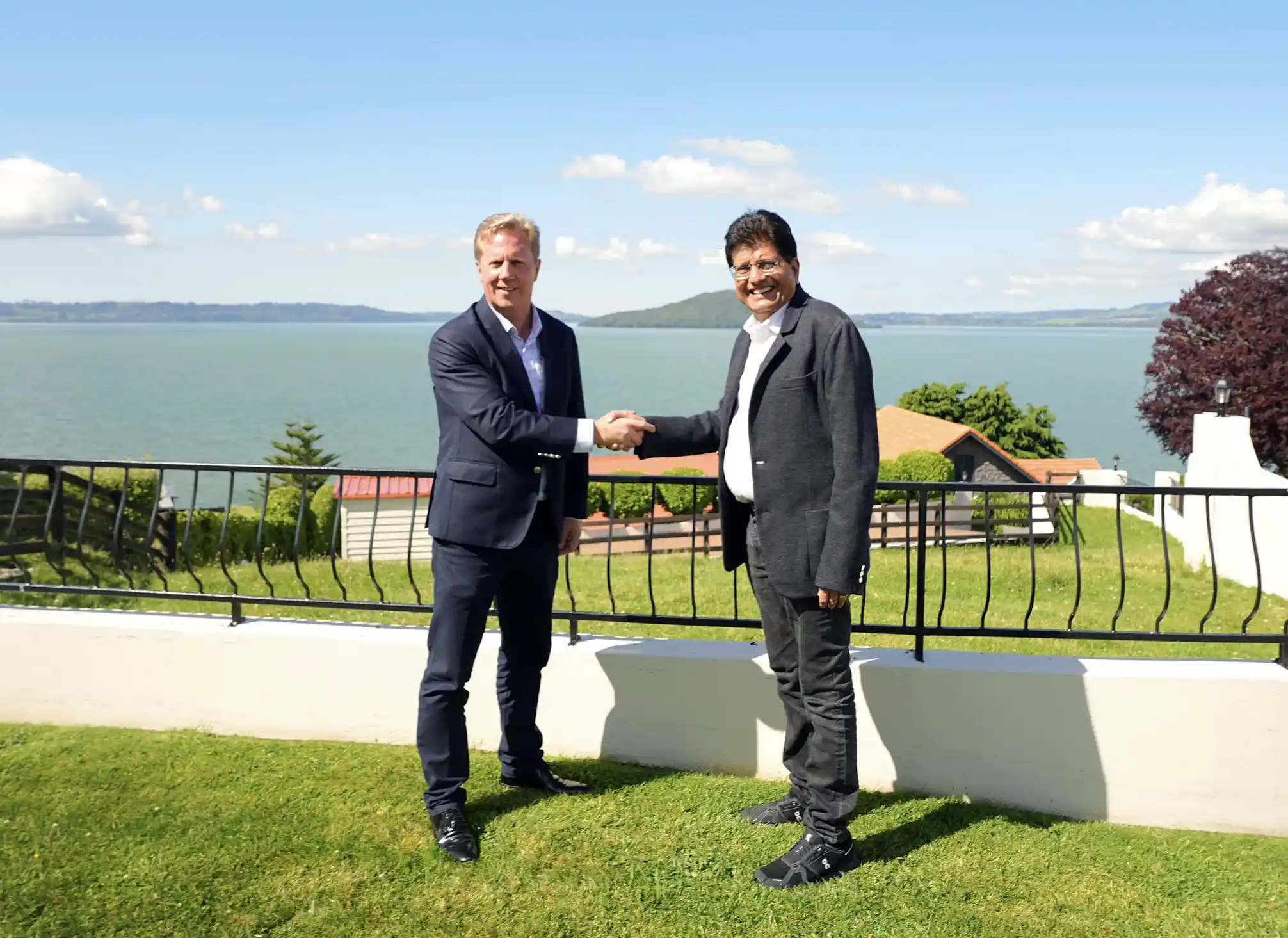
India and New Zealand finalized a landmark Free Trade Agreement (FTA) on December 22, 2025, after nine months of negotiations that began in March. This pact promises to double bilateral trade within five years and unlock $20 billion in New Zealand investments into India over 15 years. It marks India’s third FTA this year, enhancing its global trade footprint amid stalled talks with larger partners like the US and EU.
Talks launched on March 16, 2025, during New Zealand Prime Minister Christopher Luxon’s visit to India, building on prior efforts stalled since 2015. Four rounds of negotiations—from May to November—culminated in a swift conclusion announced jointly by Prime Ministers Narendra Modi and Luxon via phone. This record nine-month timeline reflects strong political commitment to overcome past hurdles like agricultural sensitivities.
Tariff Reductions
New Zealand gains tariff elimination or cuts on 95% of its exports to India—one of the highest coverages in any Indian FTA—with 57% duty-free from day one, rising to 82% upon full implementation. Immediate zero duties apply to sheep meat, wool, coal, and over 95% of forestry products, while seafood like mussels and salmon phase in over seven years. India secures zero-duty access for 100% of its exports to New Zealand, with concessions on 70% of its tariff lines covering 95% of bilateral trade value, excluding sensitive items like dairy, sugar, and onions. India’s average MFN tariff drops from 16.2% to 9.06% over ten years.
Sectoral Gains
Indian labour-intensive sectors thrive with duty-free entry into New Zealand: textiles, apparel, leather, footwear, marine products, gems, jewellery, engineering goods, automobiles, pharmaceuticals, and handicrafts. Manufacturers benefit from inputs like wooden logs, coking coal, and metal scrap. New Zealand exporters target horticulture (kiwifruit quotas four times current levels, halved tariffs beyond), apples (50% cut on large quotas), wine (from 150% to 25-50%), mānuka honey (to 16.5%), and dairy for re-export. Services expand with India accessing 118 sectors in New Zealand plus MFN in 139, including a first-time health and traditional medicine annex.
Services and Mobility
India’s “most ambitious” services package includes temporary visas for 5,000 skilled professionals yearly (up to three years) in occupations like IT and engineering. New Zealand offers 1,667 skilled visas annually from its Green List (doctors, nurses, ICT) plus 1,000 working holiday spots aligned with Australia’s scheme. Provisions cover AYUSH, culture, fisheries, tourism, and digital trade, with MFN to future-proof gains.
Investments and Cooperation
New Zealand commits $20 billion to India over 15 years, targeting infrastructure and innovation. A fast-track mechanism lets Indian firms import New Zealand ingredients duty-free for re-export—the first such Indian FTA commitment. Chapters address non-tariff barriers, customs streamlining, sanitary standards, sustainability, Geographical Indications, and a Treaty of Waitangi clause. A one-year review ensures adaptability.
Economic Impact
Bilateral trade, currently modest, is expected to double to tap India’s $12 trillion economy by 2030. India boosts MSMEs and job creation in export sectors; New Zealand accelerates its export-doubling goal, creating thousands of jobs. Strategically, it counters global protectionism, fosters Indo-Pacific ties, and complements partnerships like the Quad. Ratification and signing are slated for early 2026, with implementation to follow. This FTA exemplifies “new generation” trade, blending tariffs, talent, and sustainability.
This India-New Zealand FTA stands as a blueprint for modern trade pacts, harmonizing tariff liberalization with services mobility, investment commitments, and sustainability safeguards. By shielding sensitive sectors like dairy while opening doors for MSMEs, pharmaceuticals, and tech professionals, it positions both nations to thrive amid global uncertainties. As ratification looms in early 2026, this agreement not only aims to double bilateral trade but also fortifies Indo-Pacific supply chains, exemplifying pragmatic diplomacy in a multipolar world.

