
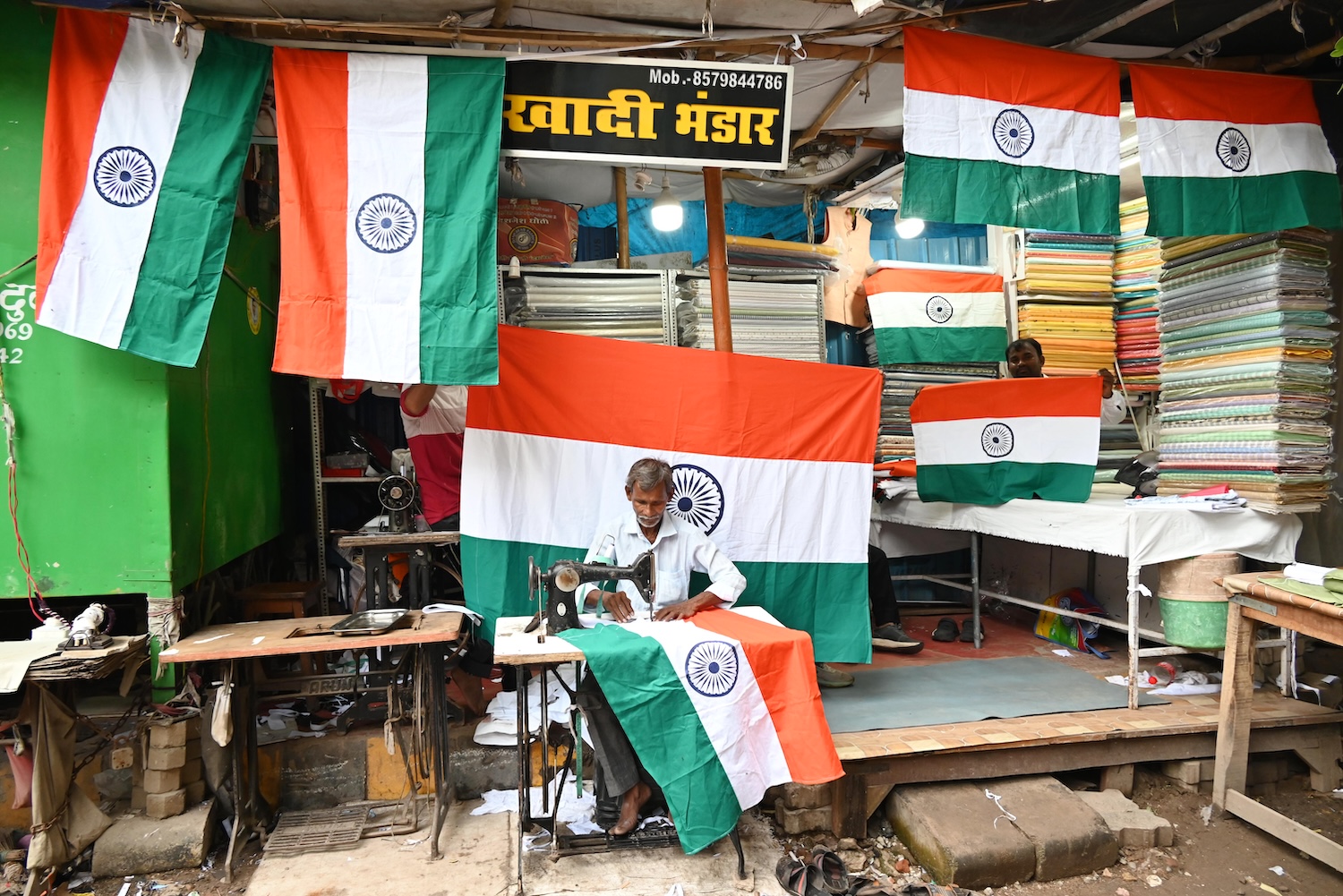
Step outside on any given August morning in India, and you’ll sense the buzz, the rustle of saffron, white, and green fluttering from balconies; children’s laughter as they clutch pinwheels or paper flags; the smells of sweets tinged with the promise of celebration. Yet, the Tricolor, the beloved Tiranga, is far more than a national symbol hoisted above official buildings; it’s the living thread that binds daily Indian life, reinterpreted with creative verve, from textile looms to home kitchens, from artisanal hands to runways and digital canvases.
More Than a Flag: The Spirit of the Tiranga
The National Flag of India is a vibrant band of deep saffron, pure white, and India green, with the navy-blue Ashoka Chakra at its heart. Each colour carries profound meaning: saffron speaks of courage and sacrifice, white for peace and truth, green for faith, growth, and prosperity, and the Chakra for righteousness and unending movement. But on the streets and in the hearts of ordinary Indians, these shades have moved beyond symbolism, popping up in unexpected, delightful, and often innovative ways.
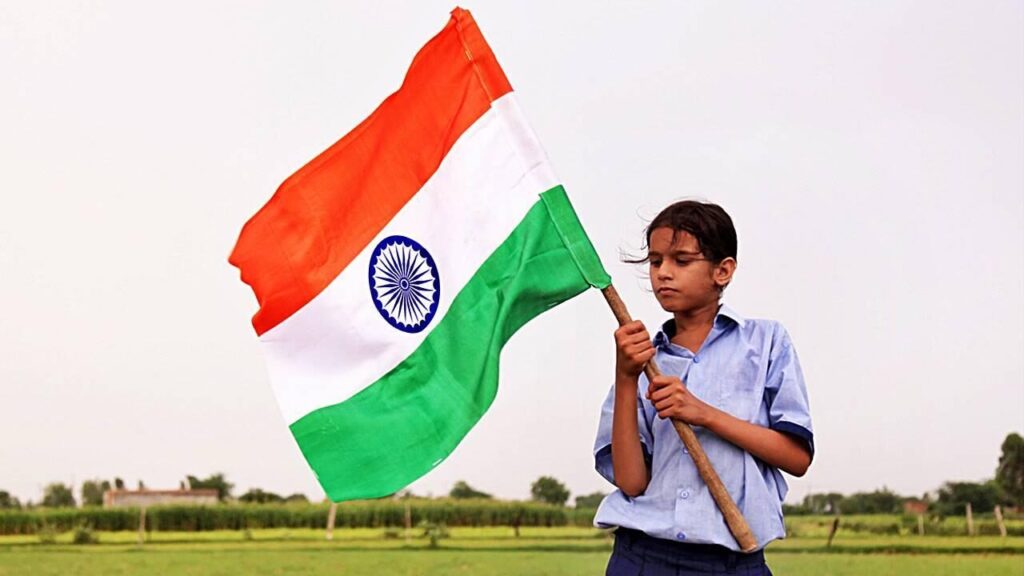
It is in these everyday encounters that the Tricolor reveals its more profound truth, not as a distant emblem reserved for official ceremonies, but as a living companion in the nation’s journey. The saffron of a street vendor’s jalebi glistens with the same fervor as a rallying cry for change. The white of a grandmother’s cotton sari holds the quiet dignity of generations that have endured and prevailed. The green of fresh coriander on a roadside plate of chaat is the taste of both heritage and hope. Even the Ashoka Chakra finds its place, spun into digital icons, festival rangolis, and handcrafted jewelry—turning with the same silent insistence that life in India must move forward. Here, the Flag’s colours are not merely seen; they are tasted, worn, shared, and lived, blending the sacred with the ordinary in a way that is uniquely, unmistakably Indian.
The Tricolor on the Loom: Textiles & Modern Fashion
In India’s humming textile industry, the Tricolor remains a perennial muse, fueling both tradition and reinvention. From handwoven sarees in artisanal clusters of Varanasi and Kanchipuram to breezy Kurtis and scarves, the saffron-white-green motif is a favorite for everyday yet meaningful fashion. Contemporary stylists update these palettes for a new generation—think Anarkalis and shararas stitched in strategic tricolor panels, hand-painted dupattas, and statement tricolor jackets paired with jeans and sneakers for Republic Day or Independence Day.
Recent years have seen the emergence of Indo-Western ensembles—palazzo suits with Ombré tricolor flows, midi-dresses echoing the Tiranga’s symmetry, and even sari blouses themed around the Ashoka Chakra. Designers at Bharat Tex 2025 showcased eco-friendly fabrics where block-printed or digitally dyed Tiranga patterns shine, blurring the boundary between heritage and high-street chic.
Food as Flag: Tricolor Culinary Creativity
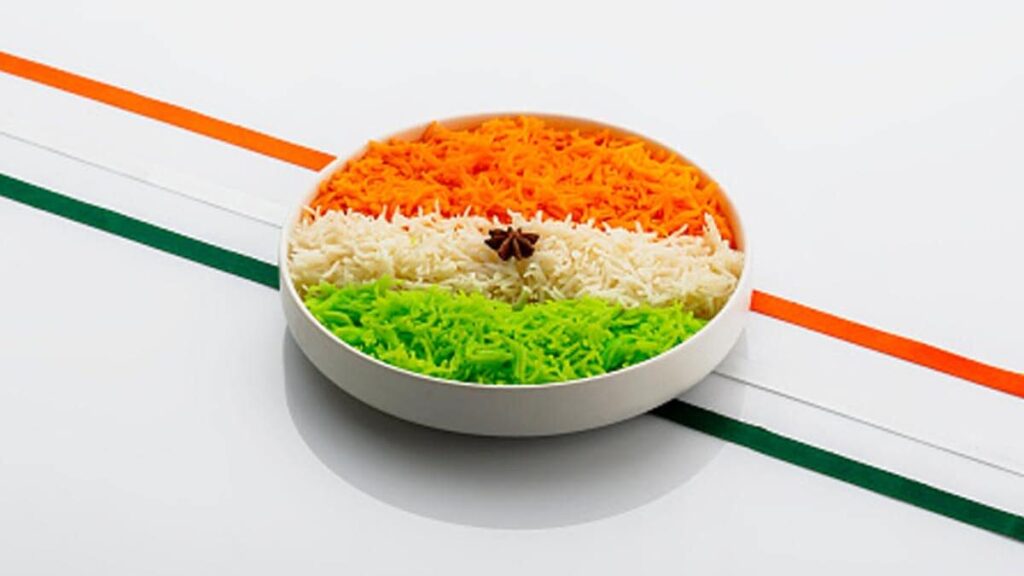
The Tricolor’s culinary interpretations have become a joyful, drool-worthy form of celebration. On national festivals, home cooks and chefs whip up platters where each course pays tribute to the flag. Saffron-tinted dal or paneer, steaming white rice, and a bright green salad or saag—all artfully arranged for maximal patriotic panache. Desserts dazzle, too: tri-layered barfis (confections) colored with carrot, coconut, and pistachio; tiranga sandwiches with carrots, paneer, and coriander; panna cottas, modaks, and even tricolor ice creams. Social media see these plated flags trending every August, inviting Indians at home and abroad to taste nostalgia, unity, and pride—all in a single bite.
Traditional Crafts: Artisans Keeping the Tricolor Alive
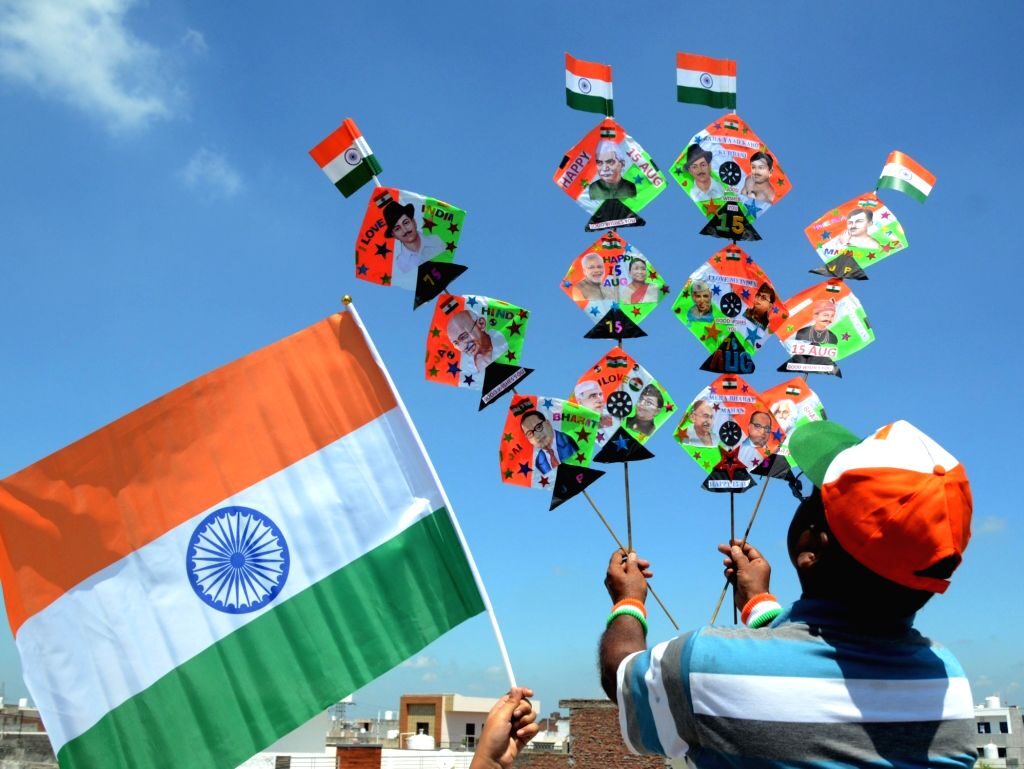
Across towns and villages, artisans breathe new life into the flag through crafts both time-honored and freshly invented. In kite-making hubs like Ahmedabad, craftspeople select gossamer paper in perfect hues, hand-tying string and wood to lift Tiranga-themed kites skyward; every Independence Day, rooftops bloom with these vivid symbols of freedom.
Florists and garland-weavers twist marigolds, jasmine, and leafy greens into tri-banded malas for shrine and street alike. Women and children craft pinwheels and rosettes, sometimes experimenting with quilling to mimic the flag’s petal shapes, or using colored beads and wool for eye-catching decorations on bags, hairbands, and classroom corners.
The digital age, too, has inspired a new wave of artisans: illustrators, animators, and meme-makers churn out tricolor graphics for WhatsApp stickers, Instagram stories, and Zoom backgrounds—each pixel a miniature tribute to national identity.
Everyday Patriotism: More Than Ceremony
Importantly, modern Indians embrace the Tiranga outside ceremonial days. Office celebrations feature teams in color-coordinated outfits, runway shows reinterpret “patriotic chic,” and yoga studios fill with tricolor mats and towels year-round. Children learn to paint or stitch the flag as part of their curriculum, lending a sense of playful pride and belonging from a young age. Even digital entrepreneurs—a new breed of artisan—offer apps and artwork to mark the date or simply celebrate the flag’s beauty.
Illuminating Identity: The Joy and Responsibility of the Tricolor
It’s easy to see why the Tricolor resonates so deeply—it’s a story of past sacrifice, present unity, and future aspiration, woven into every saree border, sweet shop window, and urban mural. It is a flag that soars not just above monuments, but through the kinetic energy of a billion lives inventing and re-inventing what it means to be Indian.
There’s a unique joy in seeing the Tricolor emerge everywhere—on the ramparts of the Red Fort, yes, but also in the hands of a kite-flying child, a grandmother’s hand-stitched garland, or on a plateful of creative, home-cooked love.
This Independence Day, as you spot those bands of saffron, white, and green—be it on your kurta, in your lunchbox, drifting aloft on a kite, or even on your screen—pause for a moment. Let their presence remind you that patriotism is not a distant ceremony. It is lived, worn, tasted, crafted, and shared. Every day.

