Prime Minister Narendra Modi’s maiden visit to Fiji in 2014 was significant in Indian foreign policy, highlighting the growing importance of the South Pacific in India’s Act East Policy and laying the foundation for the Forum for India-Pacific Islands Cooperation (FIPIC) in 2014. Today, India considers the region integral to her grand Indo-Pacific strategy, as asserted at the 55th Pacific Islands Forum Leaders’ Meeting in Koror, Palau, on September 1, 2026. India’s growing engagement with distant maritime regions underlines a characteristic shift in her strategic approach, which seems to transcend the traditional continental contour. This was underlined by the unveiling of the MAHASAGAR (Mutual and Holistic Advancement for Security and Growth Across Regions) mission by Prime Minister Modi, which was explained as an agenda to extend India’s engagement beyond the Indian Ocean region to the entire Global South. Indeed, as India formulates her own Indo-Pacific vision, Pacific Island Countries (PICs)—Papua New Guinea (PNG), Kiribati, the Marshall Islands, Palau, Tuvalu, Vanuatu, Samoa, Micronesia, Naoero (previously Nauru), the Solomon Islands, and Tonga—are increasingly becoming significant to her strategic calculations.
Strategic Significance of Pacific Islands and the South Pacific
When India unveiled its Look East Policy in the early 1990s, its focus was on the Southeast Asian region, with emphasis primarily on economic cooperation. However, as the new millennium rolled on, the larger Pacific world gradually became integrated into India’s economic and strategic calculations. The Act East Policy expanded India’s vision to strategically important regions of the Pacific world. India’s relations with the PICs can be viewed in this context.
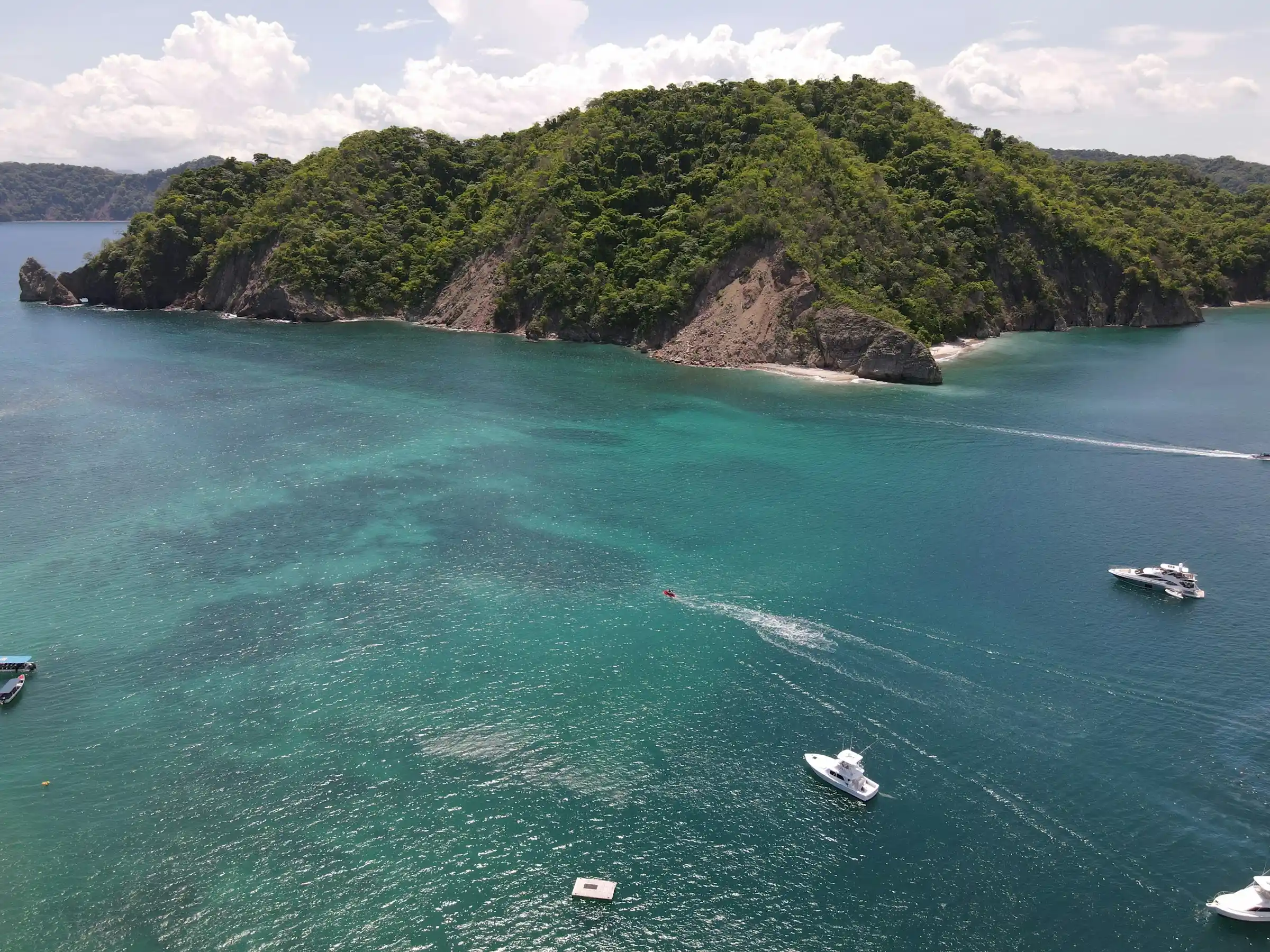
The South Pacific region is a subregion of the Indo-Pacific zone, with a large number of islands broadly grouped as Micronesia (Northern Pacific), Melanesia (Western Pacific), and Polynesia (Eastern and Central Pacific). Although the region traditionally maintained close economic and political links with the United Kingdom and the United States, as well as regional powers like Australia and New Zealand, since the turn of the new century, the PICs have started asserting their independent choices of action. In today’s era of multilateralism, these small countries hold immense importance, with their voting rights in multilateral institutions forming one of the biggest blocs of votes. Thus, in 2015, India sought the support of the PICs for India’s candidature for a permanent seat on the UN Security Council.
Geographically, too, the region holds significance. The South Pacific is now critical to both trade and digital connectivity. Major trans-Pacific shipping routes crisscross the region. More than 95 percent of international data traffic travels through submarine cables, much of which crosses the Pacific basin or the territories of the PICs. India’s economy increasingly relies on cross-border data flows, financial transactions, and digital services. Submarine cable systems that traverse the Pacific form part of the global network supporting these activities. Besides, the South Pacific is an ideal location for satellite monitoring and tracking stations. India’s 2014 Mars mission was monitored from Fiji, where an 18-member team from the Indian Space Research Organisation (ISRO) was stationed. The region is also rich in minerals such as copper, nickel, gold, and liquefied natural gas, and has huge fishing potential.
India’s strategic interests reflect her long-term goals to advance economic and diplomatic strategies in the PICs through developmental assistance, capacity building, infrastructure projects, trade and development, renewable energy, disaster management, and climate-change initiatives. India’s developmental assistance to the PICs has mostly been delivered bilaterally and through multilateral platforms like FIPIC. FIPIC comprises 14 Pacific Island nations—Cook Islands, Fiji, Kiribati, Marshall Islands, Micronesia, Naoero, Niue, PNG, Samoa, Solomon Islands, Tonga, Tuvalu, and Vanuatu. India is on a mission to establish herself as a reliable and long-term partner for the Pacific Island nations. With PNG, India fostered developmental assistance by extending a Line of Credit worth $100 million for infrastructure development and setting up a Centre of Excellence in information technology (IT). At the 2023 FIPIC Summit in Port Moresby, PNG, Prime Minister Modi unveiled a 12-step action plan to strengthen India’s partnership with PICs, with initiatives such as setting up Jaipur Foot camps, establishing a specialised cardiology hospital in Fiji, providing dialysis units and sea ambulances, promoting yoga centres, supporting IT and solar projects and SMEs, and offering scholarships for the region. The smaller Global South countries are in extreme need of developmental assistance, which gives interested countries an opportunity to strengthen their presence and diplomatic influence. In the case of the PICs, India finds such an opportunity.
The China Shadow
However, such aspirations of India encounter a strong Chinese challenge. The Pacific Islands have evolved into a theatre of Great Power competition amid China’s growing influence in the region. The level of such influence can be gauged from the uproar over the recent Pacific Islands Forum meeting in Palau, with five Pacific leaders opting to skip the summit after Palau’s invitation to Taiwan enraged China. This is indeed a blow to the PICs’ claim of the Forum as a symbol of unity. In recent years, China has significantly intensified its political, economic, and strategic presence in the Pacific Islands region. Chinese-funded infrastructure projects span roads, airports, hospitals, sports facilities, and government buildings, providing high-visibility outputs. China also has security cooperation with the Solomon Islands, Kiribati, Vanuatu, and the Cook Islands. This has ruffled US feathers, opening another front of geopolitical tussle. However, India’s own engagement with the PICs focuses on developmental assistance and economic cooperation, sans any aggressive design, which suits the PICs’ non-confrontational approach. The immediate concern of the PICs is countering the effects of climate change. India has assured the countries of its support for global efforts through initiatives in this regard. Prudently avoiding the simmering geopolitical tussle over the PICs, India focuses on cooperation in areas of immediate concern to the region.
However, India should be ready with a Plan B, investing in security collaboration with like-minded powers of the region in case the geopolitical tussle becomes too serious to overlook. The India-Australia Comprehensive Strategic Partnership asserts a commitment to an open, peaceful, stable, and prosperous Indo-Pacific region, recognising the Pacific Islands Forum as one premier forum for addressing regional challenges. This is an acknowledgment of the centrality of the Forum in regional affairs, with a message against domination by any single party. Nevertheless, India should be careful not to indulge in geopolitical tussles, but should invest more in trade and developmental assistance to PICs to strengthen its foothold in the region.