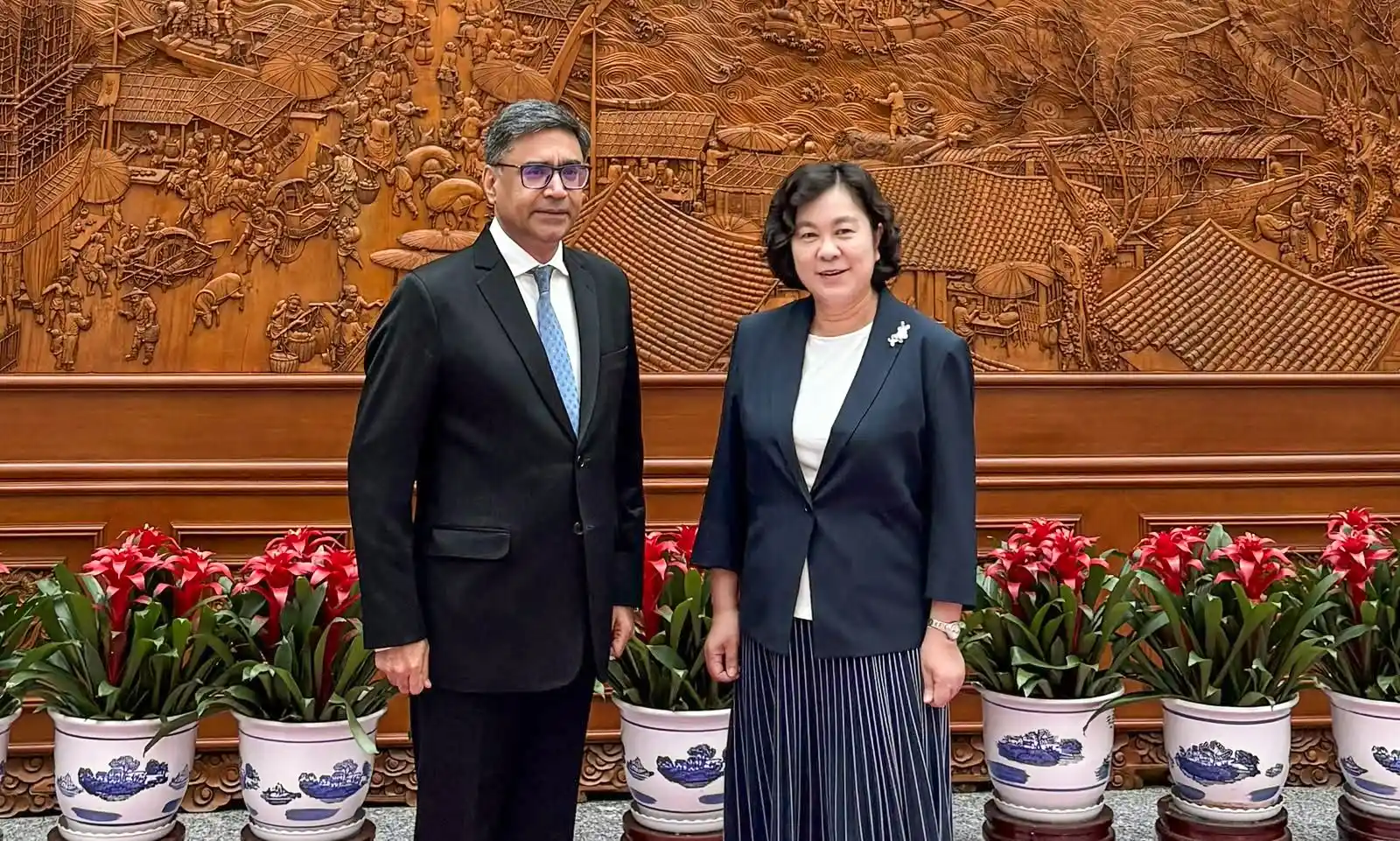
India’s Foreign Secretary Vikram Misri’s recent visit to China marks a cautious but deliberate attempt to stabilize one of Asia’s most consequential bilateral relationships. After years of strain following the 2020 border clashes, New Delhi and Beijing appear to be testing whether limited cooperation can coexist with unresolved strategic mistrust. The emphasis on trade, people-to-people exchanges, and border peace reflects a pragmatic recognition that has taken both capitals years to arrive at: disengagement alone is not a strategy. Standing apart may feel safer, but it forecloses the very channels through which friction gets managed and misunderstanding gets corrected.
At the heart of the visit lies the enduring imperative of border stability. Without credible progress on maintaining peace along the Line of Actual Control, any broader rapprochement will remain fragile, built on sentiment rather than substance. India’s position has been consistent throughout this thaw: normalcy in ties depends on tranquility at the border, not the other way around. Misri’s engagement suggests that while a final settlement on the boundary question may still be years away, both sides now see value in reinforcing the mechanisms — hotlines, patrol protocols, periodic military-to-military talks — that prevent a local skirmish from spiraling into something graver. In a nuclear-armed neighborhood shared by the world’s two most populous nations, even incremental confidence-building carries outsized weight.
Trade is where pragmatism becomes most visible, and most contentious. China remains one of India’s largest trading partners, yet the relationship is structurally lopsided, weighted heavily in Beijing’s favor. This leaves Indian policymakers with a genuine dilemma: how to keep leveraging Chinese supply chains and capital to support domestic growth, while simultaneously reducing critical dependencies in sectors like electronics, active pharmaceutical ingredients, and renewable energy components. Expanding market access for Indian goods and services in China would be a tangible, measurable gain — but it will demand persistent negotiation, patient diplomacy, and, just as importantly, domestic reforms that make Indian industry genuinely more competitive rather than merely protected.
People-to-people exchanges, often overshadowed by the drama of geopolitics, could prove to be the lowest-risk avenue for rebuilding trust between the two societies. Academic collaborations, tourism, journalist exchanges, and cultural dialogue all help soften the hardened national narratives that have calcified since 2020, when flights were suspended, visas dried up, and an entire generation of students and scholars lost the easy access their predecessors once took for granted. But such exchanges must be reciprocal, sustained, and insulated as much as possible from the next diplomatic flare-up to have any lasting impact. Trust between nations, like trust between people, cannot be legislated into existence; it accumulates slowly, through repeated and reliable interactions that survive the inevitable bad news cycle.
Misri’s visit, then, should be read not as a breakthrough but as a reset in tone and intent. It reflects a mature foreign policy — one confident enough to recognize complexity, to accept that rivals can still talk, trade, and set guardrails around their competition without pretending the underlying rivalry has disappeared. The real test will lie in follow-through: whether this round of dialogue translates into sustained calm at the border, fairer economic terms over time, and resilient channels of contact that can withstand the next crisis of confidence. In a fractured global order where great-power relationships increasingly default to confrontation, even modest, hard-won stability between India and China is a strategic asset worth pursuing — not because it resolves their rivalry, but because it makes that rivalry safer to live with.