The month of Shravan (corresponding to June-July in the Gregorian calendar) is sacred to the devotees of Shiva. Barefoot, thousands of kanwaria hit the road, mindless of the heat and humidity to collect Gangajal from a source as close to the source of the sacred river as they can. Then they march back, precariously balancing the metal or earthen vessels tied to a wooden pole on their shoulders to bathe the lingam in the shrine in their village. The traditional ritual has, alas, changed to Express Kanwars, with youngsters swaying to the tune of disco bhajans, creating traffic snarls, but old memories linger.
Those who worship Krishna celebrate his birth on Janmashtami. Quite a few poetic compositions in classical Hindustani music are inspired by Krishna lore. A particularly poignant verse is: ‘ Nisdin barsat nain hamare! Sada rahat paws ritu ham par jab te Shyam sidhare.’ (Our eyes pour out showers of rain day and night. For us, it’s monsoon forever since Shyam departed).
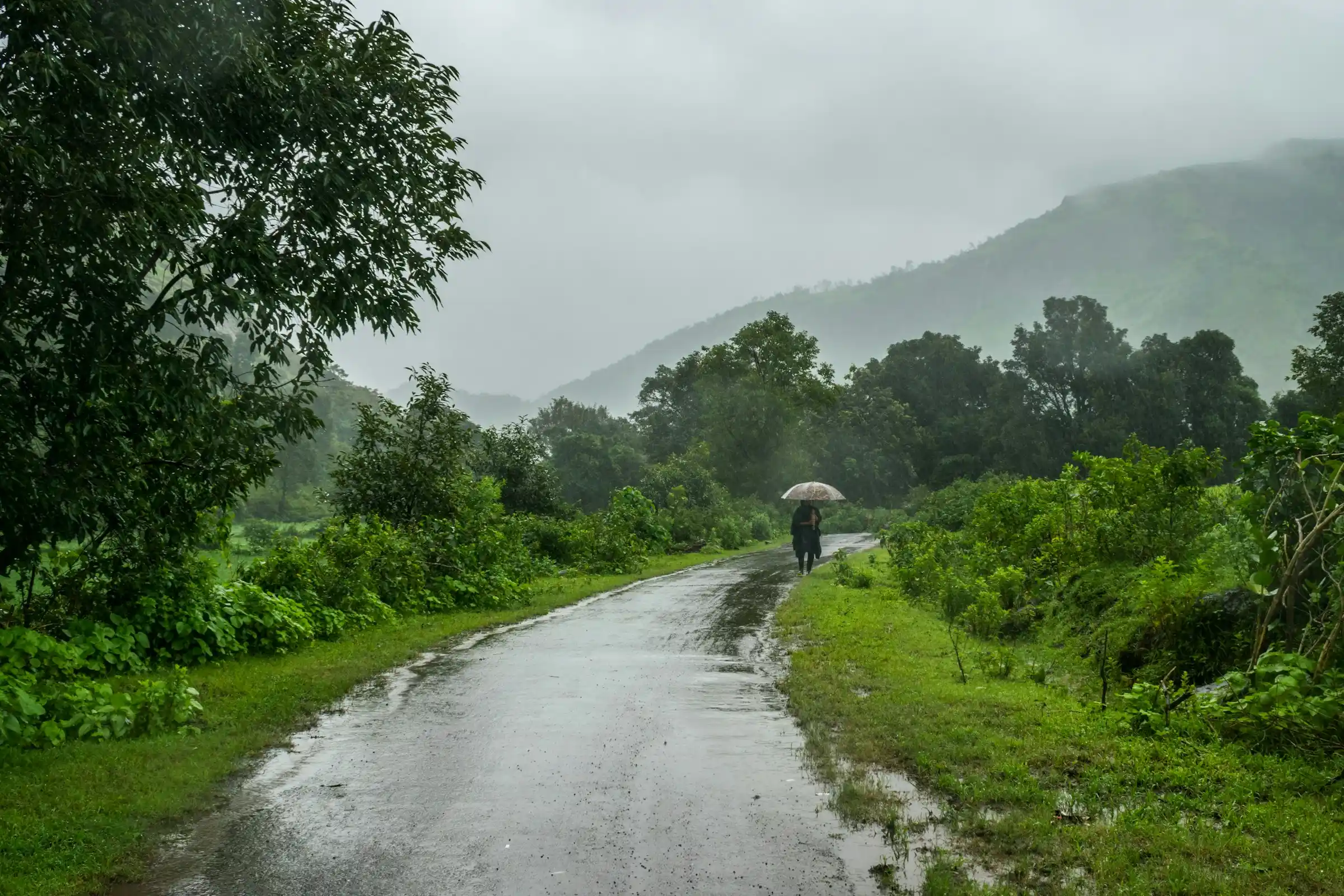
The onset of the monsoon, which had provided relief and the promise of trysts with the beloved, now unveils its terrifying face. Cloudbursts trigger landslides and turn musically gurgling mountain rivulets into torrential streams that wash away all in their way. Rivers are in spate, and the farmer now prays for the floods to recede. Ironically, it’s the floods that enrich the soil and rejuvenate underground aquifers.
Poems in many Indian languages evoke images of swollen rivers, flooded villages, people, and cattle washed away. Sangam poetry, composed in the millennia BCE, continues to echo the pain our ancestors felt.
High in the mountains, as in the rice bowl in peninsular India, it is time to transplant rice saplings. Standing knee-deep in slush, women clad in bright blouses and black skirts tucked to the waist work till dusk. All the while a drummer sings heroic ballads to energise them. Men work in the kitchen to cook for the female workforce. Pools of water reflect the blue sky and fragments of colors like a kaleidoscope. This age-old ritual in Uttarakhand is called Hurkiya Baul.
The rain-washed sunset at times lifts the curtain to reveal snow-crested peaks that stand on the Tibetan Plateau and, for eons, have stopped rain-bearing clouds from straying further, sending them to the subcontinent to give it life. If one is lucky, a rainbow can be beheld to make the heart leap up with joy
The music changes to match the mood, or is it the other way round? Megh and Malhar yield way to Desh Bhairav, Malkauns, and melodies improvising on the notes of Khamaj and Kafi. In Sawan Jhoole, songs replace the kajari. Amritvarshini is the comparable raag in the Carnatic repertoire.
The calendar is marked with festivals like Teej in the Punjab, Haryana, Rajasthan, and even Nepal. Girls and young women celebrate it joyously by taking turns at the swings and dancing. Kheer, malpooda, and halwa are cooked and shared. In northern India, deep-fried pakoda are relished greatly, as are bhaiya’s and bonda in the south. Steaming hot beverages aren’t restricted to masala tea. Indigenous pottages like karkidaka kanji in Kerala and a variety of rasam in Tamil Nadu and Karnataka help one combat the weather that encourages brooding.
The perfumes that wear well in the humid months are varieties of jasmine- Bela, Motia, and Mogra. Khus pleasantly surprises with its woody, slightly smoky undertones that effortlessly dispel humidity, creating a fragrant armor around the body.
Begum Akhtar has rendered a ghazal that talks of heartbreak in the wake of the unceasing rain. All hope of reunion with the beloved is lost. Hum samjhe the aayi barsaat to barsegi sharaab, aayi barsaat to barsaat ne dil tod diya! ( How had one hoped that with the rains, festivities would return, but it poured only to break my heart!)
There is no cause for despair. The old Sanskrit shloka may pronounce meghachchannam di am durdinam – the cloudy day is a bad omen, and the English poem doesn’t cheer up either with ‘No lark could sing on a day so dark and gray!’ Remember the Bengali song that keeps reviving the flagging spirit with Tumi meghila dine neel Akshar swapn aammar! ( You, my beloved, sustain me in distress like the dream of a clear blue sky on a depressing overcast day!) The voice of Satinath Mukerji, set to music by Abhijit Bannerjee, still works magic, changing the mood from somber to joyous.