The geopolitical landscape of South Asia is undergoing significant changes, driven by systemic challenges within the Pakistani state. Recent eastward developments and Operation Epic Fury, a joint U.S.-Israeli strike on Iran, have exacerbated tensions. On 27 February 2026, Pakistan’s Defence Minister declared “open war” against the Taliban regime in Afghanistan. This marks a major change in Islamabad’s approach, with effects on regional actors, especially New Delhi.
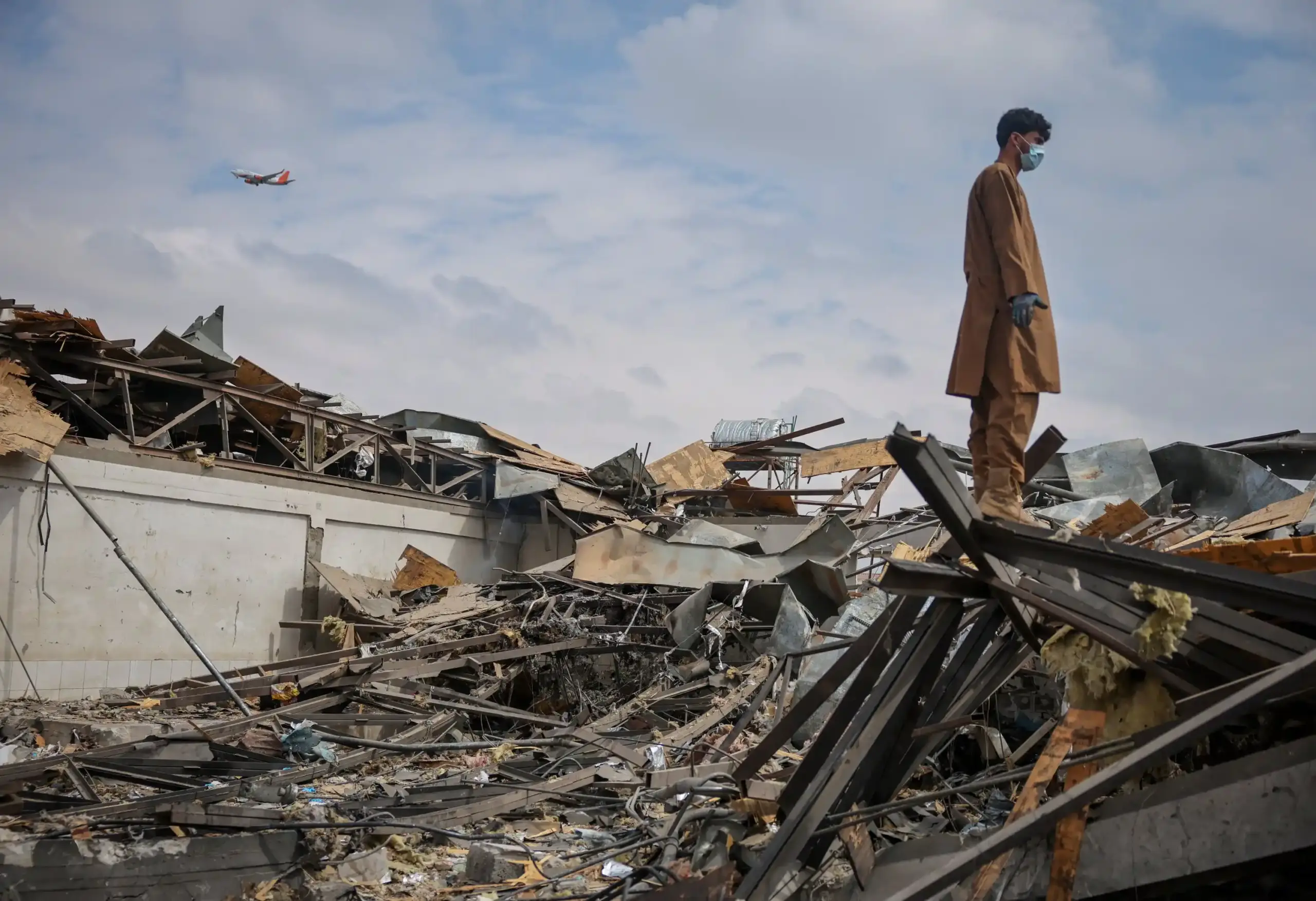
For decades, Pakistan’s security leadership viewed Afghanistan primarily as a buffer against India, a strategy that has now concluded. Pakistan’s military has resorted to large-scale aerial bombardments of cities such as Kabul, Kandahar, and Paktika. These actions are aimed at compelling the Taliban to distance itself from Tehrik-i-Taliban Pakistan (TTP). This situation has reversed Pakistan’s position. Groups it once supported are now its main enemies. Afghanistan is no longer a buffer state for Pakistan. It has become a source of instability. The recent bombardment by Pakistan on the Omid Drug Rehabilitation Facility on 16th March 2026 marked an unprincipled escalation of regional hostilities and humanitarian concerns.
Pakistan is trapped in a classic “strategic pincer,” a crisis largely the result of its own policy decisions. The government now faces three simultaneous and severe crises:
- The Afghan Front: Pakistan is engaged in a significant conflict with a resolute Taliban. This conflict is accelerated by the Taliban’s refusal to prevent the Tehrik-i-Taliban Pakistan (TTP) from operating across the border into Pakistan. This stance has not only strained relations with the Taliban leadership but has also fuelled nationalist sentiment throughout the border region demarcated by the Durand Line.
- The Internal Front (The Balochi Insurgency): The Balochistan Liberation Army (BLA) has increased its attacks. This has stopped China-Pakistan Economic Corridor (CPEC) projects and turned much of Balochistan into a dangerous area where the government struggles to operate.
- Relations with New Delhi are now at their lowest point in decades. In May 2025, India launched Operation Sindoor, coordinating military strikes to dismantle terror infrastructure. This action serves as a strong deterrent and restricts Pakistan’s strategic choices. Pakistan cannot handle hostility along multiple borders but lacks the diplomatic skills and resources to resolve these disputes. The traditional policy of “bleeding India with a thousand cuts” has failed. The Pakistani military now suffers from its own systemic wounds.
- Sectarian Volatility: Fighting between Pakistan and Afghanistan is growing at the same time as the U.S. and Israel strike Iran in Operation Epic Fury. This makes things even harder for Pakistan. The death of Iran’s leader and attacks on Iran have caused problems along Pakistan’s long border with Iran. Iran’s leader’s death has led to many Shia protests in cities like Karachi and Islamabad how people see Pakistan’s foreign policy could lead to even more unrest inside the country.
- With the Strait of Hormuz blocked and the regional energy market in chaos, Pakistan’s economy faces an existential crisis. Fuel reserves are now counted in days, not weeks. Islamabad seeks a bailout from Washington, but risks a domestic uprising. The population is already suffering severely from hyperinflation and austerity.
The 16 March airstrikes on Kabul’s Omid Drug Rehabilitation Facility represent a sickening escalation. While Islamabad claims the operation was a surgical strike against military targets, the ground reality, over 400 civilians dead, tells a different story. This wasn’t a military action; it was a massacre. The site, a repurposed NATO base, was a lifeline for thousands of patients fighting addiction. Both medical staff and Taliban officials have been adamant: there were no weapons there, only the vulnerable. To strike such a facility during the holy month of Ramadan is, by any definition, barbaric.
The international response has been swift. UNAMA is currently investigating the carnage, while the WHO has condemned the strike as a hammer blow to an already fragile healthcare system. UN Security Council Resolution 2818 has already flagged the dire need for civilian protection, suggesting that Islamabad’s actions are under a microscope. Under the Geneva Conventions, hospitals are sacrosanct. By targeting a centre filled with recovering patients, Pakistan has ignored the “Principle of Distinction.” If these reports of 400 deaths hold, the force used was not just disproportionate, it was criminal. The UN High Commissioner for Human Rights has already warned of potential war crimes. The world cannot settle for thoughts and prayers. Pakistan must face formal sanctions for this blatant assault on human life.
The Indian Perspective
For India, the current unrest isn’t just a security problem. It is also a chance to gain more power in the region. For decades, Pakistan feared India would strategically surround it. Now, this fear has come true due to Pakistan’s own diplomatic and military mistakes. India’s Silent Diplomacy, reopening its embassy in Kabul and quietly welcoming high-level Taliban delegations, has bypassed the need for Pakistan. A recent report said Afghanistan has accused Pakistan of airstrikes that killed at least six civilians and wounded more than a dozen in Kabul and other cities. Tensions between the two countries remain high.
In contrast, the Taliban now see India as a rational and stabilising partner, especially next to Pakistan’s volatile approach. The world now sees a clear divide: Pakistan is an unpredictable state, and India is seen as a preferred economic and developmental partner, rising as a “Developmental Power.” India’s claim to be the “Net Security Provider” for the Indian Ocean Region and beyond has grown stronger. The world often describes Pakistan as a “failed state” or “insurgent safe haven.” India, by contrast, is celebrated globally for AI, as a semiconductor hub, and for its Strategic Partnership with countries like Israel. The fighting on the Afghanistan-Pakistan border has deeply occupied Pakistan’s military. This has reduced their ability to support cross-border activity in Jammu and Kashmir. New Delhi now has a chance to move forward with economic and infrastructure projects in Jammu and Kashmir with little outside interference, despite ongoing minor ceasefire violations. Recent events have made it hard to argue that the region is peaceful. The Taliban government in Afghanistan says Pakistan’s military bombed their country and killed civilians. This makes Pakistan’s territorial problems even worse.
The Emerging Geopolitical Reality
The severe internal problems Pakistan is causing itself are making the “Pakistan Problem” less relevant. India’s strategy must change from the difficult task of “managing” a troublesome neighbour to simply focusing on doing much better than everyone else. By making itself the essential link between the West and the Middle East, a role clearly shown by the importance of the Chabahar Port bypass, India ensures its progress remains strong, even if the immediate region falls further into internal chaos.
In this critical time, India’s goal is clear: while its neighbours get hopelessly caught up in “open wars” and major conflicts, India must firmly prioritise strengthening itself internally and leading externally. The time is right to let old symbols of regional instability rightly collapse under the weight of their own massive mistakes and internal conflicts. The era of equal strategic power is definitely over; the age of India’s geopolitical leadership is now beginning.