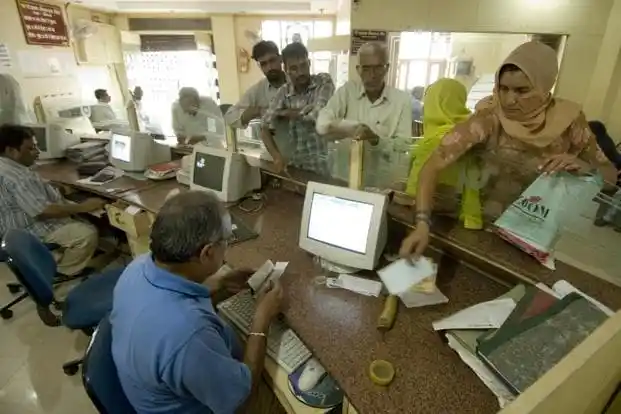
India’s efforts to bring all citizens into the fold of the banking system are perhaps the most ambitious social experiment the world has ever seen. Introduced in August 2014 by the Government of India, the Pradhan Mantri Jan Dhan Yojana (PMJDY) was a scheme aimed at radically redesigning access to finances. This program aimed to make sure that all families had a bank account and basic health insurance coverage, besides a RuPay debit card. The program not only opened channels to banks but also provided a financial safety net for the poor.
By January 2025, more than 52 crore Jan Dhan accounts had also been opened, roughly 67 percent of them in rural and semi-urban regions, the official statistics show. Despite the commendable appearance of these statistics, they only represent a fraction of the overall situation. The phrase “zero balance” is seen by most as a reference to enduring problems. Beneath this facade, a system rife with latent transaction charges, fragmented infrastructures, poor awareness, and a lack of genuine financial empowerment exists.
The Concept of Zero Balance
The idea of zero-balance accounts came from a basic but powerful goal: removing the key inhibitor of banking for the poor, i.e., the requirement for a minimum balance. For several generations, this single requirement kept millions of the poor outside the formal system of banks and pushed them into the arms of dishonest and usurious moneylenders.
The Basic Savings Bank Deposit Accounts (BSBDAs) offered under the Pradhan Mantri Jan Dhan Yojana (PMJDY) aimed to have a lasting impact by providing a safe way for citizens to handle their finances, allowing for the instant receipt of their government benefits, and providing access to small credit and insurance products.
As per official data, the percentage of accounts that have no deposit reduced from above 75% in the year 2015 to around 8% in early 2025. This sounds appealing on paper. But closer analysis will reveal a sadder truth: most accounts have a balance for a fleeting while around the times when the Direct Benefit Transfer (DBT) wages are paid. The moment the money is transferred to the account, it is immediately withdrawn to meet day-to-day needs.
For wage workers or petty traders, this notion of “saving for the future” goes against the immediate imperative of supporting their families in the present. Second, the transaction structures are adverse to the poor; BSBDAs have minuscule numbers of free withdrawals, after which the depositor bears the cost. For someone making moderate withdrawals a few times a week, such fees will quickly add up.
A SAGE study (2020) found that even marginal increases in access charges have a tendency to drive users toward the informal money system, once again, the very networks PMJDY aimed to replace.
The succeeding chapter, entitled “Women and Jan Dhan: Promise and Paradox,” tackles the contribution of women in the PMJDY scheme.
Women have been the most prominent ambassadors of PMJDY. Various social welfare programs, such as the Pradhan Mantri Ujjwala Yojana (for LPG connections), Janani Suraksha Yojana (for maternity benefits), and MGNREGA (for wages), often deposit money directly into women’s accounts. Research like The Power of Jan Dhan (2021) indicates that where women are the household financiers, expenditure switches toward education, nutrition, and healthcare. Traveling restrictions, dependency on their male kinship members, and lower levels of illiteracy prevail in limiting their independence.
A 2016 study on gender-neutral banking found that the inadequate number of female staff members and the unavailability of women-friendly facilities in rural outlets considerably reduce the chances of women using their accounts without restriction. Often, these women are not aware of additional benefits like the overdraft facility of ₹10,000, accidental insurance cover, or micro-pension plans.
The digital divide exacerbates the issue. Women have limited access to smartphones or quality internet connections, making mobile banking impossible.
To be inclusive, the PMJDY needs gender-sensitive and community-centered financial education programs provided by women and in local languages. If women are motivated to become Bank Mitras and banks are served by more women staff members, it will go a long way towards reshaping the current scenario.
Inhibitors to Effective Inclusion
The possession of a bank account is nothing but the initial step. Citizens achieve effective incorporation when they can utilize these accounts volitionally, confidently, and frequently.
However, two wide classes of challenges—infrastructural and behavioral—continue to threaten this goal.
Infrastructure and Institutional Gap
- The bank facilities are unavailable in rural areas.
The PMJDY’s front-level agents, the Bank Mitras, are often poorly trained and barely motivated.
Great strains are coming in, but effectively booming digital payments are out of their reach. Weak networks and systems abet electronic transaction failure.
According to Drishti IAS (2024), the Jan Dhan Darshak (JDD) App has successfully mapped in excess of 1.3 million banking touchpoints throughout India. Of the 601,000 villages, approximately 99.7% reportedly possess a banking outlet within a radius of five kilometers. However, in practical terms, this statistic may be deceptive, as for numerous individuals, five kilometers may translate to several hours of travel, particularly in regions lacking adequate roads or transportation.
- Socio-Economic and Behavioral Barriers
Financial illiteracy is still very common among the poorest segments of society.
A significant portion of the population does not trust traditional banks at all, either because they have gone through adverse situations in the past or simply because they are not familiar with the banking system.
Social norms based on gender prevent women from being responsible for financial decisions. A study published in the Economic & Political Weekly (2022) found that bank tellers sometimes don’t care about or respect poor people, especially women.
These obstacles serve as a stark reminder that mere access does not equate to actual empowerment. Dignity, convenience, and literacy are the basic requirements for empowerment; exclusion will occur without them.
The transition from Illusion to Empowerment represents the other end of the spectrum.
To change financial inclusion from mere symbolism to a real benefit, the concerned sector needs to change its way of thinking—from account counting to empowerment measuring. The real inclusion is not in figures but in the overall independent usage without interruption.
A better research methodology would involve bundling products that package savings, credit, insurance, and pension options together in a single easy-to-use package.
Bundle products would package the savings, credit, insurance, and pension products together in a single easy-to-use package. Clear terms of transactions should be established, ensuring that there are no hidden charges for small periodic withdrawals. Ongoing training from the base level in local languages, particularly for women and new account holders.
Institutional reforms to train banking staff on empathy, respect, and fair service. Empowerment measures that look at the number of active accounts, the owners of the accounts, and the level of activity.
Following these plans diligently could transform PMJDY from its statistical foundation to a genuine source of autonomy.
No doubt PMJDY has provided access to formal banking to millions of hitherto excluded individuals. However, for most people, these doors remain only partially open even today. To transform the impressive number of accounts into genuine inclusion rather than just a superficial appearance, it is necessary to overcome the root obstacles—social, economic, and institutional.
For the Indian financial revolution to realize its potential, it needs to look beyond the opening of accounts. It needs to empower citizens to access them fearlessly and frequently without dependence or stealthy costs. But only when that occurs will the notion of “zero balance” represent opportunity rather than void.
References
- Government of India, Ministry of Finance. (2025). Pradhan Mantri Jan Dhan Yojana (PMJDY) Dashboard. Retrieved from https://pmjdy.gov.in
- Department of Financial Services (DFS). (2025). Status of Financial Inclusion under PMJDY. New Delhi: Ministry of Finance.
- SAGE Publications. (2020). Costs of Access and Financial Inclusion: The Hidden Barriers to Usage. Journal of Financial Inclusion Studies, Vol. 5(3), pp. 45–62.
- Economic and Political Weekly (EPW). (2022). Banking the Poor: Structural Discrimination and Everyday Barriers in Rural India. Vol. 57, Issue 21.
- Drishti IAS. (2024, July). The Jan Dhan Darshak App facilitates financial inclusion mapping. Retrieved from https://www.drishtiias.com
- The Power of Jan Dhan. (2021). A Report on the Women, Finance, and Economic Agency. Centre for Social and Economic Progress (CSEP), New Delhi.
- International Conference on Sustainable Banking and Economy (ICSBE). (2016). Gender Neutral Banking: Challenges in Rural Access. ResearchGate Proceedings, pp. 87–95.