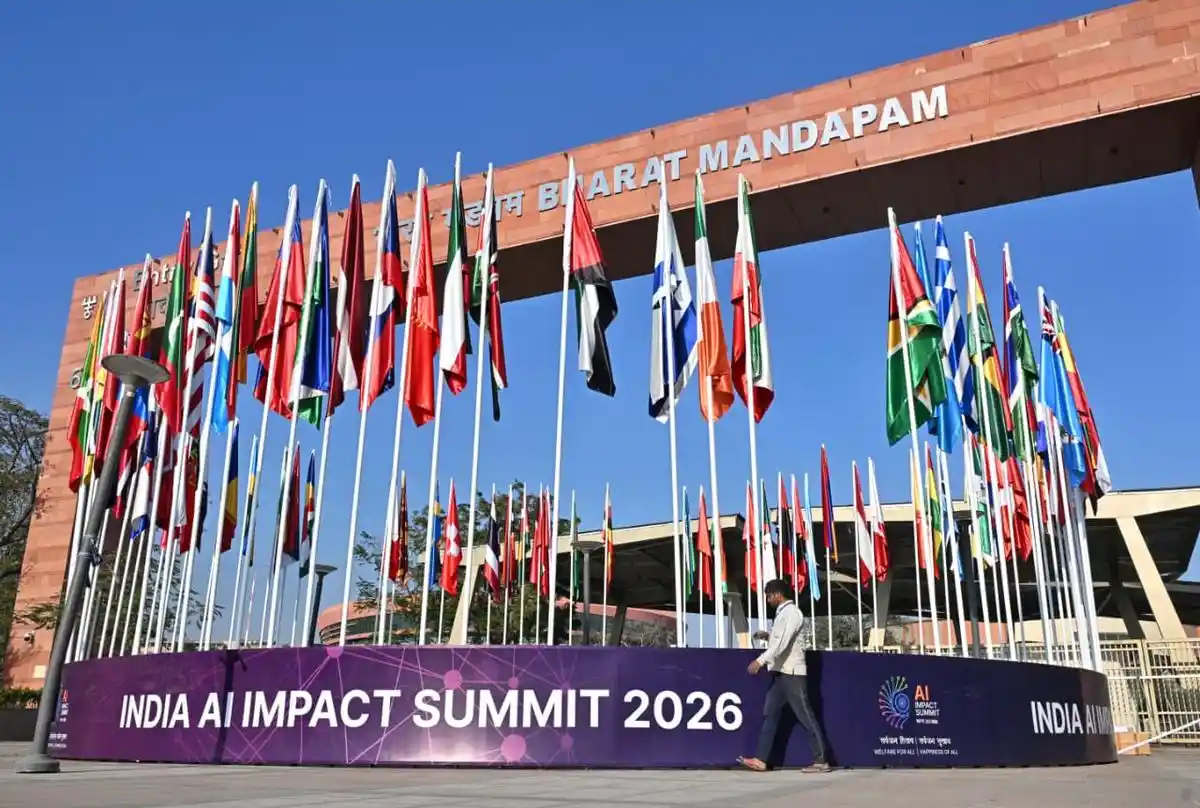
As the India AI Impact Summit 2026 unfolds in New Delhi from February 16 to 20, bringing together world leaders like French President Emmanuel Macron and Brazilian President Luiz Inácio Lula da Silva, alongside tech giants such as Sundar Pichai of Google and Sam Altman of OpenAI, India stands at the center of a pivotal global conversation on artificial intelligence. This summit, the first major international AI gathering hosted in the Global South, focuses on inclusive, responsible, and impactful AI, shifting from mere dialogue to demonstrable outcomes for people, planet, and progress.
India is not just an apt host; it is arguably the most fitting venue for this moment in AI’s evolution. The country’s remarkable strides in recent years position it uniquely as both a powerhouse of innovation and a voice for equitable global AI governance.
Consider India’s explosive advancements in AI infrastructure and capabilities. Through the IndiaAI Mission, launched in 2024 with a budget exceeding ₹10,300 crore, the nation has deployed over 38,000 GPUs, far exceeding initial targets, to provide subsidized, world-class compute access to startups, researchers, and students at rates as low as ₹67 per hour. This democratizes cutting-edge AI resources in a way few countries can match. Initiatives like BharatGen (the world’s first government-funded multimodal large language model) and indigenous models such as Sarvam-1 (optimized for 10 major Indian languages) underscore a push toward sovereign, multilingual AI tailored to India’s diverse context. Platforms like AIKosh offer shared datasets and tools, lowering barriers for innovation in agriculture, healthcare, education, and financial inclusion, sectors where AI can deliver outsized social impact.
India’s digital public infrastructure, exemplified by UPI, Aadhaar, and India Stack, has already proven how scalable systems can leapfrog traditional models, serving billions efficiently. This foundation makes India an ideal testing ground for real-world AI applications, from multilingual models addressing language barriers (via BHASHINI, supporting over 35 languages) to AI-driven solutions in public services. The country’s AI market is projected to grow at a 25–35% CAGR through 2027, and it ranks among the top globally in AI funding and competitiveness, often placing third in indices like Stanford’s Global AI Vibrancy Tool.
Yet India’s true strength lies in its unparalleled human capital. The nation leads the world in AI talent acquisition, with an annual hiring rate around 33% and AI skill penetration 2.5 times the global average in relevant occupations. Talent concentration has more than tripled since 2016, and India boasts one of the largest pools of young, technically skilled engineers and developers anywhere. This “AI workforce capital” is in extraordinarily high demand globally. Indian professionals power leading labs, tech giants, and startups from Silicon Valley to Europe, often filling critical gaps in research, engineering, and applied AI. As global AI adoption surges, companies like OpenAI and Anthropic are expanding aggressively in India, recognizing it not just as a market but as a strategic hub for talent and experimentation.
Hosting the summit in India amplifies these realities. Previous global AI forums, such as the UK AI Safety Summit, AI Seoul Summit, and France AI Action Summit, have been vital but often centered in the Global North, where discussions can overlook the priorities of developing nations: equitable access, inclusive growth, and AI’s role in addressing poverty, climate challenges, and public health. India, as the world’s largest democracy and a rising economic force, brings the perspective of the Global South to the table. It champions “AI for All,” ensuring governance frameworks prioritize the needs of billions in emerging economies rather than just advanced markets.
In an era where AI could widen inequalities or bridge them, India’s hosting signals a power shift: toward inclusive innovation, ethical deployment, and measurable impact. By convening the world in New Delhi amid its own rapid ascent, from massive compute investments to indigenous models and a talent engine fueling the globe, India demonstrates that the future of AI must be shaped collaboratively, with voices from every corner represented.
The India AI Impact Summit is more than an event; it is a declaration that the most transformative technology of our time belongs to humanity as a whole, and India, with its blend of scale, ambition, innovation, and human ingenuity, is the ideal place to make that vision real.