
For decades, Northeast India was treated as a distant periphery, rich in culture but lagging in infrastructure and economic opportunity. Today, under the government’s Act East policy, it is being recast as a strategic hub, bridging India with Southeast Asia and serving as a “front-runner of growth.” With record investments across rail, road, air, and digital connectivity, the region is not just being integrated into the national fabric—it is being positioned as a future driver of the Indian economy.
This transformation is not without its complexities. While the scale of development is unprecedented, questions of sustainability, inclusion, and long-term viability must also be addressed. Let us examine the scale, scope, and implications of this dramatic turnaround.
Railways: The Arteries of Integration
Perhaps the most symbolic development is the Bairabi–Sairang railway line in Mizoram, inaugurated at a cost of over ₹8,000 crore. Stretching just 51 kilometers, the line includes 143 bridges and 45 tunnels, making it an engineering marvel in the hills. One bridge even surpasses the height of the Qutub Minar.
But its impact extends far beyond engineering. For the first time since independence, Aizawl, Mizoram’s capital, is connected to the national railway grid. This isn’t just a story of convenience for passengers—it’s about transforming local economies. Farmers will now access wider markets for bamboo, horticultural produce, and handicrafts. Tourism, still a largely untapped sector in Mizoram, is poised for growth with direct train links to Delhi, Kolkata, and Guwahati.
Since 2014, railway budget allocation to the Northeast has risen fivefold, totaling ₹62,477 crore, with ₹10,440 crore earmarked this year alonedoc2025912634701. Projects worth ₹77,000 crore are underway, including critical corridors like the Jiribam–Imphal and Dimapur–Kohima lines, which will deepen both inter-state and strategic connectivity.
Roads and Highways: Breaking Isolation
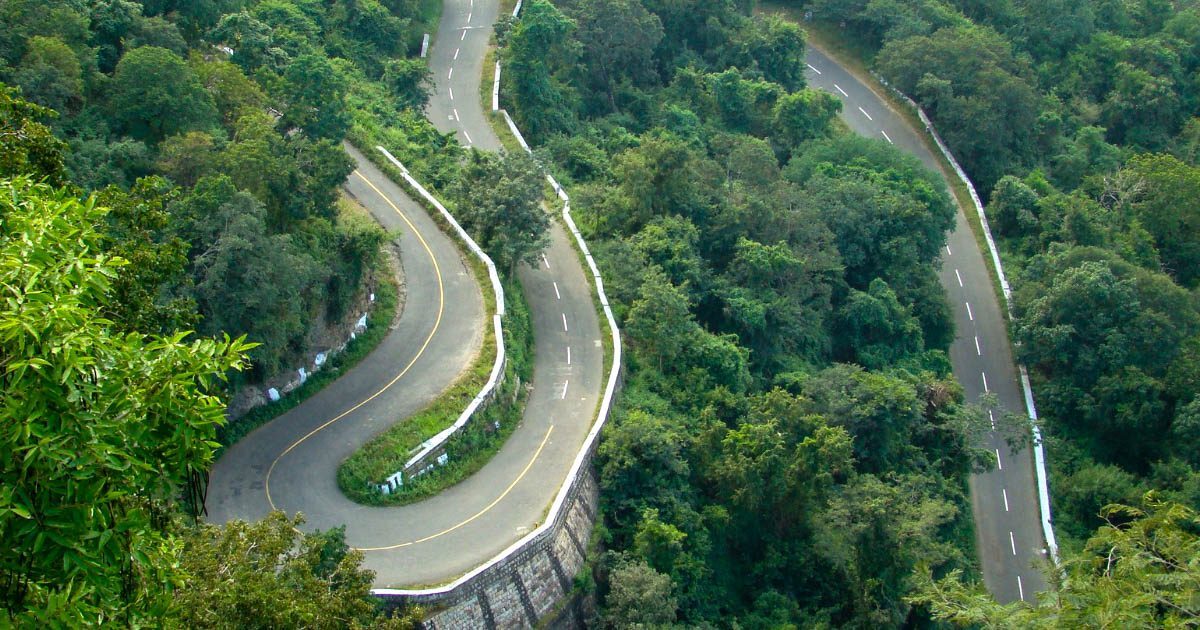
If railways connect the Northeast to the nation, roads connect its villages to the cities. The government reports 16,207 km of National Highways constructed in the region as of July 2025doc2025912634701. Under the Pradhan Mantri Gram Sadak Yojana (PMGSY), 80,933 km of rural roads and 2,108 bridges have been completed, linking even the most remote communities.
These aren’t just statistics. They mean faster access to hospitals, schools, and markets. For example, the Aizawl Bypass, at a cost of over ₹500 crore, will ease urban congestion and shorten travel times under the PM-DevINE scheme. Similarly, the Chhimtuipui River Bridge under the Kaladan Multimodal Transit framework will strengthen cross-border trade with Myanmar, transforming Mizoram into a strategic trade gateway.
Air and Digital Connectivity: Beyond Roads and Rails
The UDAN (Ude Desh ka Aam Nagrik) scheme has expanded regional air connectivity, linking previously underserved airports and heliports. For a region where terrain often makes road and rail transport difficult, this is vital.
Digital connectivity has also been aggressively pursued. BharatNet projects and Digital Bharat Nidhi have made Gram Panchayats service-ready, and new mobile towers have improved communication access. In an age where economic participation is inseparable from digital access, this is an equalizer.
The Investment Surge: A New Industrial Base
The Rising Northeast Investors Summit 2025 signaled the region’s shift from being a consumer of subsidies to a potential investment destination. The summit attracted ₹4.48 lakh crore in investment interest, focusing on energy, agro-food processing, tourism, textiles, healthcare, and IT.
This level of investment, if realized, could be transformative. Agro-based industries will empower farmers, while IT and education investments can help stem the brain drain that plagues the region. State governments have been proactive, offering single-window clearances, land banks, and eco-friendly project guidelines, ensuring that growth does not come at the cost of environmental sustainability.
Central Schemes: A Web of Support
Development in the Northeast is being underpinned by a suite of schemes:
- PM-DevINE (₹6,600 crore): Funding infrastructure and social projects under the PM GatiShakti framework.
- NESIDS – Roads & OTRI: Financing critical road and non-road infrastructure, from bridges to healthcare and education. As of July 2025, 29 projects under OTRI have been sanctioned, with ₹462 crore spentdoc2025912634701.
- NEC schemes: Focused on bamboo, piggery, tourism, and livelihoods, extending until 2026.
- Special Development Packages: Recently approved, with ₹4,000 crore for Assam and ₹250 crore for Tripura, aimed at peacebuilding, youth employment, and inclusive growth.
Together, these schemes are not just creating physical infrastructure but also fostering socio-economic inclusion.
The Poorvottar Vikas Setu (PVS) Portal exemplifies governance modernization. Previously, proposals languished in bureaucratic corridors. Now, project proposals, comments, fund releases, and compliance documents are all managed digitally. This shift ensures transparency and accountability while accelerating project execution.
Challenges: Beyond the Numbers
While the achievements are remarkable, the transformation is not without risks.
- Ecological Fragility: Massive construction across ecologically sensitive hills poses risks of landslides, deforestation, and biodiversity loss. Sustainable safeguards must match the scale of investment.
- Social Sensitivities: The Northeast is a mosaic of ethnic identities. Development must avoid fueling fears of cultural erosion or displacement.
- Execution Gap: Announced investments often face delays in implementation. The ₹4.48 lakh crore in commitments at the Investors Summit, for instance, will need consistent follow-through.
- Strategic Balance: Connectivity with Southeast Asia must be leveraged carefully, ensuring local communities are beneficiaries, not mere conduits for external trade.
A Vision of Inclusive Growth
The Northeast’s transformation represents more than a regional story—it is emblematic of India’s broader development trajectory. By reframing “EAST” as Empower, Act, Strengthen, Transform, the government has articulated a philosophy that blends hard infrastructure with human developmentdoc2025912634701.
If sustained, this model can bridge historic gaps: between periphery and center, tradition and modernity, and aspiration and opportunity. But the ultimate measure of success will not just be kilometers of highways or crores of investments—it will be whether a farmer in Mizoram, a student in Manipur, or an artisan in Tripura feels tangibly empowered.
From Margins to Mainstream
The Northeast is no longer a footnote in India’s growth narrative. It is emerging as a centerpiece of connectivity, commerce, and culture. With railways threading valleys, highways spanning hills, air routes crossing skies, and digital networks weaving villages into the national fabric, the region is poised to become a vital driver of India’s rise as a Viksit Bharat.
Yet, this is a journey, not a destination. The road ahead requires balancing development with sustainability, growth with inclusion, and speed with sensitivity. If done right, the Northeast will not just rise—it will shine as a beacon of integrated, equitable, and sustainable growth for the entire nation.

